
Efty reports that domain name purchase inquiries were down last month, offering an early, significant indicator of how global economic shifts are influencing the digital asset market.
The global landscape has undergone unprecedented transformations, significantly impacting nearly every facet of commerce and daily life. As societies worldwide adjusted to new realities, the digital realm became not just important, but absolutely critical for business continuity, communication, and entertainment. This seismic shift naturally reverberated through the domain name aftermarket. A crucial question has emerged for investors and entrepreneurs alike: what precisely is happening to domain name inquiries in the wake of widespread economic uncertainty and asset market fluctuations?
For most individual domain investors and smaller businesses, assessing their portfolio’s performance during such volatile times can be a daunting task, making it challenging to draw firm conclusions. Without extensive market data, it’s often difficult to distinguish personal trends from broader market movements. However, specialized domain name sales platforms, which aggregate vast amounts of transaction and inquiry data, are uniquely positioned to offer valuable insights into these emerging trends. Efty, a prominent platform dedicated to facilitating the buying and selling of domain names, has provided some of the first concrete data, offering crucial data points for the entire industry to consider.
Efty’s Latest Data: A Tale of Divergent Trends
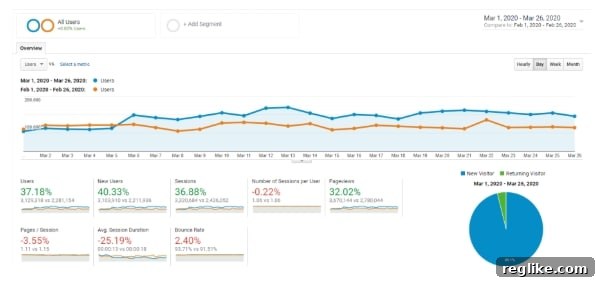
Efty’s recent analysis presents a fascinating, and somewhat complex, picture of the domain name aftermarket. The platform reported a notable 14.5% decrease in domain name purchase inquiries in March compared to the previous month, February. This decline in explicit buyer intent arrives at a period when overall digital engagement is soaring globally. What makes this data particularly intriguing is a counterintuitive finding: traffic to for-sale landing pages on Efty actually experienced a significant surge, increasing by a remarkable 37% month-over-month. This stark divergence between rising interest (traffic) and falling concrete inquiries (leads) suggests a nuanced shift in consumer behavior and market sentiment during these unique times.
The company attributes this substantial increase in traffic directly to the fundamental shift of more daily activities online. With remote work transitioning from a niche concept to a widespread norm, e-commerce accelerating at an unprecedented pace, and social interactions moving predominantly to digital platforms, overall internet usage has skyrocketed. Efty highlighted that internet usage was up by as much as 50% in certain regions of the world, underscoring the profound and rapid impact of global events on digital consumption patterns. While this heightened online presence undeniably drives more eyes to domain listings, it appears not to automatically translate into immediate, committed purchasing decisions.
Unpacking the Discrepancy: More Browsing, Less Buying Intent
The data from Efty provides a clear, albeit challenging, market snapshot: while a broader audience is increasingly engaging with digital content and exploring online possibilities, the actual intent to commit to a significant purchase, such as a premium domain name, has demonstrably waned. Several interconnected factors likely contribute to this intriguing phenomenon, illustrating the cautious approach businesses and individuals are adopting during periods of significant economic uncertainty and change.
Economic Uncertainty and Buyer Hesitation
One of the primary and most evident drivers behind the reduced inquiries is undoubtedly the prevailing economic uncertainty. Businesses, ranging from nascent startups to established multinational corporations, are prudently tightening their budgets and rigorously re-evaluating their spending priorities. Investments in new, non-essential projects, aggressive marketing initiatives, or the acquisition of high-value digital assets like premium domain names are often among the first areas to face intense scrutiny. During such times, capital preservation, maintaining liquidity, and ensuring operational stability become paramount. This leads to a natural, cautious hesitation in making discretionary or long-term investments. This cautious approach also filters down to individual domain investors and entrepreneurs, who may defer purchases until market conditions stabilize and offer clearer indicators of future growth.
Shifting Business Priorities and Strategic Realignment
During challenging economic periods, businesses frequently pivot their strategic focus towards core operations, diligently maintaining existing customer bases, and optimizing current workflows for maximum efficiency. While a robust online presence remains undeniably crucial, the immediate necessity for acquiring a new, premium domain might be temporarily deprioritized in favor of more pressing concerns, such as managing cash flow or adapting product offerings. Companies might feel content with their existing domain infrastructure or opt for more cost-effective branding solutions, effectively putting large-ticket domain acquisitions on hold. This strategic realignment is a logical and pragmatic response to an unpredictable economic environment, where immediate survival and adaptation take precedence over future expansion through new asset acquisition.
The “Digital Window Shopping” Effect
The significant increase in traffic to domain landing pages strongly suggests a prevalent “digital window shopping” effect. As individuals and business owners spend considerably more time online, they are naturally exploring a wider array of websites, including those listing domain names for sale. This heightened browsing activity could be driven by simple curiosity, future business planning, or simply a greater general awareness of the expansive digital landscape. Aspiring entrepreneurs might be brainstorming novel business ideas, and domain names are an absolutely fundamental component of that initial conceptualization process. However, this increased exploratory browsing behavior doesn’t consistently culminate in an immediate transaction, especially when the financial future of businesses and personal incomes remains shrouded in uncertainty.
Actionable Strategies for Domain Investors Amidst Shifting Tides
Despite the current dip in inquiries, the undeniable surge in traffic presents a unique and compelling opportunity for astute domain investors. The market is demonstrably evolving, and adapting strategies to effectively meet these new conditions is not just beneficial, but key to not only surviving the current climate but potentially thriving in the long run. Here are several actionable strategies that domain investors can implement:
Optimize Your Domain Landing Pages for Conversion
With more potential buyers viewing your listings, ensuring that your domain landing pages are meticulously optimized for conversion is absolutely crucial. This involves crafting clear, concise, and compelling descriptions that highlight the unique value proposition of each domain, incorporating prominent and easy-to-find calls to action, and providing an intuitive, user-friendly experience. High-quality visuals, much like the informative chart Efty provided, can also significantly help engage potential buyers. Emphasize the long-term intrinsic value, brand potential, and investment appeal of your domains, targeting future-oriented buyers rather than those seeking only immediate, short-term solutions.
Re-evaluate and Flexibilize Your Pricing Strategy
While indiscriminately cutting prices across your portfolio might risk devaluing your assets, maintaining a rigid pricing approach during a widespread market downturn could deter genuinely interested potential buyers. Consider offering more flexible pricing options, such as structured payment plans, lease-to-own agreements, or even slight, justifiable price adjustments for highly motivated buyers demonstrating serious intent. Understanding the psychological impact of pricing in a cautious market is vital. Clearly articulating the robust value proposition and potential return on investment (ROI) that a premium domain offers can effectively justify its perceived cost, even in a hesitant market.
Focus on In-Demand and Resilient Niches
Certain domain niches may experience sustained or even increased demand, even amidst a broader economic downturn. Domains related to burgeoning sectors like advanced e-commerce, comprehensive remote work solutions, innovative online education platforms, digital health technologies, and efficient delivery services are likely to remain strong or even grow in value. Investors should proactively analyze their existing portfolios for such domains and prioritize their strategic promotion. Furthermore, selectively acquiring new, high-quality domains within these burgeoning sectors could prove to be a wise long-term play, anticipating accelerated future growth once greater economic stability returns.
Enhance Proactive Marketing and Strategic Outreach
Beyond simply relying on passive listings, active and targeted marketing efforts can significantly help convert increased general traffic into concrete inquiries. Utilize various channels such as social media platforms, specialized industry forums, and direct, targeted outreach to highlight specific, valuable domains. Clearly emphasize how possessing a strong, memorable, and brandable domain name can provide a significant competitive edge in an increasingly digital-first world. Proactively building relationships with potential buyers and demonstrating flexibility and openness to negotiation can substantially improve conversion rates and foster trust.
Embrace Long-Term Portfolio Management and Curation
The current market climate strongly reinforces the paramount importance of adopting a long-term perspective in domain investing. Rather than resorting to panic selling, focus intently on curating a robust portfolio comprised of high-quality, enduring assets. Identify and steadfastly hold onto premium, evergreen domains that possess inherent value and are highly likely to retain and appreciate their worth over time. Use this period as an opportune moment to prune weaker or underperforming assets from your portfolio, thereby freeing up valuable capital or resources for more promising, strategic investments. Diversification across various domain types, industries, and Top-Level Domains (TLDs) can also significantly mitigate risks and enhance portfolio resilience.
The Broader Context: Domain Names as Digital Real Estate
The behavior currently observed in the domain name aftermarket often mirrors trends seen in broader asset classes, though it possesses its own unique digital characteristics. Just as traditional real estate markets might experience increased browsing activity during an economic slowdown (with individuals and businesses looking for potential deals or planning future moves) without an immediate surge in transactions, the digital domain market exhibits strikingly similar patterns. Domain names, frequently and aptly referred to as “digital real estate,” hold intrinsic value derived from their perceived branding potential, memorability, relevance to specific industries or keywords, and their capacity to anchor a strong online identity.
Historically, digital assets, particularly high-quality domain names, have demonstrated remarkable resilience, often bouncing back strongly once broader economic conditions improve and confidence is restored. The fundamental and irreversible shift towards digital interaction and commerce means that a strong online identity, unequivocally anchored by a premium domain, will only become more indispensable for businesses and individuals alike. This current period of reduced inquiries might, therefore, represent a temporary pause or a moment of market introspection, rather than a fundamental and lasting devaluation of this critical asset class. Smart investors recognize this as a potential opportunity to acquire undervalued assets.
Platforms like Efty play an absolutely critical role in providing much-needed transparency and data-driven insights during these turbulent times. Their ability to effectively aggregate and meticulously analyze vast amounts of market trend data allows domain investors and entrepreneurs to make far more informed and strategic decisions, adapting their approaches to the prevailing conditions. By thoroughly understanding the underlying reasons behind the observed data – more website visits but fewer direct inquiries – the entire domain community can collectively navigate the current challenges and strategically capitalize on the significant opportunities that inevitably emerge from periods of change.
Looking Ahead: Adapting and Thriving in the New Digital Economy
The current market dynamics, as clearly highlighted by Efty’s insightful report, unequivocally underscore the paramount need for adaptability, strategic foresight, and resilience within the dynamic domain name industry. While the immediate outlook suggests a cautious approach among potential buyers, the significant and sustained increase in traffic to domain listings undeniably signals a profound and lasting acceleration towards an even more digitized and interconnected global economy.
This period, characterized by market adjustments, offers a unique and invaluable opportunity for domain investors to critically refine their existing strategies, meticulously optimize their digital assets, and strategically prepare for the eventual and inevitable resurgence in buyer confidence. By steadfastly focusing on providing clear value, maintaining pricing flexibility, and implementing targeted marketing efforts, domain sellers can effectively leverage the increased visibility to build stronger sales pipelines for the future. The domain name aftermarket, while currently experiencing a moment of crucial introspection and recalibration, remains a foundational and indispensable pillar of the entire digital world, poised for renewed and robust growth as the global economy finds its footing and businesses continue their inexorable march deeper online.
(If your company possesses access to other relevant and valuable data that can further illuminate the impact of the pandemic and subsequent economic shifts on the intricate domain name aftermarket, please do not hesitate to contact me at andrew (at) domainnamewire.com. Collaborative insights and shared data are absolutely crucial for truly understanding and navigating these complex and rapidly evolving market trends.)