
Unpacking the notorious “Black Friday” of online poker reveals a far more intricate web of criminal activity than simple online gambling operations. The federal crackdown specifically targeted sophisticated financial fraud schemes aimed at circumventing U.S. law.
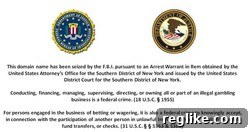
The Shockwaves of Poker’s “Black Friday”: A Deep Dive into the 2011 Domain Seizures
On April 15, 2011, the landscape of online poker was irrevocably altered when the U.S. Department of Justice (DOJ) unsealed indictments against eleven individuals and three major online poker companies. This event, now widely known as “Black Friday,” saw the seizure of critical domain names belonging to PokerStars, Full Tilt Poker, and Absolute Poker – powerhouses that collectively dominated the global online poker market. This wasn’t merely a regulatory action; it was a comprehensive federal crackdown alleging widespread fraud, money laundering, and illegal gambling operations specifically targeting the United States.
The impact was immediate and devastating for millions of players. Websites went dark, funds were frozen, and the vibrant online poker ecosystem, particularly in the U.S., ground to a halt. Before the seizures, platforms like FullTiltPoker.com alone reportedly attracted approximately 1 million unique visitors per month, underscoring the enormous scale of the operations involved.
Beyond Simple Gambling: The Core Allegations of Financial Fraud
While often broadly categorized as an anti-gambling measure, the “Black Friday” indictments articulated a much deeper and more severe set of accusations. Unlike previous, more localized domain seizures, such as those related to Kentucky gambling laws or general intellectual property infringements pursued by ICE Homeland Security Investigations, this case was fundamentally different. The federal government’s primary focus was not just on the act of facilitating online gambling, but on the elaborate schemes devised to systematically defraud the U.S. banking system and circumvent federal laws.
The Department of Justice alleged two primary methods of illicit activity:
- Deceptive Payment Processing: The companies were accused of deliberately tricking U.S. banks into processing gambling-related transactions by disguising them as payments for legitimate, unrelated e-commerce goods or services. This involved creating shell companies, using fraudulent merchant codes, and fabricating transaction descriptions to mislead financial institutions. The Unlawful Internet Gambling Enforcement Act (UIGEA) of 2006 had made it illegal for financial institutions to knowingly process transactions related to unlawful internet gambling. These companies allegedly conspired with payment processors to circumvent UIGEA through these elaborate misrepresentations, effectively lying to banks about the true nature of the funds being transferred.
- Investing in Struggling Banks for Illicit Processing: A more insidious allegation involved executives from these poker companies reportedly investing in and even acquiring stakes in struggling U.S. banks. The purpose of these investments was allegedly to gain control or influence over the banks’ operations, thereby compelling them to illegally process online gambling payments. This tactic demonstrated a concerted, high-level effort to infiltrate and manipulate the U.S. financial system to facilitate their operations, illustrating a sophisticated criminal enterprise rather than just a simple violation of gambling statutes.
It is crucial to understand this distinction. The government’s prosecution was predicated on charges of bank fraud, wire fraud, money laundering, and operating an illegal gambling business – serious federal felonies. This context makes the “Black Friday” seizures stand apart from other historical domain disputes, highlighting a clear line between operating a non-U.S. based online business that might be illegal in the U.S., and actively engaging in fraudulent schemes to subvert U.S. financial laws.
The Justification for Domain Seizures: A Legal Precedent
The seizing of domain names, which are essentially digital property, raised questions for some about the extent of government power. However, under U.S. law, assets that are directly involved in, or are the proceeds of, criminal activity are subject to forfeiture. The analogy often drawn is straightforward: if an individual uses a boat to smuggle illegal drugs into the U.S., both the drugs and the boat, as an instrument of the crime, are subject to seizure. Similarly, if domain names were deemed to be instrumental in facilitating complex criminal enterprises specifically targeting the U.S. financial system, their seizure was within the purview of federal law enforcement.
This principle of asset forfeiture served as a robust legal basis for the FBI’s actions, underscoring the severity of the alleged crimes and the government’s determination to dismantle the infrastructure supporting them. The long-term ramifications included indictments against key executives, significant financial penalties, and for many players, a protracted wait for the return of their funds, some of which were eventually repatriated through subsequent agreements.
Navigating Jurisdictional Waters: Domain Name Strategy in a Complex World
The “Black Friday” events also prompted a wider discussion within the online business community, particularly for those operating in legally ambiguous or highly regulated sectors, about the strategic considerations for domain name registration. The question arose: if an online business operates in a ‘questionable’ area (even if legal elsewhere), should it consider using a country code top-level domain (ccTLD) from a different jurisdiction?
While moving to a ccTLD might seem like a way to sidestep U.S. jurisdiction, the reality is far more nuanced. Several critical factors must be carefully evaluated:
- Local Legality: The most fundamental question is whether the specific activity conducted by the website is unequivocally legal in the country to which the ccTLD belongs. Operating a gambling or adult content site on a domain like a UAE (.ae) domain, for instance, would be highly problematic given the country’s strict laws.
- Political and Economic Stability: The stability of the chosen country is paramount. Governments can change policies on a whim, leading to sudden regulatory shifts, or economic instability could impact the operational reliability of local services. A stable political and legal environment provides greater predictability.
- Domain Policy Consistency: Research the country’s history regarding its domain name policies. Are they known for consistent application, or are there instances of arbitrary changes or seizures? Reliability in domain policy is crucial for long-term business planning.
- Registry Location: A frequently overlooked detail is the physical location of the ccTLD registry. A significant number of ccTLDs, despite their country-specific designation, are managed by registries or backend providers based in the United States. This means that even with a non-.com domain, direct U.S. jurisdiction might still apply if the registry itself falls under U.S. law, making “jurisdiction shopping” far more complex than it appears on the surface.
- International Legal Cooperation: The increasing interconnectedness of global legal systems means that even if a domain is registered in a country outside the U.S., international legal assistance treaties and cooperation agreements can still facilitate enforcement actions across borders.
Conclusion: Lessons Learned from “Black Friday”
The “Black Friday” poker domain seizures of 2011 stand as a watershed moment, not just for the online poker industry, but for any online business navigating complex international and national legal landscapes. It served as a stark reminder that operating an online business, particularly one involving financial transactions or regulated activities, requires rigorous adherence to laws and a thorough understanding of jurisdictional reach. The events clearly demonstrated that federal authorities are prepared to pursue sophisticated criminal enterprises that attempt to defraud the U.S. financial system, going far beyond simple interpretations of online gambling legality.
For businesses today, the key takeaway is the imperative for comprehensive legal due diligence. Simply operating an offshore entity or using a foreign domain is not a shield against robust enforcement actions, especially when allegations involve deliberate fraud and systemic efforts to subvert national laws. Understanding the intricate interplay of payment processing regulations, financial crime laws, and international domain governance is no longer optional but essential for sustainable online operations.