
Navigating the Domain Aftermarket: A Data-Driven Analysis of 3-Character Domain Trends
The landscape of the domain name aftermarket is a dynamic and often opaque ecosystem, where perceptions of market health can vary widely. While many long-time participants and observers might agree that the investor aftermarket for domain names isn’t experiencing the same boom it enjoyed a few years prior – a sentiment often reflected in the mood and total sales figures from live domain auctions – solid, quantifiable data to unequivocally prove or disprove this can be remarkably elusive. Unlike traditional stock markets with readily available public data, the domain market often operates with a degree of confidentiality around sales, making comprehensive analysis a significant challenge for researchers and investors alike.
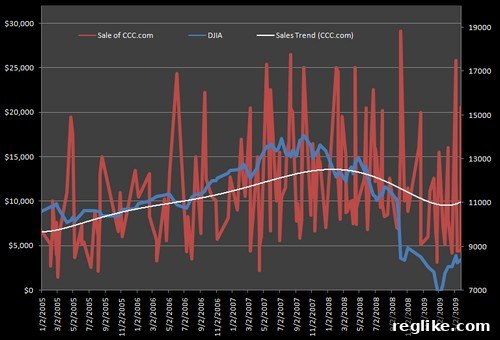
In this context, attempts to bring clarity through statistical analysis are invaluable. Richard Wixom, a respected figure from DNSalePrice, recently undertook such an endeavor, presenting a unique perspective that challenged conventional wisdom. His research suggested a different conclusion: far from being in decline, the domain aftermarket, at least in certain segments, was “doing just fine.” Wixom posited that any observed drop in domain prices over the preceding year or two was relatively minor, especially when compared to the more pronounced downturns experienced in the broader stock market, particularly the Dow Jones Industrial Average. Crucially, his analysis focused on a very specific segment of the market: three-character domains.
Richard Wixom’s Methodology: Pinpointing Value in 3-Character Domains
To gain his insights, Wixom meticulously carved out a narrow band of domain sales that he believed served as a reliable proxy for the broader investor market. His primary focus was on three-character domain sales, specifically those transacted for under $30,000. This deliberate choice of a price cap aimed to filter out outlier sales that might skew overall trends, focusing instead on a volume segment that perhaps better represented the activity of a wider base of individual investors rather than high-net-worth speculators or large corporations making strategic, multi-million dollar acquisitions. The data set spanned a period from January 2005 to May 2009, capturing a significant economic cycle that included both robust growth and the onset of a major financial crisis.
To further refine his analysis and ensure the purity of his chosen segment, Wixom applied several key filters. He systematically stripped out domains containing the less common English letters ‘q’, ‘x’, ‘y’, or ‘z’, recognizing that these characters often limit desirability and liquidity in many markets. Similarly, Internationalized Domain Names (IDNs) were excluded, as their market dynamics can be highly localized and distinct from generic ASCII domains. Furthermore, any three-letter domains that also constituted common dictionary words were removed. This particular exclusion is vital because three-letter words often command premium prices due to their inherent brandability and ease of recall, which can distort the underlying value trends of generic, non-word three-character strings that are primarily valued for their brevity and scarcity.
After this rigorous data cleansing, Wixom then plotted these meticulously selected sales on a graph. To discern underlying patterns and smooth out short-term fluctuations, he added a polynomial trend line, which helped to visualize the longer-term direction of prices. Crucially, to provide a comparative context, he overlayed this domain trend with the performance of the Dow Jones Industrial Average. This direct comparison formed the cornerstone of his argument, suggesting a resilience in the three-character domain market that appeared to outpace the broader stock market during a challenging economic period. The visual representation of this data indeed painted a compelling picture:
Evaluating the Proxy: The Unique Liquidity of 3-Character Domains
While Wixom’s work provides a commendably robust and data-driven attempt to quantify domain pricing trends using disclosed sales values – a notoriously difficult task – it is important to critically assess whether this limited data set can truly serve as a comprehensive proxy for the entire domain aftermarket. My own inclination leans towards caution in drawing such broad conclusions. The primary reason for this reservation lies in the inherent characteristics that differentiate three-character domains from the market at large: their exceptional liquidity. Three-character domains, particularly those composed solely of letters (LLL) or alphanumeric combinations, are universally recognized as highly liquid digital assets.
Their brevity makes them inherently desirable for branding, short URLs, and memorability across diverse industries and languages. The finite supply of these domains (e.g., 17,576 for LLL.com) also contributes significantly to their perceived value and liquidity. In a market downturn, highly liquid assets often retain their value better or recover faster than less liquid ones. This intrinsic characteristic means that the market behavior of 3-character domains might not perfectly mirror that of other domain types, such as keyword-rich domains, geo-domains, specific brandables, or new gTLD domains, each of which has its own unique demand drivers and liquidity profiles. Therefore, while the analysis offers profound insights into this specific niche, extrapolating its findings to the entire, vastly more diverse domain aftermarket requires careful consideration.
Beyond the $30,000 Cap: An Expanded View of 3-Letter Domain Medians
Intrigued by Wixom’s foundational work but seeking a broader perspective, I undertook a complementary analysis, cutting the data in a slightly different manner. My approach involved adding in sales of three-letter domains that exceeded the $30,000 cap, thereby encompassing the higher-value transactions that Wixom’s study intentionally excluded. Furthermore, instead of focusing on a polynomial trend line across all sales, I chose to calculate the median sales price for three-letter domains on an annual basis. Using the median is particularly effective in markets like domain investing, where a few exceptionally high-value sales (outliers) can heavily skew an average, providing a potentially misleading picture of the typical transaction value. The median, by contrast, represents the middle value in a dataset, making it a more robust indicator of the “typical” price experienced by most buyers and sellers.
The results of this expanded analysis, while utilizing the same disclosed data sources available on DNSalePrice, painted a more nuanced and, in some ways, a more conventional narrative of market fluctuations. The data revealed a pronounced upward trajectory in the median prices of three-letter domains from 2005 to 2007. Specifically, the median sales price in 2005 stood at $6,700, demonstrating a healthy and growing investor interest. This figure saw a significant jump in 2006, reaching $10,175, indicating a strong market expansion. The peak of this upward trend appeared to stabilize across both 2007 and 2008, with the median sales price consistently holding at $12,500. This two-year plateau suggested a period of market maturity and sustained high demand, perhaps reflecting robust economic conditions before the full impact of the global financial crisis was felt.
However, the data for 2009, albeit with admittedly limited entries at the time of analysis (early in the year), showed a substantial drop. So far in 2009, based on the disclosed data, the median three-letter domain sale had fallen to $6,250. This figure not only represents a significant decline from the preceding two years but also places the median price slightly below the 2005 level. While this early 2009 data doesn’t provide enough evidence to conclusively suggest a 50% year-over-year drop for the entire year, it undeniably signals a clear and sharp contraction in the market for these highly sought-after assets. Indeed, for those closely following the market, empirical observation often confirms that numbers aren’t always necessary to discern a downward shift in investor resale prices for three-letter domains during such periods.
Understanding the Broader Market Influences on Domain Valuation
The fluctuations observed in the domain aftermarket, even for a specific segment like three-character domains, are rarely isolated phenomena. They are intricately linked to a complex web of broader economic, technological, and socio-cultural factors. A general economic downturn, such as the one experienced globally in 2008-2009, invariably impacts investor confidence and discretionary spending. As traditional markets become volatile, investors often pull back from perceived higher-risk assets, which can include domain names, leading to decreased demand and downward price pressure. Companies may also reduce marketing and branding budgets, directly affecting the demand for premium domains.
Beyond macroeconomic trends, technological shifts also play a crucial role. The rise of social media platforms and mobile applications, for instance, can sometimes shift focus away from traditional website domains as primary online identifiers, though high-value domains almost always retain their importance for corporate branding and direct navigation. Furthermore, the introduction of new Generic Top-Level Domains (gTLDs) can create alternative branding opportunities, potentially diluting demand for established .com domains in some niches, while in others, .com’s scarcity and authority only become more pronounced. Perceived scarcity, brandability, memorability, and the speculative nature of investment also heavily influence a domain’s valuation. When investor sentiment sours, the speculative premium often diminishes faster than intrinsic utility value.
The ‘Bottoming Out’ Phenomenon: Opportunities for Savvy Domain Investors
The assertion that the market for three-letter domains, and potentially broader segments of the domain aftermarket, “has bottomed out” carries significant implications for current and prospective investors. A market “bottom” typically refers to the lowest point in a market cycle before a recovery begins. While notoriously difficult to predict precisely, identifying a bottom signals a potential shift from a seller’s market to a buyer’s market, presenting unique opportunities. At a market trough, prices are generally at their most attractive, allowing savvy investors to acquire high-quality assets at significantly reduced costs. For three-letter domains, which boast inherent value due to their scarcity and universal appeal, such a period could represent a prime accumulation phase.
Investors looking for signs of a bottom might observe a stabilization of sale prices after a prolonged decline, an increase in sales volume at these lower price points, or a renewed interest from institutional or large-scale private investors. A bottomed-out market also suggests that the worst of the price corrections may be over, and future movements are more likely to be upward. For those with a long-term investment horizon, acquiring desirable three-character domains during such a phase can lead to substantial appreciation when the market inevitably rebounds. It emphasizes the importance of a counter-cyclical investment strategy: buying when others are fearful and selling when others are greedy. However, it’s crucial to remember that “bottoming out” doesn’t guarantee an immediate surge; recovery can be gradual, requiring patience and continued monitoring of market indicators.
Conclusion: Data, Liquidity, and the Future of Domain Investing
The analysis of the domain name aftermarket, particularly through the lens of specific segments like three-character domains, underscores the critical role of data-driven insights in an otherwise speculative environment. Richard Wixom’s pioneering work at DNSalePrice offered a valuable, albeit narrow, perspective, suggesting resilience in 3-character domain values even amidst broader economic turmoil. Our expanded view, which included higher-value transactions and focused on median prices, painted a picture of growth, stabilization, and then a distinct downturn in early 2009 for these highly liquid assets.
This nuanced understanding highlights that while 3-character domains may possess unique liquidity characteristics that differentiate their market behavior, they are not entirely immune to broader economic pressures and shifts in investor sentiment. The observed “bottoming out” suggests that periods of market contraction can paradoxically present the most compelling opportunities for astute investors. By meticulously analyzing disclosed sales data, understanding the unique attributes of different domain segments, and staying attuned to macroeconomic trends, investors can make more informed decisions, navigate market cycles effectively, and position themselves for long-term success in the ever-evolving domain name industry. The future of domain investing will continue to reward those who combine intuitive market feel with rigorous statistical analysis.