
Namecheap Secures Second UDRP Victory Against Repeat Cybersquatter, Reinforcing Brand Protection
In a significant win for brand integrity, Namecheap, a leading domain name registrar, has successfully concluded its second Uniform Domain-Name Dispute-Resolution Policy (UDRP) case against the same individual, Agit Kaya. This repeated legal action underscores Namecheap’s unwavering commitment to protecting its valuable brand assets and combating persistent cybersquatting attempts.
The Persistent Challenge: Repeated Cybersquatting Against a Major Brand
The latest UDRP decision, available as a PDF document from WIPO, saw Namecheap prevail against Agit Kaya, a German resident, for registering domain names incorporating the Namecheap trademark. This ruling comes after a previous victory last year, demonstrating a concerning pattern of behavior from the respondent.
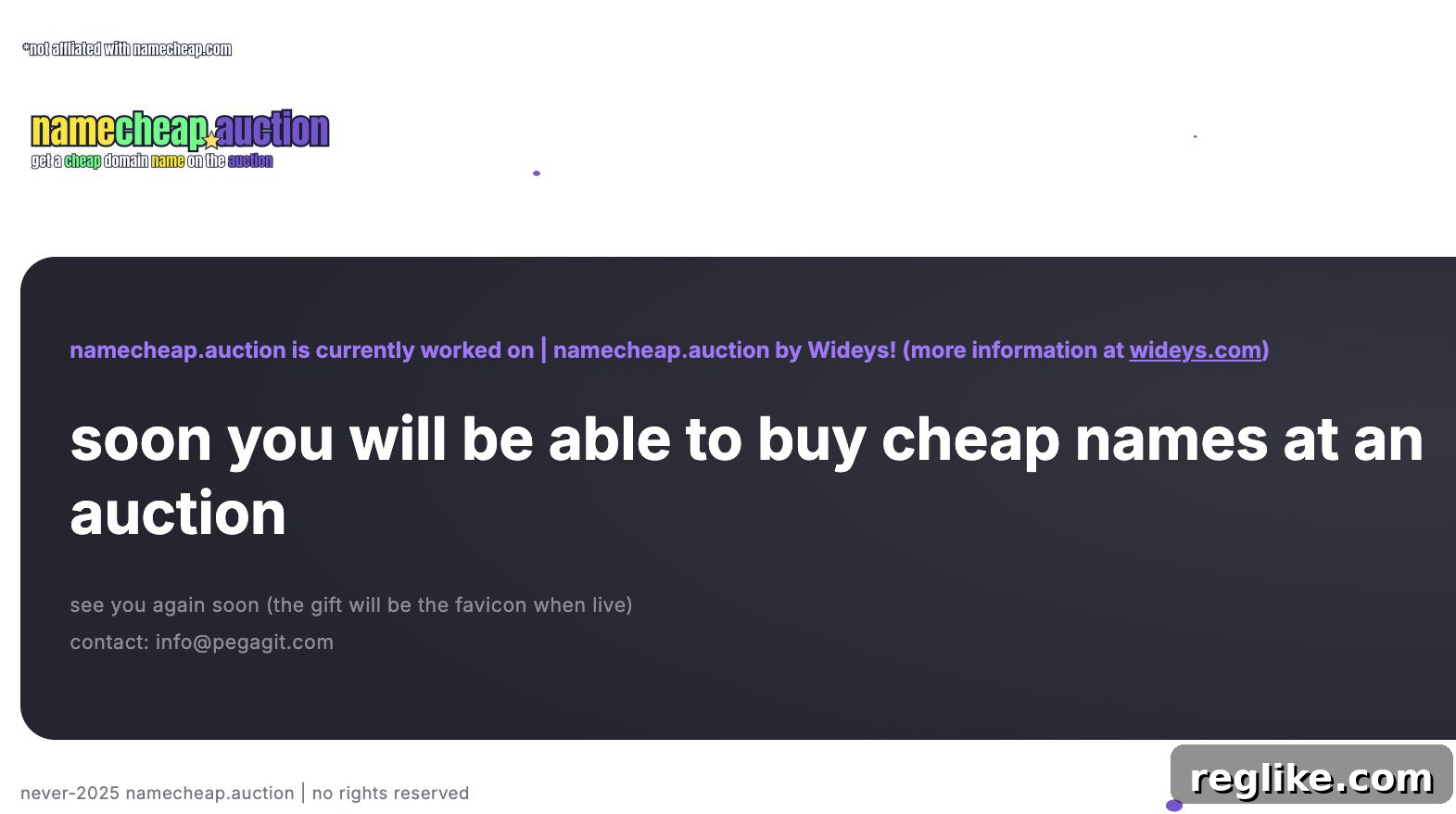
The current case centered on the domain name namecheap.auction, which Kaya had registered. His intentions, as presented, were to operate a website offering users the ability to “buy cheap names at an auction.” However, the website’s design and content, including a copyright notice stating “never-2025” and “no rights reserved,” raised immediate red flags for parody and a clear lack of legitimate purpose, strongly suggesting bad faith intent to leverage the Namecheap brand for personal gain.
Crucially, this registration occurred after Kaya had already lost a prior UDRP dispute involving the domain namecheap.domains. In that earlier case, documented in another WIPO PDF, he claimed plans to build an educational site focused on affordable domain registration options. The consistency of these actions, particularly registering a second infringing domain post-defeat, served as compelling evidence of his malicious intent and lack of rights to the trademark.
Understanding UDRP: A Vital Mechanism for Trademark Protection
The Uniform Domain-Name Dispute-Resolution Policy (UDRP) stands as a cornerstone in the fight against cybersquatting. Established by the Internet Corporation for Assigned Names and Numbers (ICANN), the UDRP provides an administrative, out-of-court process for resolving disputes between trademark owners and domain name registrants. Its primary goal is to offer a relatively swift and cost-effective alternative to traditional litigation for clear-cut cases of abusive domain name registrations.
For a complainant to succeed under the UDRP, they must prove three essential elements:
- The domain name is identical or confusingly similar to a trademark or service mark in which the complainant has rights.
- The domain name registrant has no rights or legitimate interests in respect of the domain name.
- The domain name has been registered and is being used in bad faith.
The Namecheap cases against Agit Kaya exemplify how these criteria are applied, especially the “bad faith” element, which often hinges on the registrant’s intent and history.
Deconstructing the `namecheap.auction` Case: Clear Evidence of Bad Faith
The panel reviewing the namecheap.auction dispute meticulously examined Kaya’s actions and intentions. While he attempted to present a facade of legitimate use, his arguments quickly unraveled under scrutiny. The proposed business model of an “auction for cheap names” was deemed insufficient to establish legitimate rights, primarily because it directly capitalized on the established reputation and goodwill of the Namecheap brand. Any service offering “cheap names” in conjunction with “Namecheap” would inevitably lead to consumer confusion, implying an affiliation that did not exist.
Furthermore, the website’s peculiar “copyright never-2025” and “no rights reserved” disclaimers were interpreted not as playful parody, but as strong indicators of a lack of genuine commercial intent. Such statements often signal an attempt to disavow responsibility while still benefiting from the trademark’s recognition. This, combined with the context of a previous UDRP loss, painted a clear picture of an individual deliberately seeking to exploit Namecheap’s intellectual property for potentially illicit or misleading purposes.
The Precedent of `namecheap.domains`: A Pattern of Intentional Infringement
The first UDRP case, concerning namecheap.domains, established a critical precedent that undoubtedly influenced the outcome of the second. In that initial dispute, Agit Kaya asserted his intention to develop a website that would “educate users about affordable domain registration options.” This defense, much like his later one, was found to be unconvincing. The panel determined that registering a domain name that is confusingly similar to a well-known trademark, with the intention of creating a site even tangentially related to the trademark owner’s core business, constituted bad faith.
The fact that Kaya proceeded to register namecheap.auction after explicitly being informed of his infringing behavior and losing his rights to namecheap.domains is particularly damning. This demonstrates a deliberate and continuous attempt to engage in cybersquatting, rather than an innocent mistake or a good-faith effort to build a legitimate business. The subsequent status of namecheap.domains, now resolving to a Namecheap parking page indicating its expiration, serves as a tangible consequence of these UDRP decisions and a deterrent against similar actions.
Why Brand Protection is Paramount: The Namecheap Perspective
As one of the largest and most respected domain name registrars globally, Namecheap’s brand is its most valuable asset. Millions of users trust Namecheap for their domain registration, web hosting, and related services. Cybersquatting, therefore, poses a multi-faceted threat:
- Consumer Confusion: Domain names like
namecheap.auctionornamecheap.domainscan easily mislead customers into believing they are interacting with official Namecheap channels, potentially exposing them to scams, phishing attempts, or substandard services. - Reputational Damage: If these illegitimate sites are perceived to be associated with Namecheap, any negative experiences could tarnish the company’s hard-earned reputation for reliability and customer service.
- Traffic Diversion: Infringing domains aim to siphon off legitimate traffic intended for the official Namecheap website, leading to lost business opportunities.
- Security Risks: Malicious cybersquatting sites can be vectors for malware distribution, further endangering users and the internet ecosystem.
For these reasons, Namecheap’s proactive approach to enforcing its intellectual property rights through mechanisms like the UDRP is not merely a legal formality; it’s a fundamental part of its business strategy and commitment to its user base.
The Broader Landscape: Staying Vigilant in the Digital Age
These cases serve as a powerful reminder of the persistent challenges faced by brand owners in the vast and ever-expanding digital landscape. The introduction of new generic Top-Level Domains (gTLDs) like .auction, .domains, .shop, and hundreds more, while offering new naming opportunities, also create new battlegrounds for trademark infringement. It becomes even more critical for companies to monitor these new spaces for potential abuse and to act decisively when their brand is threatened.
The UDRP process, while highly effective for clear instances of cybersquatting, is just one tool in a comprehensive brand protection strategy. Companies must also consider defensive registrations, continuous monitoring services, and, when necessary, traditional legal action to safeguard their digital assets. The internet’s open nature means that the fight against bad actors is continuous, requiring constant vigilance and a robust legal framework.
Key Takeaways for Businesses and Consumers
For businesses, the Namecheap victories highlight the importance of:
- Proactive Trademark Registration: Ensure your brand is properly registered in all relevant jurisdictions.
- Domain Name Monitoring: Regularly search for domain names that are identical or confusingly similar to your trademarks, especially across new gTLDs.
- Swift Action: Do not hesitate to initiate UDRP proceedings or other legal actions as soon as infringement is detected. Delays can weaken your case.
- Educating Your Team: Ensure your legal and marketing teams understand the nuances of domain name disputes.
For consumers, these cases are a cautionary tale:
- Verify Website Authenticity: Always double-check the URL of any website claiming to be a known brand. Look for official links and security indicators.
- Beware of Unsolicited Offers: Be wary of emails or links promising deals that seem too good to be true, especially if they direct you to unfamiliar domains.
- Report Suspicious Activity: If you encounter a domain name that you believe is unlawfully using a trademark, consider reporting it to the brand owner or relevant authorities.
Conclusion: A Strong Message Against Brand Infringement
Namecheap’s repeated success in UDRP cases against Agit Kaya sends a clear and unequivocal message: intentional cybersquatting will not be tolerated. This robust enforcement of intellectual property rights not only protects Namecheap’s brand and its customers but also reinforces the integrity of the domain name system as a whole. As the digital landscape continues to evolve, the vigilance of brand owners, supported by effective policies like the UDRP, remains crucial in maintaining a trustworthy and secure online environment for everyone.