
Navigating the New gTLD Landscape: Demystifying the Cybersquatting Threat
The proliferation of new generic Top-Level Domains (gTLDs) has undeniably reshaped the internet’s naming architecture. While this expansion offers exciting opportunities for niche communities and businesses to establish more descriptive online identities, it has simultaneously ignited a wave of apprehension among trademark owners. A dominant concern frequently voiced is the potential for a significant surge in cybersquatting activities, forcing brands into an unending cycle of defensive registrations and costly legal battles. However, a closer examination of historical data and the intrinsic nature of the domain market suggests that these fears, while understandable, may be overblown. The reality points towards a nuanced landscape where targeted vigilance, rather than widespread panic, is the most effective strategy.
The Illusion of a Cybersquatting Tsunami: Lessons from History
The anxiety surrounding an impending cybersquatting explosion with each new gTLD release is a recurring theme. Yet, historical patterns, particularly those illuminated by organizations like the World Intellectual Property Organization (WIPO), offer a compelling counter-narrative. When analyzing Uniform Domain-Name Dispute-Resolution Policy (UDRP) filings, which are the primary mechanism for resolving cybersquatting disputes, a clear trend emerges: the vast majority of these cases overwhelmingly center around established, legacy gTLDs, most notably .com.
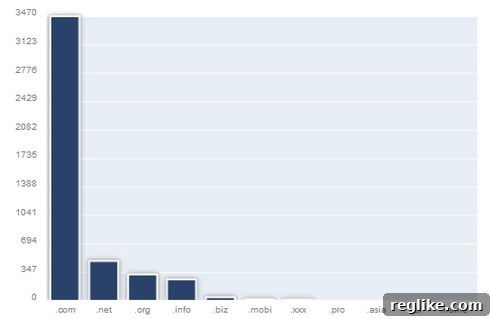
While an actual visual graph depicting WIPO’s gTLD UDRP filings would explicitly illustrate this point, its underlying message is clear: the bulk of cybersquatting “action” is concentrated where the digital traffic and perceived value are highest. This disproportionate focus on .com is not arbitrary; it reflects the domain’s unparalleled ubiquity, brand recognition, and a deeply ingrained user habit of defaulting to .com when searching for online entities. Cybersquatters, like any opportunistic actors, gravitate towards the domains that offer the highest potential for profit, confusion, or ransom – and historically, that has almost exclusively been .com.
Understanding UDRP: The Trademark Owner’s Shield
The Uniform Domain-Name Dispute-Resolution Policy (UDRP) stands as a cornerstone in the fight against cybersquatting. Established by the Internet Corporation for Assigned Names and Numbers (ICANN), the UDRP provides an administrative, out-of-court mechanism for trademark owners to resolve disputes concerning domain names that they believe infringe upon their intellectual property rights. To succeed in a UDRP complaint, a trademark owner must typically prove three things:
- The domain name is identical or confusingly similar to a trademark in which the complainant has rights.
- The registrant of the domain name has no rights or legitimate interests in respect of the domain name.
- The domain name has been registered and is being used in bad faith.
The effectiveness of UDRP is paramount in understanding the cybersquatting landscape. Its existence provides a relatively efficient and accessible avenue for recourse, deterring some potential cybersquatters while offering a remedy for legitimate brand owners. The fact that the majority of these filings target .com domains further reinforces where the perceived value and vulnerability lie.
The Niche Nature of New gTLDs: A Natural Deterrent
A common argument against the “don’t worry” stance is that the lower number of UDRP filings in new gTLDs simply reflects their smaller registration numbers. This observation is indeed accurate. When examining ratios – for instance, the number of registered domains compared to UDRP filings – domains like .com, .net, and .org often exhibit ratios around 30,000 to 1, meaning one dispute for every 30,000 registrations. Some new gTLDs, or even older ones like .biz and .mobi, might show ratios closer to 50,000 to 1 or higher. This statistical reality, however, inadvertently strengthens the core argument: most of these new gTLDs are, and will remain, relatively small and niche.
The economic realities surrounding the launch and maintenance of new gTLDs mean that many will never achieve the scale or prominence of legacy domains. They are often targeted at specific industries, communities, or geographical locations (e.g., .tech, .paris, .restaurant). This inherent specificity and limited reach act as a natural deterrent for widespread cybersquatting. Cybersquatters thrive on broad public recognition and high traffic volumes, which are rarely characteristic of a niche gTLD. The lower likelihood of “type-in traffic” – users directly typing a domain name into their browser – for these specialized extensions significantly diminishes their attractiveness as targets for brand exploitation.
Debunking Specific Cybersquatting Scenarios with New gTLDs
Trademark owners often grapple with specific hypothetical scenarios that fuel their cybersquatting concerns. Let’s address a couple of common ones:
Scenario 1: The Highly Relevant New gTLD
The “nike.shoes” example is frequently cited. A direct, highly relevant new gTLD combined with a prominent brand name appears to be a clear recipe for cybersquatting. While such instances certainly warrant monitoring and, potentially, defensive registration, they represent a small fraction of the broader domain landscape. The critical distinction lies in context. Is Nike worried about “Nike.actor”? Most likely not. The likelihood of a consumer mistaking “Nike.actor” for an official Nike product or service website is incredibly low due to the inherent incongruence between the brand and the gTLD. Cybersquatting relies on confusion, and incongruous gTLDs significantly reduce that potential. The vast majority of new gTLDs are not so directly relevant to globally recognized brands that they would naturally invite such specific, high-stakes cybersquatting attempts.
Scenario 2: Selling Counterfeit Goods on New gTLDs
Another concern is the use of new gTLDs to sell fake or unauthorized goods. “What if someone starts selling fake Nikes on nike.newgTLD?” The reality is that setting up a fraudulent store on a new gTLD is no more difficult, nor inherently more dangerous, than doing so on a free hosting service (e.g., nike.somefreehost.com) or even through a complex network of subdomains. The efficacy of such a scam largely hinges on misleading the consumer, often through phishing techniques or social engineering, rather than the intrinsic credibility of the domain extension itself. Consumers, especially those less tech-savvy, often don’t scrutinize the entire URL; they look for brand names, familiar logos, and compelling offers. Phishing attempts routinely exploit this by using similar-looking domains (e.g., nake.com instead of nike.com), demonstrating that the primary vector of attack is often visual deception or social engineering, not the inherent trust in a specific gTLD.
Proactive Brand Protection: A Balanced and Strategic Approach
While the overall threat of a cybersquatting deluge in the new gTLD era may be overstated, this does not mean trademark owners can afford complacency. The evolving digital landscape necessitates a proactive, strategic, and balanced approach to brand protection. Rather than panicking and defensively registering every possible permutation of their brand across hundreds of new gTLDs, which would be financially unsustainable and largely ineffective, brands should focus on intelligent risk assessment and targeted actions.
Key Strategies for Trademark Owners:
- Selective Defensive Registrations: Prioritize registering brand names in new gTLDs that are highly relevant to your industry, core products, or target audience. For instance, a technology company might consider .tech or .app, while a food brand might look at .food or .kitchen. This targeted approach is more cost-effective and impactful.
- Robust Monitoring Services: Invest in comprehensive domain monitoring services that track new registrations across relevant gTLDs. These services can alert trademark owners to suspicious registrations that could indicate cybersquatting or infringement, allowing for swift action.
- Leveraging Existing Legal Frameworks: The UDRP remains a powerful tool. Furthermore, national and international trademark laws provide additional avenues for enforcement against infringers, regardless of the gTLD used.
- Educate Consumers: Empowering consumers with knowledge about how to identify legitimate websites, secure payment gateways, and common phishing tactics can significantly reduce the success rate of fraudulent sites, irrespective of their domain extension.
- Utilize Trademark Clearinghouse (TMCH): For brands with registered trademarks, the TMCH provides a valuable service for protecting rights during the launch phases of new gTLDs, offering priority registration and claims notification services.
Beyond Domain Names: A Holistic Approach to Digital Brand Identity
In today’s interconnected world, brand protection extends far beyond mere domain names. A holistic strategy must encompass social media handles, mobile app names, online marketplace listings, and even keyword advertising. Cybersquatters and infringers are adept at exploiting every available digital channel. Therefore, focusing solely on new gTLDs while neglecting other potential vectors for brand impersonation would be short-sighted. A comprehensive digital brand protection strategy acknowledges that the threat landscape is multi-faceted and requires vigilance across all relevant platforms.
Conclusion: Navigating the Future of Online Brand Identity with Confidence
The advent of hundreds of new gTLDs marks an undeniable evolution of the internet. While it ushers in new considerations for trademark owners, it is crucial to temper initial anxieties with informed perspectives. The historical dominance of .com in cybersquatting disputes, coupled with the niche nature and lower traffic potential of most new gTLDs, suggests that we are unlikely to witness an overwhelming surge in cybersquatting. This is not to say that vigilance is unnecessary; indeed, an era of increased domain diversity mandates more intelligent tracking and strategic enforcement. However, it will not be the “end of the world” for brand protection. By adopting a proactive, data-driven, and holistic approach to brand protection, trademark owners can confidently navigate this expanded domain landscape, securing their digital identity without succumbing to unnecessary panic.