
ICANN’s Standoff: The California Attorney General and the Future of the .ORG Registry
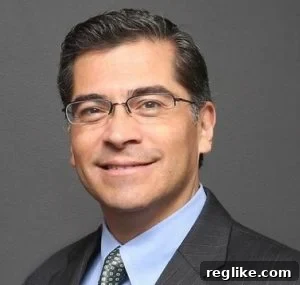
The global landscape of internet governance is often complex and fraught with high-stakes decisions. Few have captured the attention of the internet community quite like the proposed sale of the Public Interest Registry (PIR), the long-standing steward of the vital .org domain, to Ethos Capital, a private equity firm. This transaction, once seemingly on the fast track for approval, has encountered a formidable obstacle in the form of California Attorney General Xavier Becerra, whose intervention has cast a long shadow over ICANN’s autonomy and decision-making processes.
ICANN, the Internet Corporation for Assigned Names and Numbers, found itself at a critical juncture. Its Board of Directors was poised to make a definitive decision on the controversial acquisition of PIR by Ethos Capital. This was anticipated to be one of the key items discussed at a special meeting scheduled for last Friday. However, the path forward became significantly less clear just one day prior. Attorney General Becerra dispatched a sharp letter to ICANN, unequivocally stating, “ICANN must exercise its authority to withhold approval.” This direct challenge effectively halted the proceedings.
The Unexpected Intervention: California AG Puts the Brakes on the .ORG Sale
In response to the Attorney General’s powerful directive, ICANN abruptly removed the agenda item concerning the .org sale from its planned discussion. Subsequently, ICANN, alongside Ethos Capital and Public Interest Registry, agreed to postpone the final decision, pushing the deadline further to May 4. This deferral underscores the gravity of Becerra’s concerns and the significant leverage his office wields.
Unlike many other voices that have expressed opposition to the deal – from non-profits and civil society groups to individual internet users – the California Attorney General’s office possesses genuine legal authority, giving its pronouncements considerable weight. As the overseer of non-profit organizations incorporated in California, Becerra’s office commenced a thorough investigation into ICANN’s activities in January. It was at this early stage that he sent an initial letter to ICANN, raising fundamental questions about the proposed sale and thereby initiating a delay that has already stretched for several months.
Since that initial communication, all parties involved – ICANN, PIR, and Ethos Capital – have reportedly engaged in efforts to alleviate Becerra’s detailed concerns. Yet, despite these concentrated efforts, the Attorney General remains unconvinced, signalling that the concessions offered thus far have not met his stringent requirements for public interest protection.
ICANN’s Core Mandate Under Scrutiny
The central anxiety for ICANN is palpable: should it proceed with approving the transfer without adequately addressing Becerra’s objections, the Attorney General could potentially initiate legal action against ICANN. Such action might extend far beyond the immediate confines of the .org deal, potentially opening a Pandora’s Box of scrutiny into ICANN’s past and future decisions.
In his incisive April 15 letter, Becerra meticulously referenced ICANN’s articles of incorporation, which are officially filed in California. These foundational documents clearly articulate ICANN’s purpose and operational principles:
[ICANN] is not organized for the private gain of any person…recogni[zing] the fact that the Internet is an international network of networks, owned by no single nation, individual or organization” and as such, ICANN will “pursue the charitable and public purposes of lessening the burdens of government and promoting the global public interest in the operational stability of the Internet.
[ICANN] shall operate in a manner consistent with these Articles and its Bylaws for the benefit of the Internet community as a whole.
Becerra’s argument is straightforward yet profound: he contends that ICANN demonstrably adhered to these very principles in 2002 when it initially selected the Public Interest Registry, a non-profit entity, to manage the .org registry. Conversely, he posits that approving the sale to a private equity investor, whose primary fiduciary duty is to its shareholders and profit generation, fundamentally contradicts these core tenets. This move, in his view, would represent a significant departure from ICANN’s enshrined commitment to the global public interest and the internet community as a whole.
The Broader Implications: A Can of Worms for Internet Governance
The implications of Becerra’s stance are far-reaching. If ICANN chooses to move forward without satisfying the Attorney General, it risks inviting a level of scrutiny that could destabilize its established governance framework. Becerra’s office might then begin to meticulously examine other decisions ICANN has made over the past two decades – decisions that, in hindsight, might not appear to be exclusively for the “benefit of the internet community as a whole.” This could establish a powerful precedent, compelling ICANN to justify its actions under an unprecedented level of public interest oversight. Future decisions, irrespective of their nature, could find themselves subjected to an intense microscope, potentially challenging ICANN’s operational independence and established decision-making protocols.
One specific point of contention highlighted by Becerra illuminates this potential “can of worms” scenario: the presumptive renewal clause embedded within the .org contract. He expressed grave concern:
This automatic renewal provision leaves the nonprofit community that uses the .ORG registry with no protection. While the automatic renewal provision made some sense when the .ORG registry was operated by PIR and ISOC that had solid track records, it makes no sense to extend this provision to operators that have no experience operating a Registry.
This clause effectively grants the registry operator an automatic right to renew its contract without a competitive bid process, a mechanism designed to ensure stability when the operator is a trusted, long-standing non-profit like PIR, backed by the Internet Society (ISOC). However, applying such a clause to a private equity firm like Ethos Capital, which primarily seeks financial returns and has no prior experience in registry operations, fundamentally alters the risk profile. It raises serious questions about long-term stewardship, pricing policies, and the potential for a profit-driven entity to prioritize shareholder value over the diverse interests of the .org community, which primarily comprises non-profits, charities, and public benefit organizations worldwide.
ICANN’s Playbook Under Pressure
In its defense, ICANN typically adopts a strategy of seeking concessions from involved parties, which it then uses as justification for its ultimate decisions. In this instance, ICANN states:
The Attorney General’s letter does not take into account the recent work that PIR has done to make the entity more responsible to the community. ICANN requested that PIR strengthen the Public Interest Commitments to ensure meaningful enforceability; a draft of the revised PICs has been provided to the ICANN Board.
This refers to the Public Interest Commitments (PICs), which are a set of contractual obligations designed to ensure that registry operators act in the public interest. ICANN’s argument suggests that the newly strengthened PICs would provide sufficient safeguards, even under private ownership. The implication is that these revised commitments would make Ethos Capital adequately “responsible to the community,” thereby satisfying the public interest requirement.
However, many stakeholders, including the Attorney General, appear unconvinced that contractual adjustments alone can mitigate the fundamental shift from non-profit to for-profit stewardship. The fear is that a private equity firm’s core business model inherently conflicts with the public interest mandate that has historically defined the .org domain. Moreover, the enforceability of these PICs, especially against a large private entity with significant legal resources, is a persistent concern. The track record of ICANN in rigorously enforcing such commitments against powerful entities has been a point of debate in the past.
For decades, ICANN has relied on this established “playbook”: identifying potential issues, requesting minor adjustments or concessions, and then leveraging these changes as a basis to move forward. This approach has often allowed ICANN to navigate contentious situations while maintaining its operational momentum. Yet, in the face of Attorney General Becerra’s robust legal challenges and his office’s deep scrutiny, this tried-and-true strategy appears to be facing its most significant test yet. The fundamental clash between public interest principles and private commercial gain, now under the direct gaze of a powerful state regulator, suggests that ICANN’s traditional playbook might simply not be adequate to resolve the current deadlock, leaving the future of the .org domain, and indeed ICANN’s own governance model, hanging in the balance.