
T-Mobile Fortifies ‘T-Mobile Money’ Brand with Extensive Domain Name Registration Drive
T-Mobile’s Bold Return to Digital Banking: Unpacking the Extensive ‘T-Mobile Money’ Domain Strategy
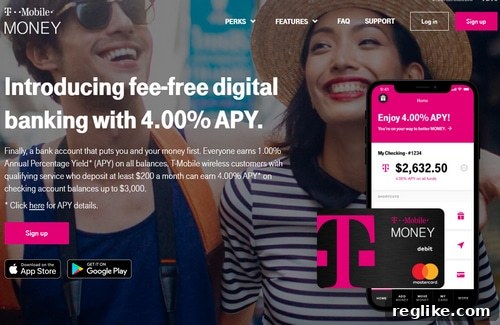
In a significant move signaling a renewed foray into the competitive world of financial services, T-Mobile (NASDAQ:TMUS) appears to be reigniting its ambitions in digital banking. After a previous attempt with its “Mobile Money” program was discontinued in 2016, the wireless giant is now reportedly trialing a new initiative under the strikingly similar moniker, “T-Mobile Money.” This strategic re-entry is not merely a quiet test; it’s accompanied by an exceptionally robust brand protection campaign, evidenced by the registration of more than 75 domain names to safeguard its digital presence.
The Evolution of T-Mobile’s Financial Ambitions: From “Mobile Money” to “T-Mobile Money”
T-Mobile’s journey into the financial sector isn’t new. Back in 2014, the company launched “Mobile Money by T-Mobile,” a prepaid debit card and mobile banking service designed primarily for the unbanked and underbanked population. The initiative aimed to offer a more affordable and accessible banking solution, free from traditional bank fees, leveraging T-Mobile’s extensive customer base. However, despite its innovative premise, the program struggled to gain significant traction and was ultimately discontinued in 2016, less than two years after its launch. Industry analysts pointed to various factors for its cessation, including intense competition from traditional banks, the complex regulatory landscape, and perhaps a market that wasn’t quite ready for a mobile carrier to fully embrace banking services.
Fast forward to the present, and the landscape has dramatically shifted. The rise of fintech, the widespread adoption of mobile payment solutions, and a growing consumer comfort with digital-first banking platforms have created a fertile ground for new players. It seems T-Mobile has been keenly observing these trends. The domain name t-mobilemoney.com, which previously served as the digital home for its defunct program, now showcases a new program offering digital banking and a mobile wallet. This signals not just a rebranding but potentially a re-envisioning of its financial service offerings, aligning them with modern consumer expectations and technological capabilities.
A Fortress of Domains: T-Mobile’s Aggressive Brand Protection Strategy
The most compelling indicator of T-Mobile’s serious commitment to this new “T-Mobile Money” venture is its proactive and extensive domain registration strategy. In a single day, the company reportedly registered at least 75 domain names, encompassing a wide array of typos, misspellings, and variations of both t-mobilemoney.com and tmobilemoney.com. This aggressive tactic goes far beyond standard brand defense; it represents a comprehensive plan to build a robust digital fortress around its new service.
This strategy is primarily aimed at combating a pervasive threat in the digital realm known as **typosquatting** (also sometimes referred to as URL hijacking or a “spoofing” URL). Typosquatting involves registering domain names that are common misspellings or slight variations of legitimate, popular websites. The intent of a typosquatter is often malicious: to capitalize on users’ typing errors to redirect them to competitor sites, phishing scams, malware distribution sites, or simply to display advertising and generate revenue. For a financial service like “T-Mobile Money,” the stakes are exceptionally high. A user inadvertently landing on a fraudulent site due to a typo could lead to severe financial losses, identity theft, and significant reputational damage for T-Mobile.
By registering these numerous variations in advance, T-Mobile effectively preempts potential malicious actors. It prevents them from acquiring these lookalike domains and using them for nefarious purposes. This defensive measure is a critical component of launching a secure and trustworthy financial product in today’s interconnected world, demonstrating T-Mobile’s understanding of the digital landscape’s vulnerabilities.
Examples of Registered Domain Variations: A Glimpse into the Strategy
The list of registered domains provides insight into the meticulous planning behind T-Mobile’s brand protection. The variations cover common typing errors, phonetic misspellings, and omissions:
- t-m0bilemoney.com (using ‘0’ for ‘o’)
- t-mbilemoney.com (missing ‘o’)
- t-mboilemoney.com (transposition of ‘o’ and ‘i’)
- t-mibilemoney.com (using ‘i’ for ‘o’)
- t-mobielmoney.com (transposition of ‘e’ and ‘i’)
- t-mobilemoney.click (alternative Top-Level Domain)
- t-mobilemoney.sucks (a less conventional, perhaps defensive, TLD)
- tm-obilemoney.com (hyphen placement variation)
- tm0bilemoney.com (no hyphen, ‘0’ for ‘o’)
- tmboilemoney.com (no hyphen, transposition)
- tmibilemoney.com (no hyphen, ‘i’ for ‘o’)
- tmobielmoney.com (no hyphen, transposition)
- tmobikemoney.com (typo ‘k’ for ‘l’)
- tmobildmoney.com (typo ‘d’ for ‘l’)
- tmobilem0ney.com (no hyphen, ‘0’ for ‘o’ in ‘money’)
This exhaustive list highlights T-Mobile’s proactive approach. They are not just protecting the exact brand name but anticipating how users might mistype it. The inclusion of both hyphenated (t-mobilemoney) and unhyphenated (tmobilemoney) versions for almost every typo demonstrates a thorough understanding of user behavior and the critical importance of a complete defensive perimeter.
The Strategic Choice of Top-Level Domains (TLDs)
Another intriguing aspect of T-Mobile’s domain registration spree is its selective approach to new generic Top-Level Domains (gTLDs). While the company registered t-mobilemoney.click and t-mobilemoney.sucks, it notably skipped many other potentially relevant new gTLDs. This selective registration could indicate several things:
- Cost-Benefit Analysis: Registering domains across dozens or hundreds of gTLDs can be incredibly expensive. T-Mobile might be strategically choosing gTLDs that pose the highest risk for abuse or those with perceived marketing value, balancing comprehensive protection with fiscal prudence.
- Targeted Marketing: The .click TLD, for instance, might be seen as relevant for call-to-action marketing campaigns or specific advertising initiatives.
- Defensive Registration: The .sucks TLD is often registered defensively by brands to prevent others from using it to host negative content or parody sites. It’s a pragmatic move to control potentially damaging narratives.
The decision to focus on specific gTLDs rather than broadly registering across all available options provides a nuanced view of their strategy, suggesting a calculated approach rather than a blanket sweep. It underscores that domain strategy isn’t just about quantity, but also about relevance and potential impact.
Why Re-enter Digital Banking Now? Market Opportunity and T-Mobile’s Ecosystem
T-Mobile’s renewed interest in digital banking comes at a time when the fintech sector is booming, and mobile carriers are increasingly looking for ways to diversify their revenue streams and enhance customer loyalty. Several factors likely contribute to this strategic decision:
- Existing Customer Base: T-Mobile boasts a massive subscriber base, providing a ready-made audience for financial services. Integrating banking features directly into their mobile ecosystem could offer unparalleled convenience and sticky services for existing customers.
- Data and Personalization: As a mobile carrier, T-Mobile has access to significant customer data (with appropriate privacy considerations), which could enable highly personalized banking experiences and offers, potentially differentiating them from traditional banks.
- Ecosystem Expansion: Offering financial services can deepen customer engagement, reduce churn, and create a more comprehensive “T-Mobile ecosystem” where users manage communication, entertainment, and finances all under one roof. This could lead to higher lifetime value per customer.
- Untapped Market Segments: While their previous attempt targeted the unbanked, the new “T-Mobile Money” might aim for a broader demographic, appealing to tech-savvy users looking for streamlined, mobile-first banking solutions.
- Competitive Landscape: Other major tech companies and even some carriers globally have successfully ventured into financial services. T-Mobile might see this as a necessary step to remain competitive and relevant in an evolving digital economy.
This re-entry suggests T-Mobile is not merely reacting to market trends but actively shaping its future as a comprehensive lifestyle provider, extending beyond basic telecommunication services.
The Broader Implications for the Digital Banking Landscape
T-Mobile’s aggressive push into digital banking, backed by such a robust brand protection strategy, has broader implications for the financial industry:
- Increased Competition: The entry of a major player like T-Mobile intensifies competition for traditional banks and emerging fintechs alike. Consumers stand to benefit from more innovative products, competitive fees, and enhanced services.
- Innovation in Mobile Banking: T-Mobile’s focus on a “mobile wallet” and digital banking will likely spur further innovation in how financial services are delivered via smartphones, pushing boundaries for convenience and feature integration.
- Brand Trust and Security: For a financial service, trust is paramount. T-Mobile’s meticulous domain strategy underscores the importance of digital security and brand integrity in building consumer confidence, setting a high bar for others.
- Regulatory Scrutiny: As more non-traditional entities enter banking, regulatory bodies will likely increase their scrutiny, ensuring consumer protection and financial stability across all players.
- The Future of ‘Super Apps’: This move aligns with the global trend towards “super apps” – platforms that combine multiple services (communication, commerce, finance, entertainment) into a single, integrated user experience. T-Mobile could be positioning itself to become a significant player in this space in the US.
Conclusion: A Calculated and Protected Comeback
T-Mobile’s reported re-entry into the digital banking sphere with “T-Mobile Money” is a highly calculated move, learning from past experiences and adapting to a more mature fintech landscape. The comprehensive registration of over 75 domain names is not merely an afterthought; it is a foundational pillar of their strategy, demonstrating a deep understanding of the critical importance of brand security and trust in the digital age. By proactively safeguarding against typosquatting and other digital threats, T-Mobile is not just launching a new service; it is building a protected ecosystem for its customers’ financial future.
This strategic investment in domain protection signals that “T-Mobile Money” is intended to be a long-term, significant offering. As the service rolls out, its success will depend on its features, user experience, and market adoption, but one thing is clear: T-Mobile is leaving no stone unturned in securing its digital identity from the very beginning. This aggressive stance on domain protection serves as a prime example for any company serious about launching a major digital product in today’s complex online environment.