
Panelist Finds Reverse Domain Name Hijacking in Pickleball Domain Dispute
Pickleball Domain Dispute: Panelist Slams Complainant for Reverse Domain Name Hijacking
In a significant ruling from the National Arbitration Forum, an Oregon man has been found guilty of engaging in Reverse Domain Name Hijacking (RDNH) during a contentious dispute over a prominent pickleball-related domain name. This decision serves as a powerful reminder of the Uniform Domain Name Dispute Resolution Policy’s (UDRP) core principles and the severe repercussions for those who attempt to abuse the system.
Understanding Reverse Domain Name Hijacking (RDNH) in Domain Disputes
Before delving into the specifics of this pickleball saga, it’s crucial to understand what Reverse Domain Name Hijacking entails. RDNH occurs when a complainant, typically a trademark holder, attempts to unfairly seize a domain name from a legitimate registrant by initiating a UDRP proceeding in bad faith. Essentially, it’s an abuse of the UDRP process, where the complainant knows, or should have known, that they could not establish the necessary grounds for their complaint, yet proceeds anyway with the aim of harassing the domain owner into surrendering their rights.
The UDRP was established by ICANN (Internet Corporation for Assigned Names and Numbers) to provide an efficient, cost-effective mechanism for resolving disputes concerning abusive domain name registrations, particularly cybersquatting. To succeed in a UDRP complaint, a complainant must prove three essential elements:
- The domain name is identical or confusingly similar to a trademark or service mark in which the complainant has rights.
- The respondent (domain name registrant) has no rights or legitimate interests in respect of the domain name.
- The domain name has been registered and is being used in bad faith.
A finding of RDNH signifies that the complainant has failed to meet these criteria, and moreover, has done so with malicious intent or a reckless disregard for the policy, often attempting to leverage their trademark rights to acquire a domain name they are not otherwise entitled to.
The Global Pickleball Network Dispute: A Case Study in Bad Faith
The recent case centered around the domain name globalpickleballnetwork.com. The complainant, Trevor Meier, an individual from Oregon, filed a dispute with the National Arbitration Forum, seeking to gain control of this domain. The domain was legitimately owned by a Florida resident who operated pickleball.global, a related online venture. Notably, the disputed domain, globalpickleballnetwork.com, was being actively used to forward traffic to pickleball.global, where visitors were greeted with the welcoming headline, “Welcome to Pickleball Global Network.”
Meier’s strategy appeared to be based on the belief that obtaining a trademark for “Global Pickleball Network” would automatically grant him the right to acquire the domain name, regardless of the respondent’s prior ownership and established use. This miscalculation, coupled with his subsequent actions, would ultimately lead to the damning RDNH finding.
Panelist Charles Kuechenmeister’s Compelling Finding of RDNH
The panelist assigned to the case, Charles Kuechenmeister, delivered a meticulous and unequivocal decision, finding that Trevor Meier had indeed engaged in Reverse Domain Name Hijacking. Kuechenmeister’s detailed reasoning underscored the egregious nature of Meier’s conduct, highlighting a pattern of behavior that demonstrated clear bad faith from the outset. Here are the pivotal excerpts from his finding and their critical implications:
Complainant is not represented by legal counsel in this proceeding but the evidence of bad faith in bringing this action is compelling and even a person not familiar with UDRP practice should have known that doing so was fundamentally wrong. In August of 2018, one year before bringing this case, Complainant called Respondent to tell him that he was planning to start a business called “Global Pickleball Network” and requested Respondent to sell him the Domain Name. Respondent refused, explaining that he had been using the Domain Name in connection with his operations for several years and wanted to continue to do so. At that point, Complainant became aggressive and informed Respondent that he planned to start his business under the name mentioned, that he would obtain a trademark registration for it, and force Respondent to turn the Domain Name over to him (Response Exhibit A). Complainant then took those actions, with full knowledge of Respondent’s business and his rights in the Domain Name. Respondent notes that one year later, when the USPTO registration was issued, Complainant filed this proceeding the same day. Respondent also notes that one of the grounds for a finding of bad faith alleged by Complainant is that Respondent refused to sell the Domain Name to Complainant for any amount of money. This is just the reverse of the circumstance articulated in Policy ¶ 4(b)(i). It is clear that, for whatever reason, Complainant believes himself entitled to the Domain Name and initiated this proceeding to obtain it, without regard for any of the requirements imposed by the Policy.
Complainant knew or should have known that he would be unable to prove that Respondent lacked rights or legitimate interests in the Domain Name or that Respondent registered and was using the Domain Name in bad faith. This meets well-established criteria for a finding of reverse domain name hijacking.
Key Takeaways from the Panelist’s Decision:
- Clear Prior Knowledge and Intent: The panelist emphasized that Meier’s initial contact with the respondent in August 2018, a full year before filing the complaint, was crucial. Meier explicitly stated his intention to start a business under the “Global Pickleball Network” name and sought to purchase the domain. This established his full awareness of the respondent’s prior ownership and use of the domain.
- Aggressive Tactics and Threats: Upon the respondent’s refusal to sell, Meier resorted to aggressive tactics, threatening to obtain a trademark and then use it to force the transfer of the domain. This premeditated approach clearly demonstrated an intent to circumvent legitimate acquisition methods and abuse the UDRP system.
- Timing of Trademark and Complaint: The fact that Meier filed the UDRP proceeding on the very same day his USPTO trademark registration was issued further solidified the panelist’s conclusion. It revealed a calculated plan to weaponize the trademark against an established domain holder, rather than using it for its intended purpose of protecting his own brand in commerce.
- Misapplication of Bad Faith Criteria: Meier’s assertion that the respondent’s refusal to sell the domain constituted bad faith on the respondent’s part was a critical misinterpretation of UDRP Policy ¶ 4(b)(i). This policy typically addresses a registrant offering to sell the domain for profit to the trademark owner, not the reverse. Meier’s attempt to twist this provision against the respondent underscored his desperate and ill-conceived strategy.
- Inherent Implausibility of Complaint: The panelist firmly stated that Meier knew or should have known his complaint was doomed to fail. Given the respondent’s longstanding and legitimate use of the domain, Meier could not realistically prove that the respondent lacked rights or legitimate interests, nor that the domain was registered and used in bad faith. This fundamental flaw in Meier’s case highlighted his bad faith in even initiating the proceedings.
The “Kitchen Violation” Analogy: A Perfect Fit
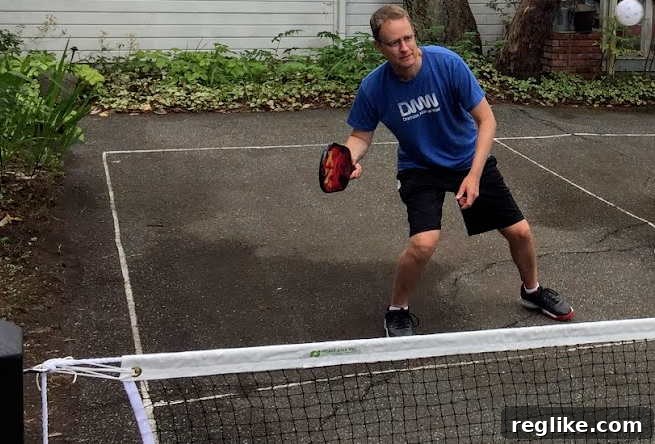
In the vibrant sport of pickleball, a “kitchen violation” occurs when a player hits the ball out of the air while standing too close to the net within the non-volley zone, often called the “kitchen.” This results in an immediate fault and the play is dead in favor of the opposing team. This analogy, used by the original reporting, perfectly encapsulates Trevor Meier’s actions.
Meier, much like a player stepping into the kitchen, attempted to gain an unfair advantage by entering forbidden territory – trying to leverage a newly acquired trademark to take a domain name already legitimately held and used by another party. His aggressive, premeditated approach was a clear “violation” of the principles of fair play and legitimate acquisition within the domain name ecosystem. Just as a kitchen violation stops play and awards a point to the opponent, Meier’s actions were swiftly penalized with an RDNH finding, affirming the respondent’s rights and putting an end to the baseless dispute.
Broader Implications and Lessons Learned from this Pickleball Dispute
This pickleball domain dispute offers several crucial lessons for individuals, businesses, and legal professionals navigating the digital landscape:
- Due Diligence is Paramount: Before attempting to acquire a domain name or asserting trademark rights, thorough due diligence is essential. Researching existing domain registrations and their active use can prevent costly and futile legal battles.
- Prior Rights Trump Later Trademarks (Often): A newly acquired trademark does not automatically grant rights to an existing domain name, especially if the domain holder has legitimate prior use. The UDRP strongly protects those with established, good-faith use.
- The UDRP is Not a Collection Agency: The UDRP is designed to combat cybersquatting and abusive registrations, not to facilitate domain name acquisitions for opportunistic trademark holders. Attempts to use it as such will likely result in an RDNH finding.
- Legal Counsel is Crucial: The panelist explicitly noted Meier was not represented by legal counsel. This case vividly illustrates why expert legal advice is invaluable in UDRP matters, as a qualified attorney could have advised against pursuing such a clearly unfounded complaint.
- Protecting the Integrity of the UDRP: Findings of RDNH are vital for maintaining the credibility and integrity of the UDRP process. They serve as a deterrent against abusive complaints and ensure that the policy remains a fair and effective tool for resolving genuine domain name disputes.
- Value Your Digital Assets: For domain name holders, this case reinforces the importance of actively using and demonstrating legitimate interests in your domains. Such usage provides a strong defense against potential challenges.
Conclusion: A Cautionary Tale in the World of Domain Names
The globalpickleballnetwork.com domain dispute stands as a stark cautionary tale in the often-complex world of internet governance and intellectual property. Trevor Meier’s attempt to leverage a newly registered trademark and aggressive tactics to seize a domain name with established, legitimate use not only failed but also resulted in a significant finding of Reverse Domain Name Hijacking. Panelist Charles Kuechenmeister’s firm decision upholds the foundational principles of the UDRP, safeguarding legitimate domain owners from vexatious complaints and reinforcing the message that the policy is a tool for justice, not a weapon for opportunistic acquisition. This case highlights the critical importance of understanding and respecting existing domain rights, urging all parties to engage with integrity and adhere to the spirit and letter of the law when navigating digital asset disputes.