
.Aero Domain Dispute: Russia Seeks ICANN Intervention Over Suspension of Registrations
A significant dispute has emerged in the realm of internet governance, as Russia appeals to the Internet Corporation for Assigned Names and Numbers (ICANN) to mediate a situation involving the .aero domain registry. The crux of the issue lies in the suspension of .aero domain registrations and renewals for organizations based in the Russian Federation, a move that Russia claims is unjustified and detrimental to its aviation sector. This article delves into the details of the dispute, examining the arguments presented by both sides and the potential implications for the future of international domain management.
The Core of the Dispute: Suspension of .Aero Services
The heart of the matter is Russia’s contention that SITA Information Networking Computing USA, Inc., the operator of the .aero sponsored top-level domain (sTLD), has unfairly suspended domain registration and renewal services for Russian entities. According to Russia, this suspension, which commenced on November 10, 2023, is based on a misinterpretation of international sanctions. The .aero domain is specifically designated for the air transport industry, making its accessibility crucial for airlines, airports, and related organizations.
Russia’s Appeal to ICANN
Representing the Ministry of Digital Development, Communications and Mass Media of the Russian Federation, Andrea Zhinov, Russia’s Governmental Advisory Committee (GAC) representative to ICANN, formally requested ICANN’s intervention. Zhinov’s letter to ICANN underscores Russia’s belief that SITA’s actions are unwarranted. The letter argues that the sanctions cited by SITA do not, in fact, apply to domain registration services. The Russian government insists that General License No. 25C3, paragraph (b), issued by the Office of Foreign Assets Control (OFAC), explicitly exempts services related to domain name registration and renewal from sanctions. Therefore, Russia views SITA’s justification as “completely unfounded and solely malicious.”
ICANN’s Response: A Call for Contractual Compliance
ICANN’s response to Russia’s appeal, delivered three months after the initial communication, suggests a focus on established procedures. ICANN advised Russia to submit a complaint to Contractual Compliance if they believe SITA has violated the .aero Top-Level Domain (TLD) Sponsorship Agreement. This response places the onus on Russia to formally demonstrate that SITA has failed to meet its contractual obligations, essentially deferring the resolution process to the existing contractual framework. While seemingly straightforward, this response has been criticized by some as being slow to react to what Russia considers a critical issue affecting its national interests.
The Impact on Russian Aviation
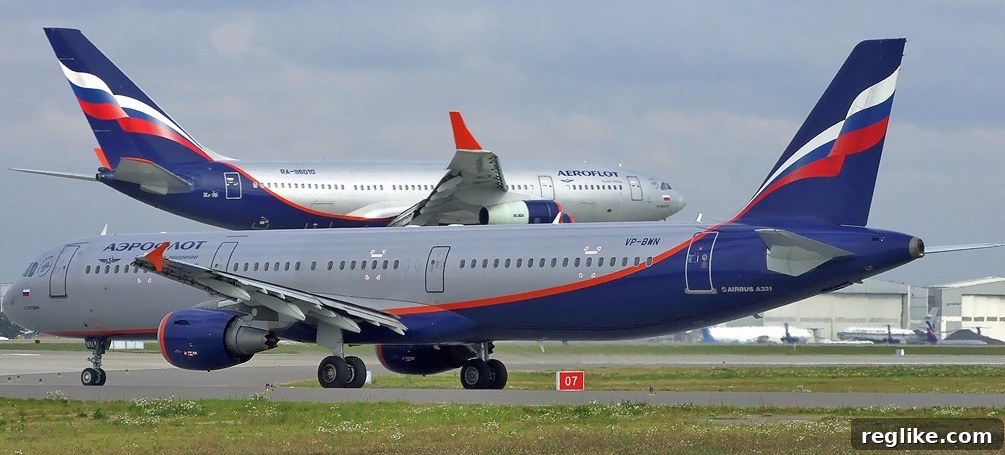
The suspension of .aero domain services potentially affects a substantial number of Russian organizations. Russia reports that over 400 entities, including more than 30 airports and 15 airlines, have their domain names registered under the .aero TLD. The inability to register or renew these domains can disrupt online operations, hinder communication, and potentially damage the reputation of these organizations. For airlines, a functioning online presence is essential for ticket sales, customer service, and disseminating crucial travel information. Similarly, airports rely on their websites to provide flight schedules, directions, and other essential services to travelers. Disruption in these services can have significant repercussions for both the aviation industry and the public.
Understanding .Aero: A Domain for the Skies
The .aero domain is a sponsored top-level domain (sTLD) specifically created for companies and organizations associated with the air transport industry. It serves as a recognizable and industry-specific online identifier, helping users quickly identify and access relevant aviation-related websites. The .aero domain is managed by SITA, a company specializing in IT and telecommunication services for the air transport industry. SITA’s role as the .aero registry operator is governed by a Sponsorship Agreement with ICANN, outlining its responsibilities and obligations.
The Broader Context: Sanctions and Internet Governance
This dispute highlights the complex intersection of international sanctions, internet governance, and national interests. While sanctions are intended to achieve specific political or economic objectives, their application in the digital realm can have unintended consequences. The question of whether domain registration services should be subject to sanctions is a matter of ongoing debate. Some argue that such services are essential for communication and access to information, and therefore should be exempt. Others contend that sanctions should be applied comprehensively to maximize their effectiveness.
The .aero domain dispute raises fundamental questions about the role of ICANN in resolving conflicts between national governments and domain registry operators. ICANN’s primary mission is to ensure the stable and secure operation of the internet’s domain name system. However, it also faces the challenge of navigating complex geopolitical issues and balancing the interests of various stakeholders. ICANN’s decision in this case could set a precedent for how similar disputes are handled in the future.
Potential Resolutions and Future Implications
Several potential resolutions exist for the .aero domain dispute. Firstly, SITA could re-evaluate its interpretation of the sanctions and reinstate domain registration and renewal services for Russian organizations if they determine the sanctions do not apply. Secondly, ICANN could conduct a more thorough investigation of the matter and issue a binding decision based on its interpretation of the Sponsorship Agreement and relevant international laws. Thirdly, Russia and SITA could engage in direct negotiations to reach a mutually acceptable agreement.
The outcome of this dispute could have significant implications for the future of internet governance. It could influence how sanctions are applied in the digital realm, how ICANN resolves conflicts between national governments and registry operators, and how domain names are managed in an increasingly interconnected world. A swift and equitable resolution is crucial to maintaining trust in the internet’s domain name system and ensuring that it remains a valuable resource for all.
Conclusion: A Critical Juncture for Internet Governance
The .aero domain dispute between Russia and SITA represents a critical juncture for internet governance. The outcome will not only impact the Russian aviation industry but also set a precedent for how international sanctions are applied to internet resources and how ICANN mediates disputes between nations and domain registries. A transparent and fair resolution is essential to uphold the principles of a free, open, and accessible internet for all.