
Unlocking Domain Value: A Comprehensive Guide to Researching Domain Sales in China
Are you looking to sell a domain name in the Chinese market but unsure how to determine its value? Many factors influence a domain’s worth, and understanding the nuances of the Chinese domain market is crucial for setting a realistic and profitable price. This comprehensive guide provides you with the tools and knowledge to conduct thorough research and confidently assess the value of your domain in China.
One of the most common questions I receive is, “How much can I sell my domain for in China?” While there’s no magic formula, the answer always begins with research. Instead of relying on guesswork, it’s essential to analyze comparable domain sales and understand current market trends. This guide will introduce you to a powerful resource and provide a step-by-step approach to conducting your own domain valuation research.
eName: Your Gateway to the Chinese Domain Market
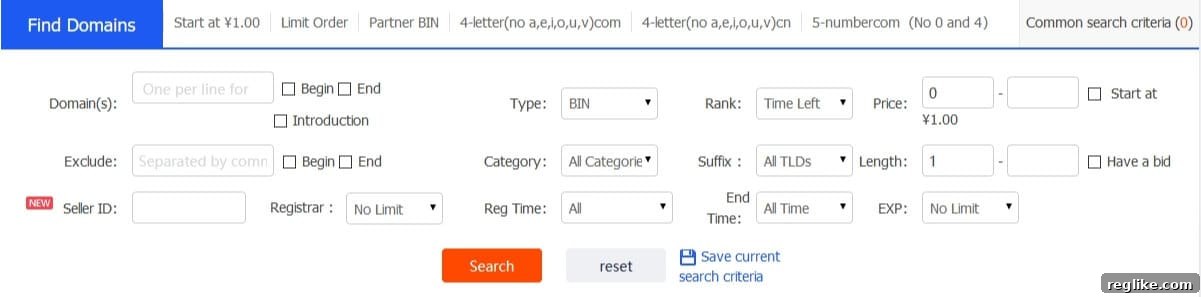
To effectively gauge the value of your domain, you need access to real-world sales data. eName, a leading domain registrar in China, offers a valuable tool for researching domain sales. While primarily a Chinese platform, eName provides an English interface, making it accessible to a global audience. This feature allows you to explore domains currently listed for sale with fixed prices (“Buy It Now” or BIN), providing a clear snapshot of the market.
Here’s how to leverage eName for your domain research:
- Access eName: Visit eName.com and locate the English language option (usually a button or link).
- Navigate to the BIN Section: Once in the English interface, find the “Find Domains” menu and select “BIN.” This will direct you to the section showcasing domains listed with fixed prices.
- Utilize Filters for Targeted Research: The key to effective research lies in using filters to narrow down your search. eName provides various filters to refine your results based on domain characteristics.
Practical Examples: Finding Comparable Domain Sales
Let’s explore a few practical examples to illustrate how to use eName’s filters to find comparable domain sales.
Example 1: Valuing a Four-Letter .com Domain
Suppose you own a four-letter .com domain and want to understand its potential value in the Chinese market. Follow these steps:
- Category Selection: From the “Category” drop-down list, choose “4-letter.” This will restrict your search to only four-letter domains.
- Suffix Selection: From the “Suffix” drop-down list, select “.com.” This ensures you’re only looking at .com extensions.
- Initiate Search: Click the “Search” button to execute your filtered search.
- Analyze Results: Once the search results appear, you can further refine your analysis. Click the “Cur Price” heading to sort the domains by price, from lowest to highest. This gives you a clear picture of the lower end of the market. Adjust the “Each page shows” option to 100 to display a larger sample size on each page, facilitating a more comprehensive review.
- Examine Domain Details: If a particular domain catches your eye, click its name to view more details. Keep in mind that some information might still be in Chinese. In such cases, use a translation tool like Google Translate to get a general understanding of the domain’s description or any relevant information.
As of this writing, a search for four-letter .com domains on eName reveals over 40,000 listings. The lowest-priced domain might be around $80 USD, with the cheapest 100 domains priced below $150 USD. This provides a baseline for your valuation. Carefully compare your domain to these listings, considering factors like letter combinations, pronounceability, and potential brandability. Is your domain easier to remember or more relevant to a specific industry? These factors can justify a higher price.
Example 2: Assessing the Value of a Seven-Number .com Domain
Let’s say you own a seven-number .com domain. Here’s how to research comparable sales on eName:
- Category Selection: Choose “Pure Number” from the “Category” list. This will filter for domains consisting solely of numbers.
- Length Specification: In the “Length” fields, enter “7” for both the minimum and maximum length. This ensures you only see seven-number domains.
- Initiate Search: Click the “Search” button.
- Analyze Results: Similar to the previous example, sort the results by price and adjust the display to show 100 domains per page.
A search for seven-number .com domains might reveal thousands of listings, with the lowest-priced domains selling for around $11 USD. The cheapest 100 domains might be priced under $45 USD. As before, compare your specific domain to these listings. Are there any repeating patterns or memorable sequences within your number combination? Such features can influence the domain’s value. Certain number combinations may also hold cultural significance in China, further impacting their desirability.
Beyond .com: Exploring Other Extensions and Domain Types
The examples above focus on .com domains, but eName allows you to research a wide variety of domain extensions and types. You can explore:
- Other Extensions: Investigate the value of .net, .org, .club, and other popular domain extensions.
- Pinyin Domains: Pinyin domains, which use the Roman alphabet to represent Chinese words, are highly sought after in China. eName allows you to research the value of these domains.
- Mixed Character Domains: Some domains combine letters and numbers. Explore the pricing of these mixed character domains to understand their market value.
- Chinese IDN (Internationalized Domain Names): Research the value of domains written entirely in Chinese characters. These domains are becoming increasingly popular in China.
Key Considerations for Domain Valuation in China
While eName provides valuable data, it’s important to consider the following factors when assessing the value of your domain in China:
- Cultural Significance: Certain words, numbers, and letter combinations hold specific cultural meanings in China. Understanding these nuances can significantly impact your domain’s value.
- Brandability: A domain’s ability to be easily remembered, pronounced, and associated with a brand is crucial.
- Relevance: Does the domain relate to a specific industry, product, or service that is popular in China? Relevance can drive up demand and price.
- Market Trends: Stay informed about current trends in the Chinese domain market. Demand for certain types of domains can fluctuate based on economic and social factors.
- Competition: Analyze the competitive landscape. Are there similar domains already in use? How strong is the competition for your target keyword or brand?
Conclusion: Empowering You to Make Informed Decisions
Determining the value of a domain in the Chinese market requires diligent research and a thorough understanding of the local landscape. By utilizing eName’s BIN search tool and considering the key factors outlined in this guide, you can empower yourself to make informed decisions about pricing and selling your domain. Remember to continuously monitor market trends and adapt your strategy accordingly. With the right approach, you can unlock the full potential of your domain in the dynamic Chinese market.