
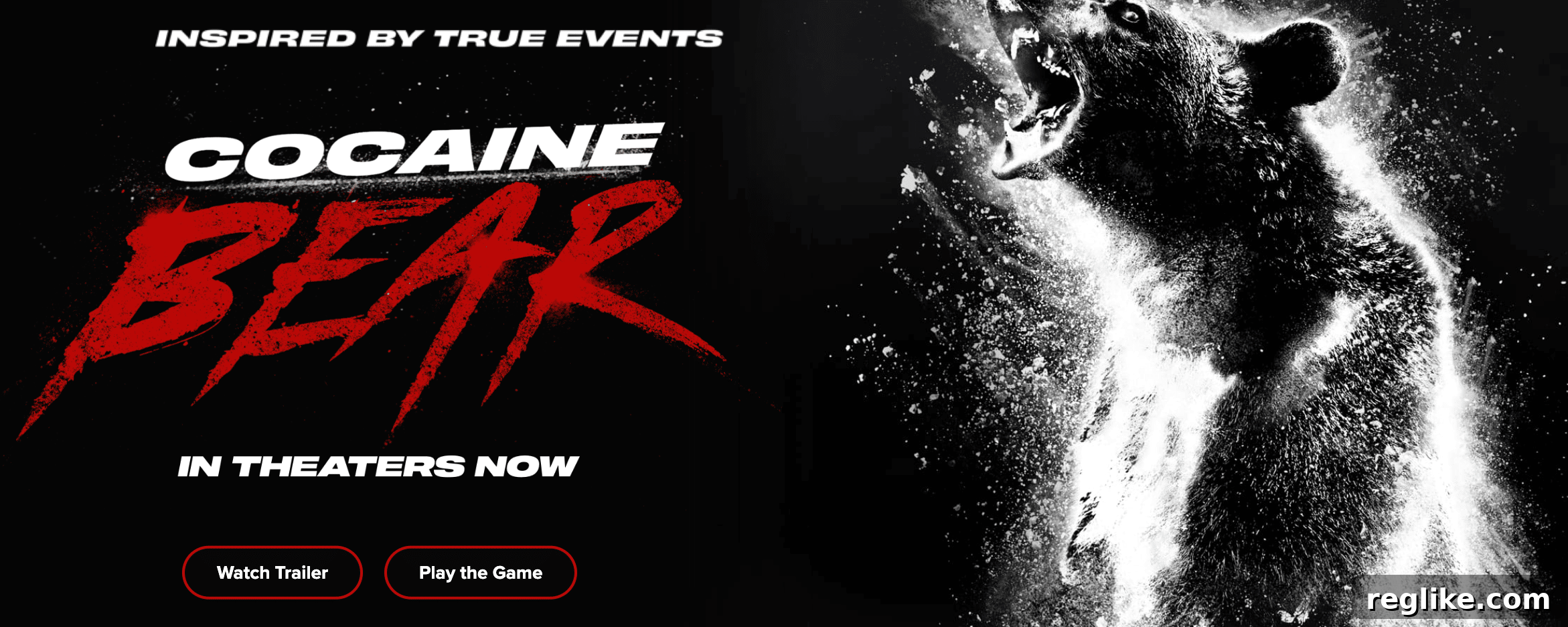
Cocaine Bear’s Cybersquatting Claim Denied: A Domain Name Dispute
The infamous Cocaine Bear, now a household name thanks to a recent movie sensation, recently attempted to acquire the domain name CocaineBear.com. However, a UDRP (Uniform Domain Name Dispute Resolution Policy) panelist has ruled against the bear’s claim, stating that the complainant failed to demonstrate sufficient grounds for a cybersquatting accusation. This decision highlights the complexities involved in intellectual property rights and domain name ownership in the digital age, particularly when dealing with names tied to real-life events and subsequent commercial exploitation.
The legal battle began last month when a cybersquatting claim was filed against the owner of CocaineBear.com. The timing coincided with the soaring popularity of the “Cocaine Bear” movie, which has thrust the story of the unfortunate bear into the limelight once more. While the movie is a fictionalized account of a real event, the name “Cocaine Bear” has become intrinsically linked to the historical incident.
The complainant in this case was Kentucky for Kentucky LLC, an organization that possesses the actual taxidermied remains of the Cocaine Bear. This organization also has a licensing agreement with Universal Studios, the distributor of the “Cocaine Bear” movie, granting them the rights to use the name and likeness of the Cocaine Bear for commercial purposes related to the film.
The domain name CocaineBear.com was registered in May 2022 by a company located in Singapore. Although this registration occurred after the movie was officially announced, it’s important to note that the domain had been previously registered by someone else before expiring. This detail becomes relevant when considering the intent of the current domain owner and whether their actions constitute cybersquatting.
The National Arbitration Forum panelist, responsible for adjudicating the dispute, ultimately ruled that Kentucky for Kentucky’s intellectual property rights surrounding the name “Cocaine Bear” were established too late. While the organization has been actively promoting the Cocaine Bear for several years, their registered intellectual property is more recent. Furthermore, they were unable to sufficiently convince the panelist that they possessed pre-existing common law rights to the name that would supersede the domain registration.
Panelist Alan L. Limbury, in his written decision, stated: “The name ‘cocaine bear’ is a well-known reference to a bear which died from an overdose of cocaine in 1985. The cocainebear.com domain name was registered on May 28, 2022, some three months before Complainant’s mark was registered with the USPTO and some weeks after Complainant claims first use of the mark. However, there is no evidence of the extent of any such use by Complainant from which it may be concluded that Respondent, in Singapore, was aware of Complainant’s mark when registering the domain name.”
Limbury further elaborated on his reasoning, noting that the term “Cocaine Bear” comprises ordinary descriptive words. He argued that there was no compelling evidence to suggest that the mark was so distinct or well-known that the domain registrant could not have conceived of a plausible good faith use for the domain name. This is a crucial element in determining whether a domain was registered with the intent to profit unfairly from the trademark of another party.
The UDRP process is designed to resolve disputes involving allegations of cybersquatting, where a domain name is registered with the bad faith intent to profit from the goodwill of a trademark belonging to someone else. To succeed in a UDRP claim, the trademark owner must generally prove three elements:
- That the domain name is identical or confusingly similar to a trademark or service mark in which the complainant has rights.
- That the respondent (the domain name registrant) has no rights or legitimate interests in respect of the domain name.
- That the domain name has been registered and is being used in bad faith.
In this particular case, the panelist appears to have found that Kentucky for Kentucky failed to adequately demonstrate the third element: bad faith. The timing of the domain registration relative to the complainant’s trademark registration, along with the generic and descriptive nature of the term “Cocaine Bear,” likely contributed to this determination.
This case serves as a reminder of the importance of securing intellectual property rights early on, particularly when dealing with names that have the potential to become commercially valuable. It also highlights the challenges involved in proving cybersquatting, especially when the domain name in question incorporates generic or descriptive terms.
The Cocaine Bear story is a unique and bizarre one, and its recent resurgence in popularity through the movie has created a complex web of legal and ethical considerations. While Kentucky for Kentucky may be disappointed with the outcome of this domain name dispute, the movie’s success has undoubtedly increased the visibility of their organization and the Cocaine Bear itself.
The story of the Cocaine Bear, a black bear that ingested a significant amount of cocaine in 1985 after a drug smuggler’s plane crashed in Georgia, has captured the public imagination for decades. The bear’s body was eventually found, surrounded by empty packages of cocaine. The bizarre incident has been the subject of numerous news reports, documentaries, and now, a major motion picture.
The movie “Cocaine Bear” takes significant creative liberties with the true story, presenting a fictionalized account of the bear going on a rampage after consuming the drugs. While the real bear died shortly after ingesting the cocaine, the movie portrays a much more dramatic and violent scenario. Despite the fictionalized elements, the movie has resonated with audiences, perhaps due to the inherent absurdity and dark humor of the underlying story.
The legal battle over the CocaineBear.com domain name underscores the increasing importance of domain names as valuable assets in the digital age. A domain name can be a crucial component of a brand’s online presence, and a memorable or relevant domain can significantly contribute to its success. As such, disputes over domain names are becoming increasingly common, requiring careful consideration of intellectual property law and the principles of fair use.
In conclusion, the UDRP panel’s decision against Kentucky for Kentucky in the CocaineBear.com domain name dispute highlights the complexities of cybersquatting claims and the importance of establishing strong intellectual property rights. While the Cocaine Bear’s story continues to captivate the public, this legal battle serves as a reminder of the real-world implications of online branding and domain name ownership.
This case also brings up interesting questions about the balance between historical events, commercial exploitation, and intellectual property rights. Can a historical event, even a bizarre one, be subject to trademark protection? And to what extent can individuals or organizations profit from events that occurred in the past? These are complex legal and ethical questions that are likely to continue to be debated as the digital landscape evolves.
The future of the CocaineBear.com domain name remains uncertain. The current owner may choose to continue operating the website, potentially using it for purposes unrelated to the movie or the Kentucky for Kentucky organization. Alternatively, they may be willing to negotiate a sale of the domain name to Kentucky for Kentucky or Universal Studios. Regardless of the outcome, the Cocaine Bear story is sure to continue to fascinate and entertain audiences for years to come.