
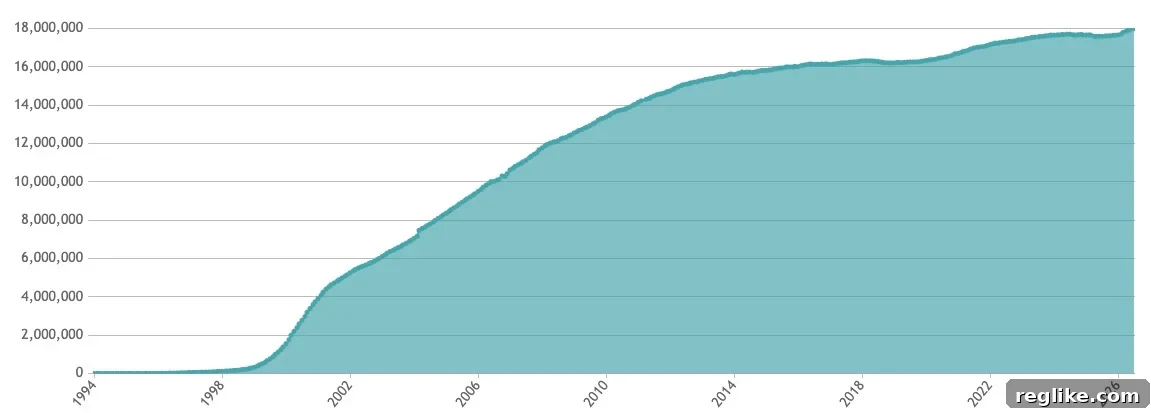
Milestone comes five years after hitting the 17 million mark.
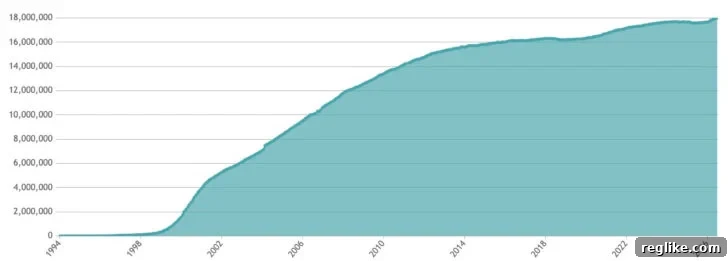
.de Domain Registry Surpasses 18 Million Names
DENIC, the registry responsible for Germany’s country-code top-level domain, has announced that the .de namespace now exceeds 18 million registered domains. This milestone underscores the long-term resilience and local preference for .de within Germany and reflects a mature, stable market that has evolved significantly since the domain’s inception.
The rapid expansion that characterized the early years of domain registration has moderated in recent decades. After steep growth in the 1990s and early 2000s, registrations settled into a steadier pattern. The registry reached 15 million domains under management in April 2012, and it passed the 17 million mark five years ago. There have even been short stretches where the total dipped month to month, which is not uncommon for established top-level domains as businesses close, rebrand, or consolidate their online presence.
Local Preference and Brand Recognition
Despite a leveling in growth, the .de extension remains exceptionally popular among German internet users. A survey conducted in December 2025 found strong unaided awareness for the .de domain: 79% of respondents in Germany recognized .de without prompts, compared with 67% for .com and 17% for .net. When presented with the hypothetical choice of a free domain, 72% of people surveyed indicated they would choose a .de address. These figures illustrate a clear national affinity for a domestic namespace that signals local relevance and trust to consumers and businesses alike.
Historical Context and Development
The .de domain was added to the IANA database in 1986. In its earliest days, administration was handled from the United States under the coordination efforts of Jon Postel, who helped organize the initial allocations of country-code top-level domains. In 1988, administrative responsibility moved to the University of Dortmund in Germany, where the foundation for a nationally operated namespace was established. At that time, there were only six registered .de domains—a modest beginning compared with today’s millions.
By 1996, registrations had grown to around 50,000. Recognizing the need for a robust, scalable management structure, a group of 37 internet service providers came together to form DENIC as a cooperative. That organizational shift marked a turning point, creating a professional, member-driven registry focused on stability, technical excellence, and serving the needs of German internet stakeholders.
What the Future May Hold
The .de domain’s steady presence in the German internet landscape points to continued relevance for local businesses, organizations, and individuals seeking a clear national identity online. While global domains like .com remain important, country-code domains often retain advantages for local search relevance, consumer trust, and regulatory alignment.
DENIC’s operational model as a cooperative and the long history of oversight and development have contributed to a robust technical infrastructure and governance framework. These attributes help explain why .de remains one of the most recognized and widely used country-code top-level domains in Europe.
Reaching more than 18 million registrations is both a milestone and a reminder of the domain’s enduring role. For registrants and internet professionals, the .de namespace continues to represent a valuable asset for connecting with German audiences and maintaining a credible online presence within the country.