
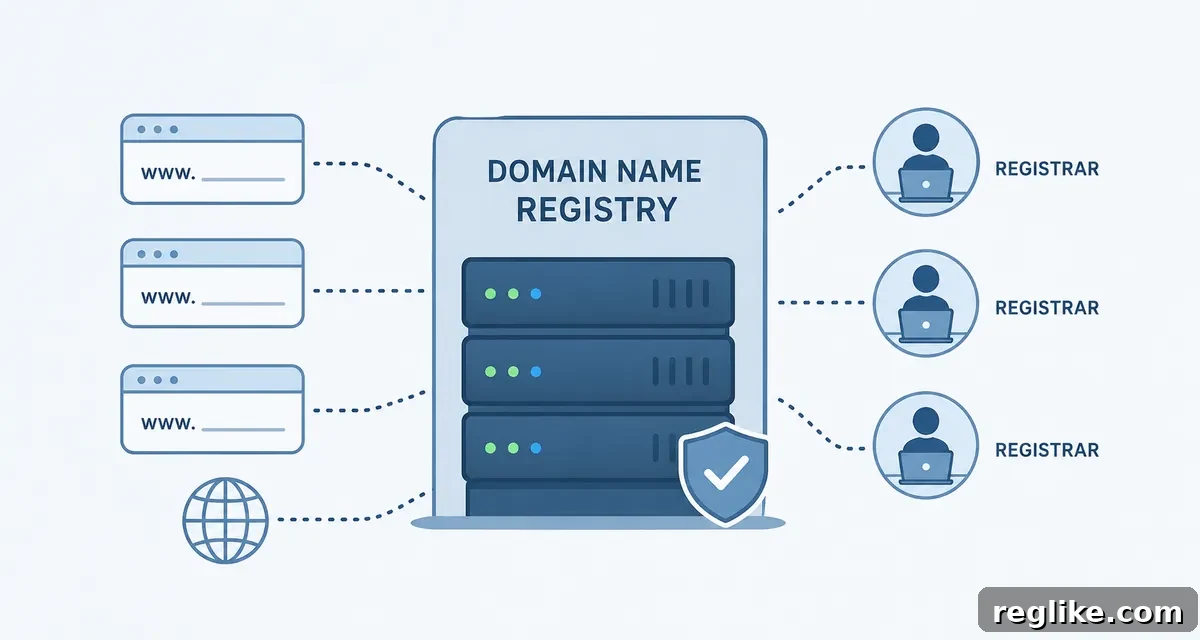
Companies have about a month left to apply to provide backend registry services for new top level domains.
Applications for new top level domains (gTLDs) are due on August 12. That same deadline applies to organizations that wish to be pre-certified as Registration Service Providers (RSPs), according to ICANN’s recent announcement.
Registration Service Providers act as the technical backend for a top level domain registry. They operate the critical infrastructure that makes a TLD resolvable on the internet, handle domain provisioning and management, and ensure DNS and WHOIS functionality meet operational and security requirements. For this application round, ICANN is using a pre-certification approach for RSPs: instead of requiring each TLD applicant to provide extensive technical detail about their backend services, applicants may indicate they will use an ICANN-approved RSP.
This pre-certification streamlines the TLD application process for organizations that prefer to outsource registry operations. Applicants can focus on policy, business and community aspects of their proposals while relying on an approved provider for the technical and operational responsibilities of running a registry.
There are two broad models for RSPs in this round. Some certified RSPs provide services exclusively to their own registries and do not accept third-party customers. A notable example is Google, which is certified as an RSP but limits its backend services to domains it operates itself. Other certified RSPs offer multi-tenant registry platforms designed to serve external applicants that do not wish to build and operate their own backend systems.
ICANN opened multiple application windows for RSP certification to give providers additional opportunities to apply. The first RSP application window closed in May 2025. Providers who missed that initial deadline—or organizations that decided to pursue certification after seeing market demand—have this current window as their last chance to be listed as pre-approved RSPs for the ongoing TLD application round.
Some prominent infrastructure providers were not included in the initial list of pre-certified RSPs. For example, Verisign did not appear among the first certified providers. On an investor call earlier this year, Verisign indicated it might complete the RSP certification process later, which would allow it to serve as a backend provider if it chooses to apply for or acquire a new TLD. Having certification in place can be useful both for entities that plan to operate their own TLDs and for companies considering future acquisitions or partnerships.
Being an approved RSP does not obligate a provider to offer services to third parties, nor does it guarantee that an RSP will be selected by any particular applicant. Instead, the certification confirms that the provider meets ICANN’s technical and operational criteria, simplifying the documentation burden for TLD applicants who choose to rely on them. For applicants, selecting an approved RSP can reduce review complexity and help demonstrate readiness to operate a stable, secure registry.
Beyond operational convenience, pre-certification has implications for competition and market dynamics. Multi-tenant RSPs can lower the barrier to entry for organizations seeking to run a TLD by removing the need to build specialized infrastructure. At the same time, vertical integration—where a registry owner also runs its own RSP—remains a viable model for companies that prefer complete control over their registry operations.
Prospective TLD applicants should evaluate the available RSP options carefully before filing their applications. Key considerations include technical capabilities, security practices, scalability, customer support, and contractual terms. Equally important is understanding whether an RSP will provide services exclusively to its parent organization or will accept external registry customers.
ICANN maintains a publicly available list of currently approved RSPs for this application round. Applicants planning to submit a new gTLD application by the August 12 deadline should confirm RSP availability and certification status as part of their preparation, and ensure all required documentation is in order before filing.