
Spaceship’s founder called out a fake sales post on X this week.
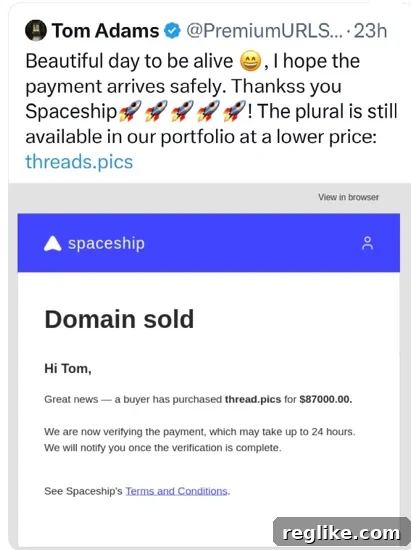
Earlier this week, a user on X posted about a purportedly large domain sale on the marketplace Spaceship. The post claimed that “Tom Adams” had sold thread .pics for $87,000 and included what appeared to be a sales confirmation email as proof.
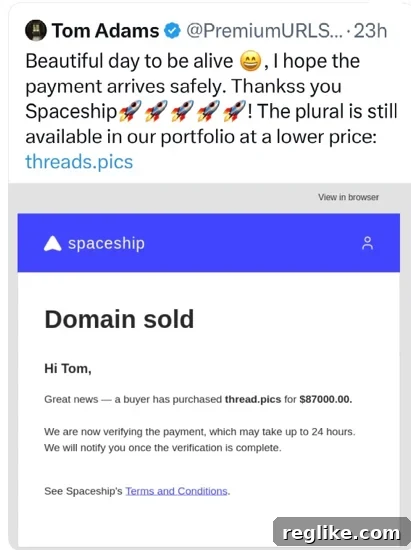
That eye-catching figure drew plenty of attention, but the sale was not genuine. Richard Kirkendall, the founder of Spaceship, publicly commented on the post to clarify that there was no such transaction recorded on the platform. Shortly after that clarification, the X account that shared the claim was deleted.
This incident highlights a growing problem: fabricated sales notices can be easy to create and spread, especially when anyone can post screenshots or generated emails online. Sophisticated tools make it simple to manufacture convincing-looking documents, which in turn can mislead readers who take such posts at face value.
There are a few likely motives behind these kinds of fake announcements. In this case, the account that promoted the claim also pushed another, similar domain as still available—threads .pics—suggesting an attempt to drive interest in that plural form. More broadly, false sales posts can be used to artificially boost demand for certain top-level domains or to attract attention to a specific seller, registry, or marketplace.
It’s unfortunate because many people use platforms like X to share genuine domain sales and market activity, and those real posts provide useful visibility into what’s actually moving. The problem is that a handful of fabricated claims can erode trust and make it harder to separate legitimate market signals from manufactured hype.
To protect yourself and assess claims more reliably, consider the following steps when you see dramatic sale announcements online:
– Verify the source: Check the account history and engagement. Established sellers, brokers, or well-known observers typically have a track record of posting verifiable sales or industry commentary. New accounts with little history deserve extra skepticism.
– Cross-check the marketplace: If a sale is claimed to have happened on a specific platform, look for a record on that platform or an official confirmation. Many marketplaces list completed sales or provide transaction IDs that can be traced.
– Examine the evidence critically: Screenshots of emails or receipts can be edited. Look for inconsistencies in formatting, dates, sender addresses, or other details that don’t match the usual style of the purported sender.
– Ask for supporting documentation: Where appropriate, request additional proof such as transfer records, escrow confirmation, or a reputable third-party invoice. Sellers seeking legitimate credibility are often willing to provide verifiable documentation.
– Watch for patterns: Repeatedly promoted listings, urgent calls to buy, or unusual pricing disparities compared with similar names can be signs of manipulation. If several high-value claims appear suddenly and only from accounts promoting a related name, approach with caution.
For marketplaces and community members, improving verification practices and encouraging transparent reporting can reduce the impact of false claims. Platforms can help by making sale histories more visible, supporting verified accounts for frequent sellers, and providing straightforward ways for users to report suspicious posts.
For individuals participating in domain trading or following market activity, the best defense is a healthy dose of skepticism combined with careful verification. Take high-value claims seriously, but confirm them through reliable channels before accepting them as fact or acting on them.
Ultimately, while social platforms remain a valuable place to learn about trends and real sales, they are also channels where misinformation can spread quickly. Being vigilant about sources and evidence helps preserve the usefulness of these spaces and protects buyers and sellers from being misled.