
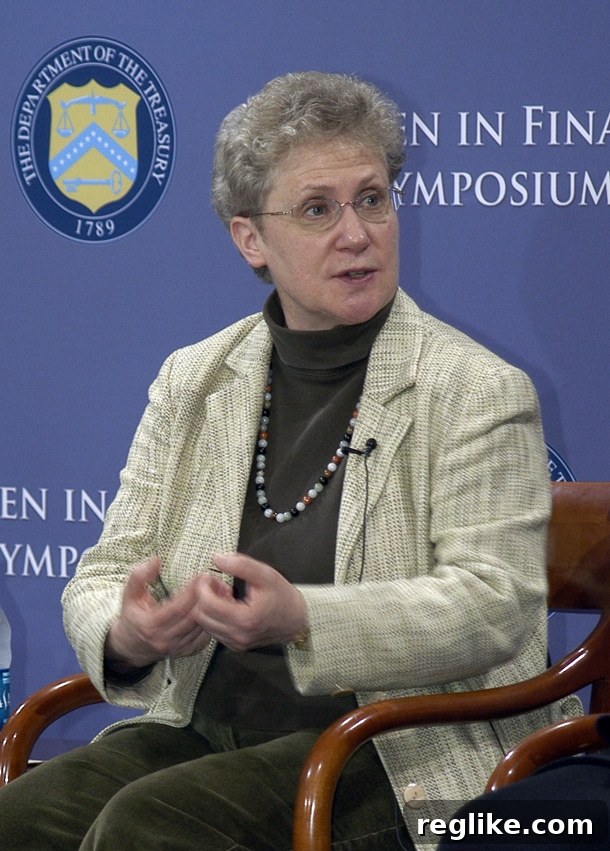
Navigating the Digital Identity Labyrinth: Abby Joseph Cohen’s UDRP Battle and the Nuance of Common Law Trademarks

In an era where personal branding and digital identity are paramount, the protection of one’s name and reputation online has become a critical endeavor. For public figures, the challenge is even greater, as their widespread recognition can make them targets for online impersonation and misuse. Such was the recent predicament faced by Abby Joseph Cohen, a distinguished economist and former Goldman Sachs partner, who found herself entangled in a Uniform Domain Name Dispute Resolution Policy (UDRP) case that illuminated the complexities of establishing common law trademark rights. The outcome of her dispute, which saw her claim for common law trademark rights rejected in one instance, serves as a significant reminder of the meticulous evidence required to safeguard personal brands in the digital realm.
The Impersonation: A Deceptive Digital Facade
The core of the dispute revolved around the deceptive registration and use of the domain name “AbbyJosephCohenAdvisory[.]com.” On March 3, an unknown individual or entity registered this domain, subsequently launching a website that brazenly purported to offer financial advisory services under Cohen’s esteemed name. The site presented itself as a legitimate venture associated with the Columbia Business School professor and former Chief U.S. Investment Strategist at Goldman Sachs. This act of online impersonation not only posed a direct threat to Cohen’s professional reputation but also carried the potential to mislead the public, leveraging her credibility for illicit or unauthorized activities. The creation of such a website, designed to trade on the goodwill and recognition of a prominent individual, clearly fell under the umbrella of cybersquatting – the abusive registration of domain names in bad faith.
Alarmed by this blatant misrepresentation, Cohen, a figure whose career has been marked by integrity and expertise in the financial sector, promptly initiated a cybersquatting claim under the UDRP. This policy provides a streamlined and cost-effective mechanism for trademark owners to reclaim domain names that have been registered and used in bad faith. While the registrant’s intent to impersonate Cohen seemed overtly clear, the UDRP process demands that complainants meticulously satisfy three core elements to succeed: demonstrate that the domain name is identical or confusingly similar to a trademark in which they have rights, prove that the registrant has no legitimate interest in the domain name, and show that the domain name was registered and is being used in bad faith.
Understanding the UDRP Framework: A Gateway to Digital Justice
The Uniform Domain Name Dispute Resolution Policy (UDRP) is a crucial framework established by the Internet Corporation for Assigned Names and Numbers (ICANN) to combat abusive domain name registrations. It offers an administrative alternative to traditional litigation, providing a more efficient means for resolving disputes concerning domain names that infringe upon trademark rights. To prevail in a UDRP complaint, the complainant must demonstrate, on a balance of probabilities, three fundamental criteria:
- The domain name is identical or confusingly similar to a trademark or service mark in which the complainant has rights.
- The registrant has no rights or legitimate interests in respect of the domain name.
- The domain name has been registered and is being used in bad faith.
In Cohen’s case, the “identical or confusingly similar” criterion was likely straightforward given the direct incorporation of her name. The “no legitimate interest” and “bad faith” elements also seemed evident due to the impersonation and deceptive nature of the website. However, the pivotal challenge, and where the recent dispute took an unexpected turn, lay in proving the first element: that Cohen possessed demonstrable trademark rights in her name, specifically common law rights.
The Heart of the Matter: Proving Common Law Trademark Rights
Trademark rights are generally categorized into two main types: registered trademarks and common law trademarks. Registered trademarks are those formally recognized by a government agency, such as the U.S. Patent and Trademark Office (USPTO), offering clear and nationwide protection. Common law trademarks, conversely, are established through the consistent use of a name, logo, or phrase in commerce to identify goods or services, leading to public recognition and an association with the source of those goods or services. While equally valid, common law rights are notoriously more challenging to prove, especially in a UDRP context where formal documentation is often preferred.
In the specific UDRP case at hand, UDRP panelist David Sorkin meticulously examined the evidence presented by Cohen. His ruling highlighted a critical deficiency in the complainant’s submission:
[Cohen] here has offered no evidence to support the claim of common law rights apart from a bare assertion that she is “a prominent figure in the finance industry.” Such a conclusory allegation is insufficient to demonstrate rights in a mark.
Sorkin’s decision underscored that merely stating one’s prominence, no matter how true, is not enough to establish common law trademark rights within the strict evidentiary requirements of a UDRP proceeding. To successfully assert common law rights, a complainant must typically provide substantial evidence demonstrating that their name has acquired “secondary meaning” in connection with specific goods or services. This means the public has come to associate the name not just with the individual, but also with the source of particular services – in this instance, financial advisory services.
What kind of evidence would be deemed sufficient? Panelists typically look for a range of factors, including the duration and exclusivity of use of the mark, the nature and extent of advertising and promotion of the mark, the amount of money spent on advertising, the volume of sales or services under the mark, the geographic extent of market penetration, and evidence of actual public recognition and association of the mark with the complainant’s goods or services. This could involve extensive media coverage specifically linking Cohen’s name to financial services, records of her professional activities and public appearances, publications, testimonials, or any other tangible proof that her name functions as a source identifier in the market.
Conflicting Outcomes: The Nuance of UDRP Decisions
Adding another layer of intrigue to this case is the fact that Cohen had recently won a strikingly similar UDRP dispute just a month prior. In that earlier case, panelist Richard Hill found that she did possess common law trademark rights in her name, leading to the transfer of the infringing domain. This stark contrast between two decisions involving the same complainant and ostensibly similar circumstances highlights a significant aspect of the UDRP process: while past decisions can be persuasive, UDRP panels are not strictly bound by precedent in the same way traditional courts are.
Panelist Sorkin directly addressed this previous ruling in his decision regarding AbbyJosephCohenAdvisory[.]com:
It is unclear what evidence supporting the claim of common law rights was presented to the panel in Abby Joseph Cohen v. Adorno Garcia, supra (referring without elaboration to “evidence that [Complainant’s] name has achieved widespread recognition in connection with financial services”), but in any case this Panel is not bound by that decision.
Sorkin’s statement illuminates several key points. Firstly, it suggests that the evidence presented in the prior successful case might not have been fully detailed in the written decision, making it difficult for subsequent panels to assess its sufficiency or applicability. Secondly, and more importantly, it reiterates the principle that each UDRP case is decided on its own merits, based on the specific evidence presented in that particular proceeding. The burden of proof rests squarely on the complainant in each individual case, irrespective of past victories. This means that even if Cohen’s lawyer, Stephen J. Elliott of Sullivan & Cromwell LLP, submitted largely similar arguments, the precise details and strength of the accompanying evidence could have varied, or simply been interpreted differently by another panelist with a unique perspective.
The situation perfectly illustrates the “nuance in UDRP disputes” that Elliott himself discovered after filing cases to recover domains that might have been registered to impersonate Sullivan & Cromwell. Even seasoned legal professionals must navigate the subjective interpretations and varying evidentiary thresholds that can exist between different UDRP panelists, underscoring the critical importance of a comprehensive and irrefutable presentation of facts.
Lessons for Brand Owners and Public Figures in the Digital Age
The outcome of Abby Joseph Cohen’s UDRP dispute, particularly the rejection of her common law trademark claim, offers invaluable lessons for individuals and organizations alike striving to protect their digital identities and intellectual property. For prominent figures like Cohen, whose personal brand is inextricably linked to their professional endeavors, this case highlights that even widespread fame does not automatically translate into legally defensible common law trademark rights in a UDRP context. There must be a clear, demonstrable link between the name and specific commercial services, backed by robust evidentiary support.
This saga underscores several critical takeaways:
- The Imperative of Evidence: Assertions of prominence, however truthful, are insufficient. Detailed, concrete evidence of how a name functions as a source identifier for particular goods or services in commerce is paramount for establishing common law trademark rights. This includes marketing efforts, public recognition surveys, media mentions specifically linking the name to commercial activities, and duration of use.
- Consider Formal Trademark Registration: While common law rights are valid, the UDRP process often favors registered trademarks due to the clarity and legal presumption of ownership they provide. For individuals whose names are central to their professional brand or business, considering formal trademark registration for their name in connection with their services (e.g., “Abby Joseph Cohen” for “financial advisory services”) can significantly streamline and strengthen future UDRP claims.
- Proactive Brand Protection: Vigilance is key. Regularly monitoring domain registrations that incorporate one’s name or brand is an essential proactive measure. Tools and services exist that can alert individuals to new domain registrations that are identical or similar to their names, enabling swift action against potential cybersquatting.
- UDRP is Case-Specific: The fact that two different panelists reached different conclusions in similar cases emphasizes that UDRP outcomes are highly dependent on the specific arguments and evidence presented in each individual proceeding, as well as the panelist’s interpretation. Legal counsel must therefore prepare each case meticulously, anticipating potential scrutinies.
- The Enduring Threat of Cybersquatting: This incident serves as a stark reminder that cybersquatting remains a persistent threat, targeting individuals and brands across all sectors. As digital identities become increasingly valuable, the strategies to protect them must evolve and strengthen.
In conclusion, Abby Joseph Cohen’s experience, while a setback in this particular instance, provides a profound educational moment for anyone navigating the complexities of brand protection in the internet age. It powerfully illustrates that even for the most recognized public figures, the journey to secure one’s digital identity against impersonation and misuse demands more than just fame; it requires strategic foresight, meticulous documentation, and a thorough understanding of intellectual property law. The battle against online deception is ongoing, and strong, clear evidence remains the most potent weapon in the arsenal of brand owners.