
The Shrewd Strategy Behind Verisign’s .com Promotion on Google
In the vast and ever-evolving digital landscape, a domain name serves as the cornerstone of any online presence. For businesses, individuals, and organizations alike, selecting the right domain is paramount to establishing credibility, brand recognition, and a memorable online identity. Given this critical importance, the strategies employed by domain registries and registrars to capture user attention and guide their choices are fascinating to observe. Recently, an interesting promotional tactic from Verisign, the registry operator for the prestigious .com domain, caught my attention, underscoring a sophisticated approach to brand awareness that extends beyond typical direct sales.
When most users turn to Google and search for generic terms like “domain names,” their expectation is typically to encounter advertisements from domain name registrars such as GoDaddy, Namecheap, or Google Domains. These ads usually focus on enticing offers, competitive pricing, or the ease of registration. However, a particular ad from Verisign stood out, diverging significantly from this conventional pattern.
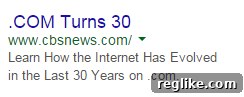
Instead of directly prompting users to register a .com domain, this advertisement led to a CBSNews.com article commemorating the 30-year anniversary of the .com domain. This indirect, content-driven approach, clearly sponsored by Verisign, serves a powerful purpose: to keep the .com domain prominently “top of mind” for potential registrants, reinforcing its legacy, reliability, and enduring relevance in an increasingly crowded domain name market.
Understanding Verisign’s Clever Awareness Strategy
Verisign’s decision to promote an evergreen news article about .com’s anniversary rather than a direct sales pitch is a masterclass in brand awareness and long-term market positioning. This strategy is particularly effective for several reasons:
- Building Trust and Authority: By linking to a reputable news source like CBSNews, Verisign leverages third-party validation. The article isn’t a sales brochure; it’s a historical piece that subtly underscores .com’s foundational role in the internet’s development, its unparalleled track record, and its widespread adoption by businesses worldwide. This fosters a deeper sense of trust and authority around the .com brand.
- Reinforcing Legacy and Reliability: The 30-year anniversary highlights .com’s enduring presence and stability. In a digital world often characterized by rapid changes and fleeting trends, emphasizing decades of consistent operation speaks volumes about reliability and future-proofing. For businesses looking for a long-term online home, this message resonates strongly.
- Subtle Persuasion: Rather than overtly selling, the ad gently reminds users of .com’s ubiquitous nature and its status as the default choice for most credible online ventures. It taps into the psychological comfort of familiarity and the “safe bet” mentality that often drives significant purchasing decisions, including domain name selection.
- Reaching a Broader Audience: Direct sales ads primarily target users who are already in the “purchase” phase of their journey. An awareness ad, however, reaches a wider audience – those who might be exploring ideas, conducting preliminary research, or simply curious about domain names in general. By educating them on .com’s significance, Verisign ensures that when they eventually reach the decision-making stage, .com is already perceived as the authoritative standard.
- Differentiating from Competitors: In a market flooded with new generic Top-Level Domains (gTLDs), .com stands out by not needing to explain its value proposition or unique features. Its value is inherent in its history and adoption. This strategy allows Verisign to reinforce this inherent value rather than engaging in feature-by-feature comparisons.
This approach highlights a crucial aspect of marketing in the domain industry: it’s not always about the lowest price or the newest extension. Sometimes, it’s about nurturing the perception of value, trust, and established authority.
The Unrivaled Power and Credibility of .com Domains
The continued dominance of .com is not accidental; it is built on a foundation of inherent advantages that Verisign’s marketing intelligently reinforces. For countless businesses and individuals, a .com domain is synonymous with legitimacy and professionalism. This perception stems from several key factors:
- Universal Recognition: .com is the most widely recognized and remembered domain extension globally. Its ubiquity makes it the intuitive first choice for users typing a website address directly into their browser.
- Enhanced Credibility: Businesses operating on a .com domain often project a stronger sense of establishment and trust compared to lesser-known extensions. For many, a .com domain signals a serious, long-term commitment to their online presence.
- Market Value: Premium .com domains frequently command higher resale values in the aftermarket, reflecting their intrinsic worth and desirability. This makes them not just an online address, but also a valuable digital asset.
- Search Engine Optimization (SEO) Benefits: While Google has stated that TLDs do not directly influence search rankings, the indirect benefits of a .com can be significant. Users are more likely to remember, trust, and link to a .com domain, leading to better brand recall, higher direct traffic, and potentially more natural backlinks – all factors that positively impact SEO.
- Ease of Communication: When sharing a website address verbally, in print, or through social media, a .com domain is simple, unambiguous, and universally understood, minimizing potential confusion.
Verisign’s ad capitalizes on these deeply ingrained perceptions, ensuring that even as new options emerge, the core advantages of .com remain undisputed in the minds of the internet-savvy public.
Navigating the New TLD Landscape: Marketing Challenges and Opportunities
Verisign’s strategy prompts a wider reflection on how different Top-Level Domains (TLDs) are marketed. The introduction of hundreds of new gTLDs – such as .app, .tech, .store, .online, .blog, and many more – was intended to diversify the internet’s naming options, offer greater availability, and allow for more specific branding. However, marketing these newer extensions presents unique challenges compared to the established behemoth that is .com.
To gauge the prevailing marketing efforts for these newer options, I conducted further Google searches:
- When searching for “new TLDs,” a term predominantly used by professionals within the domain name industry, surprisingly, only one advertisement appeared. This suggests that registries or major registrars might not be heavily investing in ads targeting this specific, niche audience, perhaps assuming they are already well-informed.
- However, when I searched for “new domain names” and “new web addresses” – phrases more likely to be used by the general public or non-domain professionals who are simply looking for an available, modern address – a different picture emerged. An advertisement for the .co domain appeared prominently:
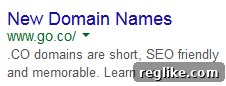
While some domain registrars also displayed ad text related to new TLDs for these broader searches, .com (via Verisign) and .co were the only two domains directly promoted by their respective registries. This observation is telling. It highlights a potential gap in the market for new TLD registries to directly engage with and educate the broader public about the value and relevance of their extensions.
The .co Domain: A Case Study in Niche Marketing
The presence of a registry-promoted ad for .co for general searches like “new domain names” is noteworthy. .co has successfully positioned itself as a modern, concise, and often more available alternative to .com, particularly appealing to startups, tech companies, and creative ventures. Its marketing often emphasizes its “company” or “corporation” connotation, making it feel professional yet fresh. The fact that its registry is actively promoting it to a general audience suggests a direct effort to build brand awareness and establish its credibility as a viable choice beyond the overwhelming shadow of .com.
Effective Marketing Strategies for New TLDs: Lessons from Verisign and .co
The Verisign strategy, with its focus on general awareness and positive brand reinforcement, offers valuable insights for new TLD companies. Instead of relying solely on registrars to push their extensions through direct sales, new gTLD registries should consider implementing similar, broader-reaching marketing initiatives:
- Content-Driven Awareness Campaigns: Similar to Verisign’s approach, new TLD registries could sponsor and promote positive news articles, case studies, or success stories highlighting businesses thriving with their specific extensions. For example, a registry for .tech could promote articles about innovative tech startups using their domain, showcasing real-world applications and benefits.
- Educational Initiatives: Many potential registrants are simply unaware of the benefits or specific use cases for new TLDs. Marketing efforts should focus on educating the public about the unique identity and branding opportunities that extensions like .store, .blog, or .art can provide. This could involve sponsored content, informative blog posts, or even simple explainer videos.
- Highlighting Niche Relevance: Each new TLD often caters to a specific industry or interest. Marketing should emphasize this niche relevance. A .cafe domain registry could target coffee shop owners, while a .photography registry could reach out to professional photographers, demonstrating how the TLD directly enhances their brand.
- Partnerships and Influencer Marketing: Collaborating with industry influencers, web developers, marketing agencies, or established businesses that successfully use a new TLD can amplify reach and build credibility. Testimonials and endorsements can be powerful tools for adoption.
- Addressing Perceptions of Trust: Some users might be hesitant to adopt newer TLDs due to unfamiliarity or perceived lack of trustworthiness compared to .com. Marketing campaigns need to proactively address these concerns by showcasing security measures, widespread adoption statistics, and positive user experiences.
- Showcasing Availability and Creativity: A major advantage of new TLDs is the greater availability of desirable, short, and memorable domain names that are often taken in .com. Marketing should highlight this opportunity for creative branding and securing a perfect match for one’s online identity.
Choosing the Right Domain Name: A Holistic Approach
The marketing dynamics observed – Verisign emphasizing legacy and trust, and .co promoting a modern alternative – underscore the multifaceted considerations involved in domain name selection. For any individual or business, the choice of a domain name and its TLD is a strategic decision that impacts brand identity, marketing efforts, and ultimately, online success.
Factors to consider include:
- Brand Alignment: Does the TLD reinforce or detract from your brand message? A .design TLD for a design agency makes perfect sense, while a .org for a commercial enterprise might be confusing.
- Target Audience: Who are you trying to reach? A global audience might benefit more from the universal recognition of .com, while a niche community might appreciate the specificity of a new TLD.
- Memorability: Is the domain easy to remember, spell, and communicate?
- Availability: Is your preferred name available in the TLDs that align with your brand and budget?
- Future Growth: Will the chosen TLD accommodate your business’s future expansion or new service offerings?
Conclusion
Verisign’s clever advertising strategy for .com, focusing on historical significance and brand awareness rather than direct sales, serves as a powerful reminder of the importance of holistic marketing in the domain name industry. It demonstrates that sometimes, the most effective way to sell is not to sell at all, but to educate, inform, and reinforce positive brand perceptions.
For the multitude of new TLDs now vying for attention, there is a clear opportunity to learn from this approach. By moving beyond purely transactional marketing and investing in content-driven campaigns that highlight their unique value propositions, foster trust, and educate the broader public, new TLD registries can carve out their own significant space in the digital landscape. As the internet continues to evolve, so too must the strategies for connecting users with the perfect online address, ensuring that the domain name market remains vibrant, diverse, and accessible for all.