
Rethinking Mobile Strategy: Why a Luxury Automaker Overlooks Its .mobi Domain
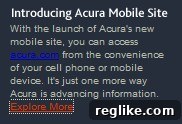
In today’s hyper-connected world, a brand’s digital presence is paramount, and its mobile strategy often dictates user engagement. For luxury car manufacturer Acura, their approach to mobile web access presents an intriguing case study. Despite owning Acura.mobi, the company has conspicuously opted against utilizing this dedicated mobile domain for its new mobile website. Instead, recent communications, such as their email newsletters, direct mobile users to the more traditional Acura.com.
This decision, while seemingly minor, sparks a broader discussion about domain strategy, user experience, and the very purpose of mobile-optimized content. It highlights a common dilemma faced by many large organizations in navigating the evolving landscape of digital interaction.
The Curious Case of Acura’s Mobile Domain Choice
The initial user journey immediately reveals a potential friction point. While Acura’s email directs users to Acura.com, simply typing this into a mobile browser, as one might expect for a seamless experience, doesn’t directly land visitors on the mobile-optimized version. Instead, the actual mobile site resides at a sub-directory: acura.com/mobile/. This extra step, however small, can disrupt the user flow and potentially lead to frustration, especially for a brand that prides itself on precision and luxury.
Acura’s decision to bypass its Acura.mobi domain is not an isolated incident. Other major corporations have made similar choices. For example, American Airlines also opted to stick with its .com domain for its mobile site, preferring AA.com over the hypothetical AA.mobi (which, in their specific case, they do not own). This trend raises fundamental questions about the relevance of dedicated mobile domains and the advantages of consolidating digital presence under a primary .com address.
The Decline of .mobi: A Historical Perspective
The `.mobi` top-level domain (TLD) was introduced with much fanfare in 2005, intended to be the definitive identifier for websites optimized specifically for mobile devices. Its creation was a response to the nascent mobile internet era, aiming to provide a clear signal to users and search engines alike that a site was designed for smaller screens and limited bandwidth. Many companies, including Acura, invested in securing their brand’s `.mobi` counterpart, anticipating a future where a distinct mobile presence would be essential.
However, the technological landscape evolved rapidly. The rise of smartphones with more powerful browsers, coupled with the development of responsive web design (RWD) and adaptive design techniques, quickly rendered the `.mobi` domain largely obsolete. Responsive design allows a single website, residing on a primary `.com` domain, to dynamically adjust its layout and content to fit any screen size, from desktop monitors to tablets and smartphones. This approach offered superior search engine optimization (SEO) benefits by consolidating link equity and simplifying content management, making a separate `.mobi` site an unnecessary complexity.
For brands like Acura, holding onto a `.mobi` domain while not actively using it might stem from a variety of reasons. It could be a defensive registration to protect their brand, a remnant of an outdated strategy, or simply an oversight by current web development teams who prioritize the more modern and efficient responsive design methodologies.
Optimizing for Mobile: Beyond the Domain Name
While the choice between `.mobi` and `.com` for mobile is a technical one, the more critical question revolves around the actual utility and user experience a mobile website provides. When considering whether a mobile site will truly be used, it’s essential to evaluate its core functionalities and how well they align with common mobile user behaviors and needs.
What Makes a Mobile Site Indispensable?
Consider the example of American Airlines. Logging onto their mobile website makes immediate and practical sense. Travel plans are dynamic; flights get delayed, gates change, and check-ins need to be managed on the go. A mobile airline site provides instant access to crucial information: flight status updates, mobile boarding passes, rebooking options, and travel alerts. These functionalities are time-sensitive, location-dependent, and directly address pressing needs of a traveler who is typically away from a desktop computer. The value proposition is clear and compelling.
Contrast this with Acura’s mobile website, which, as observed, appears to focus primarily on a dealer locator. Users can navigate to the mobile site, enter their zip code, and then find contact information for a nearby dealer. While useful in specific scenarios, this single function might not be robust enough to drive frequent engagement or justify a user specifically seeking out the mobile site.
Enhancing the Automotive Mobile Experience
To truly resonate with users, an automotive mobile site could offer a much richer and more interactive experience beyond just finding a dealer. Imagine the possibilities:
- Vehicle Configurators: Allowing users to build and customize their desired model with real-time pricing, even if it’s a simplified version for mobile.
- Inventory Search: Browsing current new or used vehicle inventory at local dealerships.
- Service Scheduling: Enabling existing owners to book service appointments directly from their phone.
- Roadside Assistance: Quick access to emergency services or support.
- Virtual Showrooms & AR Features: Offering immersive experiences to explore vehicle features or even place a virtual car in their driveway using augmented reality.
- Electric Vehicle (EV) Charging Station Locators: Increasingly vital for future models.
- Test Drive Booking: Streamlined process to schedule a test drive at a preferred dealership.
- Brochure Downloads & Specifications: Access to detailed information on demand.
Without such compelling features, a mobile car website risks becoming a digital afterthought, accessed only when absolutely necessary rather than as a primary engagement channel. The disparity in utility highlights a crucial point: some functionalities are inherently well-suited for the mobile web due to immediacy, context, or location dependency, while others offer limited value in a mobile-first environment.
SEO Implications and User Expectations in the Mobile-First Era
Google’s shift to mobile-first indexing underscores the critical importance of a robust mobile strategy for SEO. Websites that offer a poor mobile experience risk lower rankings, even if their desktop version is optimized. This makes the choice of domain and the quality of the mobile content even more significant.
For Acura, consolidating its mobile presence under Acura.com through responsive design is generally a sound SEO strategy. It ensures that all link equity and authority are concentrated on a single domain, rather than being split between Acura.com and Acura.mobi. However, the lack of an immediate redirect from Acura.com to Acura.com/mobile/ for mobile users indicates a missed opportunity for a truly seamless experience. Modern best practices often involve automatic detection of mobile devices and a smooth, immediate redirect to the optimized version or, ideally, a single responsive site that adapts without URL changes.
User expectations have also evolved dramatically. People anticipate fast loading times, intuitive navigation, and content tailored to their immediate needs when accessing a website on their phone. Any friction, such as having to manually type an extended URL or search for a specific mobile section, can lead to quick abandonment.
Conclusion: A Call for Strategic Mobile Development
Acura’s decision to own but not actively use its `.mobi` domain, while opting for a sub-directory on its `.com` site for mobile, mirrors a broader industry trend away from dedicated mobile domains. This strategy aligns well with modern SEO practices and the ubiquity of responsive web design. However, the execution, particularly the lack of an automatic and immediate redirect to the mobile-optimized content, introduces unnecessary friction for users.
More importantly, the effectiveness of any mobile site hinges on its ability to provide genuine value to the user. While finding a dealer is a valid mobile function, a luxury automotive brand like Acura has an opportunity to offer a much richer, more engaging, and ultimately more useful mobile experience. By strategically enhancing the mobile site with features that cater to the evolving needs of car buyers and owners, Acura can transform its mobile presence from a mere utility into a powerful tool for brand engagement and customer loyalty.
The lesson here is clear: owning the right domain is only the first step. The true measure of a successful mobile strategy lies in its ability to deliver an intuitive, valuable, and seamless experience that genuinely serves the user, wherever they are.