

Afternic Pricing AI: Smarter Domain Valuation for Sellers
Afternic’s innovative Pricing AI offers invaluable, data-driven insights into comparable listings, past sales, and current market demand, empowering domain sellers with a robust foundation for accurate valuations.

The intricate landscape of domain name investing and selling frequently presents a significant challenge: accurate valuation. Determining the optimal price for a domain is paramount, as it directly impacts liquidity and profitability. Many in the domain community are familiar with GoDaddy’s automated appraisal system, GoValue, which has often been a subject of debate due to its generalized or sometimes inconsistent evaluations.
While GoValue certainly has its utility, particularly when performing high-level scans of extensive domain lists for potential acquisitions, its limitations become more apparent when delving into the nuanced appraisal of individual domains. Such specific valuations require a deeper consideration of unique market factors and historical data that a broad-stroke algorithm might miss.
In response to this industry need, Afternic, a prominent player in the domain aftermarket, recently introduced its groundbreaking Pricing AI tool. This sophisticated system represents a significant evolution, building upon the foundational data from GoValue but enhancing it with a more comprehensive analysis. Pricing AI is specifically designed to provide Afternic sellers with more refined, actionable, and data-backed pricing recommendations. It meticulously evaluates a broad spectrum of data points, including similar active listings, historical sales data, previous offer histories, and other pertinent market indicators, offering sellers a multifaceted view of their domain’s potential market value.
How to Access and Utilize Afternic’s Pricing AI
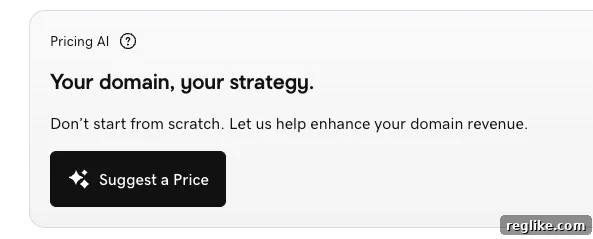
Accessing the Pricing AI tool is a seamless process for any Afternic account holder. To leverage this powerful feature, simply navigate to the specific domain within your Afternic portfolio that you wish to evaluate. Located conveniently at the top of the domain management interface, you will find a distinct “Suggest a Price” button. A single click on this button will prompt the AI to initiate its analysis, subsequently generating tailored pricing insights and recommendations for your selected domain, streamlining what was once a time-consuming manual process.
Understanding the Dynamics of AI in Domain Valuation: Strengths and Considerations
Like many advanced AI-driven tools, Afternic’s Pricing AI exhibits both remarkable capabilities and areas where its suggestions may show some variability. The format and depth of its recommendations can fluctuate; for example, in some instances, the AI may explicitly detail a crucial factor like the number of leads a domain has garnered, while in other evaluations, this vital piece of information might be notably absent. Recognizing these potential variations is crucial for sellers to effectively interpret and apply the tool’s outputs to their pricing strategies.
Deep Dive into Pricing AI’s Core Valuation Factors
To fully grasp the operational mechanics of Pricing AI and the diverse data types it processes, let’s explore several illustrative examples of pricing suggestions the tool has generated. These excerpts effectively demonstrate the AI’s comprehensive, multifaceted approach, drawing upon various facets of a domain’s history and its current market positioning.
Past Offers: A Key Indicator of Buyer Engagement
One of the most compelling data points analyzed by Pricing AI is the historical record of offers a domain has received. A typical report might highlight: “The domain has received an offer of $2,000, which was closed lost. This suggests that there is at least some interest in the domain, although the amount is relatively low compared to its valuation. The other offers of $0 indicate that while there may not be active interest at this time, the previous offer provides a baseline for negotiation.” This insight is exceptionally valuable. Even a “closed lost” offer signifies a tangible, albeit unfulfilled, level of buyer interest at a specific price point. Sellers can strategically utilize this information to establish a realistic negotiation floor or to refine their asking price, understanding that prior interest often signals potential for future engagement.
GoDaddy Valuation: Contextualizing Automated Appraisals
Pricing AI frequently incorporates the original GoDaddy Valuation (GoValue) into its comprehensive analysis, but crucially, it adds a layer of market context: “The GoDaddy valuation for [domain] is $3,871, which indicates a strong potential value for this domain. However, since you have received an offer of $1,500 in the past (which was a “Closed Lost” deal), this suggests that the market may not currently support the full GoDaddy valuation.” This example masterfully illustrates the tool’s effort to reconcile algorithmic appraisal with the undeniable reality of real-world market feedback. While GoValue provides a theoretical value based on extensive data analysis, actual offers from prospective buyers often present a more pragmatic view of current market demand. Pricing AI effectively bridges this gap, offering sellers a more realistic and actionable perspective.
Comparable Listings: Navigating the Competitive Landscape
A fundamental component of any robust valuation strategy involves a thorough understanding of the competitive market. Pricing AI excels in identifying and presenting relevant active listings: “When looking at comparable domain listings, we see prices for domains in the pet niche vary widely. The domain everythingdog.co is listed at $1,988, while others like everythingbutthedog.com are priced at $1,288. The higher-end domains such as dogsdogs.com and dogs.org command prices in the thousands, reaching up to $555,555 for dogs.org.” This feature provides sellers with direct insight into how similar domains are currently being priced by competitors. By observing the wide range of prices within a specific niche—from more affordable .co extensions to premium .com or .org domains—sellers can strategically position their own asset, aiming for a price that is both competitive and accurately reflective of their domain’s unique attributes. This function is particularly invaluable for identifying prevailing market trends and understanding the nuanced pricing psychology within a given industry segment.
Market Demand: Discerning the Buyer’s Pulse
A clear understanding of current market demand is indispensable for making informed pricing decisions. Pricing AI endeavors to quantify this demand, though sometimes with results that warrant further scrutiny: “The lack of leads may indicate that there is not a high current demand for this specific domain, which could lower its price. However, the substantial valuation percentile (86.2%) indicates that it is still considered a premium domain within its niche.” This example highlights a key challenge inherent in AI analysis: reconciling potentially conflicting data points. A high valuation percentile typically suggests a premium asset, yet a reported “lack of leads” implies low buyer demand. This specific scenario underscores an area where human interpretation remains crucial. A seller would need to investigate further: Is the domain genuinely not generating interest, or is the AI misinterpreting or underreporting “leads”? Nevertheless, the AI’s effort to quantify demand and categorize a domain within its specific niche represents a significant step forward in valuation tools.
Lead and Offer History: Concrete Evidence of Interest
Finally, the combined history of leads and offers provides the most direct and tangible evidence of actual buyer engagement and interest: “The domain has received no leads and only one closed offer of $80, which suggests that demand for this specific domain may be low. This limited interest should be a significant factor in determining a more conservative pricing range.” This precise assessment guides the seller towards adopting a more conservative pricing strategy, acknowledging the current lack of strong market pull. It effectively emphasizes that while a domain may possess inherent intrinsic value, its current market liquidity and demonstrable buyer interest are paramount considerations when establishing an achievable and realistic price.
Navigating Afternic Pricing AI’s Current Limitations and Areas for Improvement
While Afternic’s Pricing AI marks a substantial leap forward in domain valuation tools, sellers should be aware of its current limitations. The tool occasionally exhibits inconsistencies, particularly in how it defines and reports “leads.” As illustrated in the preceding examples, a disconnect can sometimes arise: a domain might have a history of generating significant interest and traffic, yet the AI report might inaccurately state a “lack of leads.” Conversely, a domain receiving a concrete offer logically implies at least one “lead,” yet the AI might simultaneously report “no leads” alongside a closed offer. This ambiguity surrounding the definition and reporting of leads can create confusion and necessitates that sellers cross-reference the AI’s data with their own analytics and a thorough understanding of their domain’s engagement history.
Another area where the tool sometimes falls short is in its comprehensive reporting of comparable *sold* domains. While it commendably highlights active comparable listings, its data concerning actual sales can occasionally be incomplete. For instance, if the exact domain being evaluated had a previous sale on Afternic – a historical transaction that would undeniably exist within Afternic’s own extensive internal data archives – the Pricing AI tool might surprisingly omit this critical information from its suggestions. This oversight is particularly puzzling, as an exact past sale represents arguably the most definitive and reliable indicator of a domain’s market value. While external tools like Instant Domain Search can be valuable for broader competitive analysis, Afternic’s own internal sales data should ideally be leveraged more consistently and prominently for direct comparability within its AI suggestions.
The Undeniable Value and Future of Afternic Pricing AI
Despite these minor inconsistencies and opportunities for refinement, the introduction of Afternic’s Pricing AI is an overwhelmingly positive and transformative development for domain sellers. The sheer volume and quality of data it aggregates and presents—ranging from active comparable listings to a detailed analysis of past offers and GoValue assessments—provides a significantly richer and more nuanced foundation for pricing decisions than many sellers could compile manually. The ability to swiftly glean insights into competitor pricing, discern market sentiment through offer history, and obtain an initial data-driven recommendation substantially streamlines and enhances the often-complex domain valuation process.
Ultimately, a seller may still choose to set a price that deviates from Afternic’s suggestion, and this is perfectly acceptable. Domain selling remains as much an art as it is a science, frequently demanding human intuition, sophisticated negotiation skills, and an intimate understanding of specific niche markets. However, the more high-quality data and diverse analytical perspectives a seller has at their disposal, the more informed, strategic, and confident their ultimate pricing decisions will be. Pricing AI serves as an invaluable assistant, functioning as a digital consultant that offers a well-researched and intelligent starting point, even if its suggestions are not always absolute. It represents a significant stride towards demystifying domain valuation and empowering sellers with the advanced tools necessary to thrive in an increasingly competitive digital marketplace.
By offering a structured, data-driven approach to assessing domain value, Afternic’s Pricing AI tool significantly enhances market transparency and empowers sellers to make more strategic and profitable choices. It is a highly welcome addition to the domain ecosystem, poised to evolve and become even more precise and indispensable as AI technology continues to advance and integrate further real-world market feedback.