
The Perils of Domain Disputes: Understanding Reverse Domain Name Hijacking in the AgSpace.com Case
In the complex and often contentious world of domain name disputes, the Uniform Domain-Name Dispute-Resolution Policy (UDRP) stands as a critical tool for protecting trademark rights. However, like any powerful instrument, the UDRP can be misused. A recent and particularly illuminating case involving farming technology company AgSpace Agriculture Limited serves as a stark reminder of the consequences when a complainant attempts to leverage the UDRP unfairly, resulting in a finding of Reverse Domain Name Hijacking (RDNH).
This incident underscores the importance of legitimate claims, due diligence, and ethical conduct within the domain name system. It highlights how companies, even those with legitimate brands, can face severe repercussions and damage to their reputation if they pursue domain names aggressively without a sound legal basis.
The Domain Name Dilemma: AgSpace vs. AgSpace.com
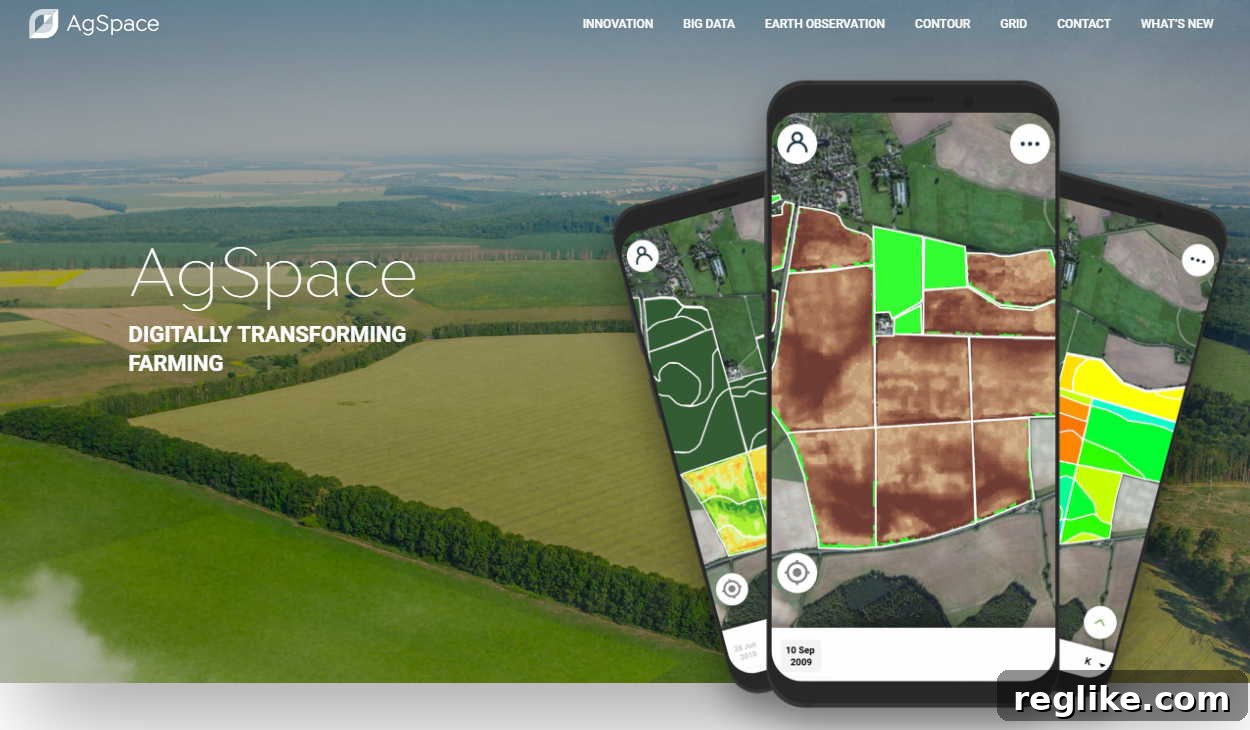
AgSpace Agriculture Limited, a company operating in the farming technology sector, currently utilizes the domain name Ag-Space.com for its online presence. Like many businesses, they sought to acquire the unhyphenated version of their brand, AgSpace.com, believing it would offer a more streamlined and memorable online identity. This desire is understandable, as shorter, unhyphenated domains often carry more perceived value and are easier for customers to recall. However, the path they chose to acquire this domain led them into direct conflict with established domain name policies.
The core of the dispute revolved around AgSpace.com, a domain name that was registered by its current owner in 1998. This registration date is crucial, as it predates the very existence of AgSpace Agriculture Limited. The owner of AgSpace.com had held the domain for over two decades, establishing a legitimate presence and potential goodwill long before the complainant entered the market. This historical context is fundamental to understanding why AgSpace’s subsequent actions were deemed inappropriate and ultimately led to a finding of Reverse Domain Name Hijacking.
The company’s attempt to obtain the coveted AgSpace.com domain, as documented in the WIPO decision D2019-1532, revealed a concerning pattern of aggressive tactics and a disregard for the principles underpinning the UDRP. Their actions not only failed to secure the desired domain but also resulted in a significant legal rebuke, highlighting the strict boundaries within which trademark holders must operate when pursuing domain name disputes.
Aggressive Tactics and Unjustified Demands
Before formally initiating a UDRP complaint with the World Intellectual Property Organization (WIPO), AgSpace Agriculture Limited engaged in a series of communications with the owner of AgSpace.com. These communications were far from amicable. The company reportedly threatened the domain owner, urging them to accept what was described as a “trivial cash offer.” The implication was clear: accept the offer, or face the legal complexities and potential costs associated with a UDRP dispute. This strategy, often employed by parties hoping to intimidate legitimate domain holders, is heavily frowned upon within the domain industry and by UDRP panelists.
The domain owner, having registered AgSpace.com in 1998, well before AgSpace Agriculture Limited was established, was well aware of their strong legal position. They correctly informed the complainant that their claims lacked merit and that a UDRP case would likely fail. This pre-dispute exchange demonstrates that AgSpace Agriculture Limited proceeded with the UDRP complaint with full knowledge that their case was weak and that the respondent had a prior, legitimate claim to the domain.
Despite this clear communication and the evident lack of a strong legal foundation, AgSpace Agriculture Limited chose to file the dispute anyway. This decision to pursue a UDRP case in the face of such clear deficiencies became a central factor in the panelist’s subsequent finding of Reverse Domain Name Hijacking. It suggested an intent to leverage the UDRP process as a means of acquisition rather than legitimate dispute resolution, transforming it from a protective measure into an offensive weapon.
Navigating the UDRP Landscape: Understanding the Requirements
The UDRP is designed to provide a streamlined process for trademark owners to recover domain names that have been registered and used in “bad faith” (often referred to as cybersquatting). For a UDRP complaint to succeed, the complainant must satisfy three cumulative elements:
- The domain name is identical or confusingly similar to a trademark or service mark in which the complainant has rights.
- The domain name registrant has no rights or legitimate interests in respect of the domain name.
- The domain name has been registered and is being used in bad faith.
In the AgSpace.com case, while the first element (confusing similarity) might have been arguable, the complainant faced insurmountable hurdles with the second and third elements. The domain owner had registered the domain in 1998, establishing a legitimate interest long before AgSpace Agriculture Limited even existed. This historical fact fundamentally undermines any claim that the respondent lacked rights or registered the domain in bad faith with AgSpace’s trademark in mind. Panelist Flip Jan Claude Petillion highlighted this critical flaw, noting:
In the present case, the Complainant expressly acknowledges in its Complaint that “the Disputed Domain Name was registered prior to the registration of AgSpace Agriculture limited”. The Complainant further provides “our case is based principally on the fact that the Respondent has no bona fide or legitimate use of the domain name of our trademark and has refused to release the domain or respond to our offer to meet the respondent’s reasonable out-of-pocket costs related to the domain”.
This statement from the complainant’s own filing was damning. It revealed an explicit awareness that the domain pre-dated their company and trademark. Their argument, therefore, shifted to the respondent’s *current* use, attempting to retroactively apply bad faith, which is inconsistent with UDRP principles. The UDRP policy specifically requires bad faith *registration* and *use* relative to the complainant’s rights at the time of registration, or at least a demonstrable intent to target the complainant. Given the 1998 registration, it was impossible for the respondent to have registered the domain in bad faith concerning a company that did not yet exist.
The Panelist’s Verdict: A Clear Finding of RDNH
Panelist Flip Jan Claude Petillion, in his thorough analysis, had an undeniably straightforward task in determining the outcome. AgSpace Agriculture Limited failed unequivocally to demonstrate that the domain registrant lacked rights or legitimate interests in the domain. Furthermore, they failed to prove that the domain was registered in bad faith concerning their trademark. The evidence clearly pointed to the respondent’s long-standing, legitimate registration and use of the domain, predating the complainant’s existence.
Understanding Reverse Domain Name Hijacking (RDNH)
The UDRP policy includes a provision for Reverse Domain Name Hijacking (RDNH), which occurs when a complainant attempts to use the UDRP process in bad faith to improperly seize a domain name from a legitimate registrant. It’s a serious finding that sends a strong message against the abuse of the system. In finding reverse domain name hijacking, the WIPO panelist wrote:
The mere lack of success of a complaint is not in itself sufficient for a finding of RDNH. In the present case, however, the Complainant knew it could not succeed as to the second and third element of the Policy as the Complainant had clear knowledge of the Respondent’s commercial identity corresponding to the Disputed Domain Name and the lack of bad faith by the Respondent. The Complainant expressly acknowledged that it knew that the Respondent had registered the Disputed Domain Name well before the Complainant had established its business or acquired its trademark rights. As a result, the Complainant clearly ought to have known it could not succeed under any fair interpretation of facts reasonably available prior to the filing of the Complaint. The website connected to the Disputed Domain Name has also never made reference to, let alone target, the Complainant or its mark and there are no indicia that would demonstrate that the Respondent intended to disrupt the Complainant’s business or create confusion with the Complainant’s trademark for commercial gain (see section 4.16, WIPO Overview 3.0).
This excerpt meticulously outlines why RDNH was found. It’s not just about losing the case; it’s about *knowing* you would lose and proceeding anyway. The panelist emphasized several key points:
- Complainant’s Knowledge of Respondent’s Identity and Legitimacy: AgSpace knew the respondent’s commercial identity aligned with the domain and that there was no bad faith. The respondent was not impersonating AgSpace, nor was their domain somehow connected to AgSpace’s brand in an infringing way.
- Prior Registration Date: The complainant explicitly acknowledged that the domain was registered long before their company or trademark existed. This fact alone makes it virtually impossible to prove bad faith registration.
- Absence of Targeting: The website associated with AgSpace.com never targeted or made any reference to AgSpace Agriculture Limited or its brand. This further disproved any intent to disrupt business or create confusion for commercial gain.
- Failure of Due Diligence: The panelist clearly stated that AgSpace “ought to have known it could not succeed under any fair interpretation of facts reasonably available prior to the filing of the Complaint.” This is a critical point. Companies are expected to conduct thorough due diligence before initiating a UDRP. If the facts clearly indicate a lack of merit, filing the complaint becomes an act of bad faith itself.
The finding of RDNH is a serious stain on a company’s record. It signals an attempt to improperly obtain a domain name, potentially wasting the resources of the UDRP system and causing undue burden on a legitimate domain owner.
Lessons Learned and Broader Implications
The AgSpace.com case offers several vital lessons for businesses and domain owners navigating the digital landscape:
- Importance of Due Diligence: Before launching any domain dispute, companies must conduct exhaustive research into the domain’s registration history, the registrant’s background, and any potential legitimate interests. Blindly pursuing a domain based on a perceived brand overlap is a recipe for failure and potential RDNH findings.
- Ethical Considerations in Domain Acquisition: The UDRP is not a tool for coercive domain acquisition. Its purpose is to combat cybersquatting. Companies must respect the rights of long-standing domain holders and pursue domain acquisitions through legitimate means, such as direct negotiation and fair market offers, rather than litigation threats.
- Protection for Legitimate Domain Owners: This case provides reassurance for domain owners who have legitimately registered and used their domains for extended periods. The UDRP system, when applied correctly, protects these owners from aggressive attempts by newer entities to seize their digital assets.
- Impact on Brand Reputation: A finding of Reverse Domain Name Hijacking can significantly harm a company’s reputation. It portrays the company as aggressive, unethical, and willing to abuse legal processes. In an era where corporate image and transparency are paramount, such findings can have lasting negative consequences.
- Understanding UDRP Elements: It’s crucial for trademark holders to understand that mere similarity to a trademark is insufficient. The elements of “no rights or legitimate interests” and “bad faith registration and use” are equally, if not more, critical, especially concerning older domain registrations.
The AgSpace.com case serves as a prime example of the boundaries within the UDRP system. It demonstrates that while trademark protection is paramount, it does not grant companies an automatic right to every domain name that remotely resembles their brand, especially if that domain was registered legitimately long before the trademark existed. The robust defense provided by the UDRP against abuse ensures that the internet remains a fair and orderly space for all digital stakeholders.
Conclusion: Safeguarding the Domain Name System
The UDRP process, while designed to protect trademark holders from opportunistic cybersquatting, is also equipped with mechanisms to deter its abuse. The finding of Reverse Domain Name Hijacking against AgSpace Agriculture Limited in their bid for AgSpace.com sends a clear message: attempting to leverage the UDRP without a strong, fact-based claim, and especially with prior knowledge of the case’s weakness, carries significant consequences. This outcome reinforces the integrity of the domain name system and underscores the importance of legitimate practices and respect for established domain ownership rights. For businesses considering a domain dispute, the AgSpace.com case stands as a cautionary tale, emphasizing that due diligence and ethical considerations must always precede legal action.