
AHNU.com Cybersquatting Claim Denied: Deckers Outdoor Faces Setback, Continues with AHNU.co
In a compelling decision published by the World Intellectual Property Organization (WIPO), footwear powerhouse Deckers Outdoor, widely recognized for its diverse portfolio of brands including Ugg, Teva, and Hoka, has been unsuccessful in its Uniform Domain-Name Dispute-Resolution Policy (UDRP) claim for the domain name ahnu.com. This ruling solidifies the position of the current domain owner, compelling Deckers to continue its relaunched AHNU footwear brand under the ahnu.co domain. The comprehensive decision, penned by Panelist Nick Gardner, is being lauded as an exceptionally well-reasoned analysis, providing critical insights for brand owners and domain registrants navigating the complexities of intellectual property in the digital realm.
The AHNU Brand Journey: Acquisition, Discontinuation, and Relaunch
Deckers Outdoor (NYSE: DECK) initially acquired the AHNU footwear brand in 2009, a strategic move that included the valuable ahnu.com domain name. For nearly a decade, ahnu.com served as the primary online home for the brand. However, business considerations led Deckers to discontinue the manufacturing of the AHNU brand in 2018. Following this decision, the company allowed the ahnu.com domain to expire in 2021, effectively relinquishing its control over the asset.
Once ahnu.com lapsed and became available on the open market, it was promptly acquired by its current registrant. The registrant, who did not respond to the UDRP complaint, secured the domain name during a period when the AHNU brand was not actively in production. Interestingly, this domain’s journey post-expiration reflects a clear market value. Data from platforms like NameBio indicates an initial sale for $2,545 on NameJet in June 2021, followed by another transaction for $3,101 on NameJet in July 2022. Historical Whois records from DomainTools further show New Venture Services, an investment holding company under Newfold Digital, as the owner between these two sales. This demonstrates that the domain possessed inherent value independently of its connection to the AHNU trademark during its inactive phase.
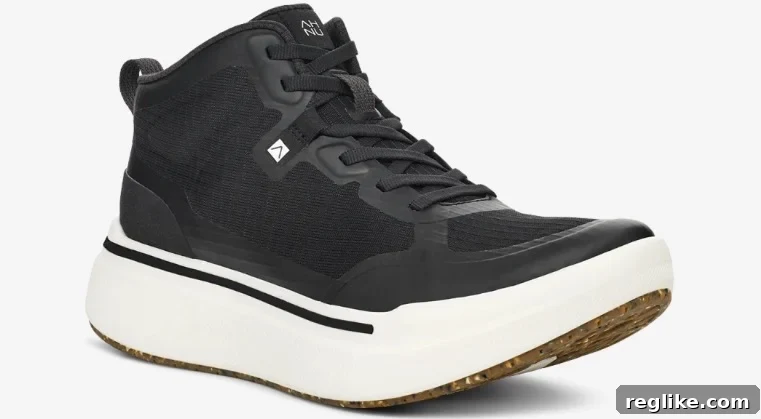
Fast forward to the present year, Deckers Outdoor made the strategic decision to relaunch the AHNU brand. With ahnu.com already in the hands of another party, Deckers opted to establish its renewed online presence using ahnu.co. This subsequent relaunch prompted Deckers to file a UDRP complaint, alleging that the current registrant of ahnu.com was engaged in cybersquatting by holding a domain name confusingly similar to its trademark, registered and used in bad faith.
Understanding the UDRP Framework: The Pillars of a Claim
To fully grasp the implications of this decision, it’s essential to understand the Uniform Domain-Name Dispute-Resolution Policy (UDRP). This policy, established by ICANN (Internet Corporation for Assigned Names and Numbers), provides a streamlined administrative process for resolving disputes over domain name registrations where a trademark is involved. For a complainant to succeed under UDRP, they must prove three cumulative elements:
- The domain name is identical or confusingly similar to a trademark or service mark in which the complainant has rights.
- The domain name registrant has no rights or legitimate interests in respect of the domain name.
- The domain name has been registered and is being used in bad faith.
Failure to prove even one of these three elements results in the denial of the complaint. In the AHNU.com case, the primary hurdle for Deckers Outdoor proved to be the third element: demonstrating bad faith registration and use.
Panelist Gardner’s Scrutiny: Why Bad Faith Could Not Be Proven
Panelist Nick Gardner’s decision is particularly noteworthy for its detailed and logical progression, systematically dismantling Deckers’ arguments regarding bad faith. He carefully considered the nuances of domain name markets, the nature of the domain itself, and the timeline of events.
The Inherent Value of Short, Generic Domains
A crucial aspect of Gardner’s reasoning revolved around the intrinsic value of four-letter domain names. He articulated that “Ahnu” is simply a sequence of four letters that, when conjoined, do not form an immediately recognizable common word. Such domains, particularly those that are short, pronounceable, or could serve as acronyms, are highly sought after in the domain aftermarket. As Gardner noted:
…“Ahnu” is simply four letters of the alphabet. Those letters when conjoined in this way do not form an immediately recognizable word – but they can be an acronym. Commonly when a domain name lapses it becomes available for reregistration and it is common practice for details of names that are likely to become available to be publicized beforehand, often in connection with some form of auction or competitive bidding process. The Panel would not be surprised by a lapsed four letter domain name being acquired immediately when it became available almost irrespective of whatever its previous usage may have been.
This insight is fundamental. It posits that a domain investor acquiring a short, expired domain might do so for its inherent market value, completely independent of any specific trademark association, especially if that trademark was not actively in use at the time. The rapid re-registration of ahnu.com after its expiration, therefore, did not automatically signify an intent to target Deckers’ brand.
Distinguishing from Prior Cybersquatting Precedents
Deckers attempted to draw parallels with previous UDRP cases where expired domains, once owned by trademark holders, were returned after being re-registered. However, Gardner meticulously distinguished those cases, highlighting a crucial difference: in those precedents, the domains typically had a clear, direct, and often famous connection to the complainant’s actively used trademark, making the bad faith intent of the new registrant more evident. In contrast, “Ahnu,” during its period of dormancy, was not actively building goodwill in the market, making it less of a clear-cut case of opportunistic targeting. Gardner succinctly stated, “The present case is not as straightforward because the Disputed Domain Name is likely to have inherent value.” This distinction underscores that not all re-registrations of expired trademark-related domains constitute cybersquatting, particularly when the domain itself holds generic or inherent market value.
The Critical Role of Timeline and Transparency
Perhaps the most compelling aspect of Gardner’s decision involved his critical examination of Deckers’ presentation of facts. Deckers provided a screenshot of a 2024 Google search for “AHNU,” showing results predominantly related to its shoe brand. However, Gardner shrewdly questioned what those search results would have reflected in 2021, the year the domain was acquired by the current registrant and when the brand was not in production. This highlighted the importance of evaluating bad faith at the time of registration, rather than in retrospect after a brand relaunch.
More significantly, Gardner noted that Deckers’ account was incomplete. While the company stated it acquired the brand in 2009 and that it was “redesigned in 2024,” it conspicuously omitted the crucial detail that the brand had been discontinued in 2018 and was inactive when ahnu.com expired and was subsequently acquired. Recognizing this critical gap, Panelist Gardner took the proactive step of conducting his own limited research, which quickly confirmed the brand’s discontinuation in 2018. This led him to issue a procedural order, requesting more comprehensive and accurate information from Deckers. It was only after this intervention that the full historical context emerged, allowing the panel to make an informed decision based on complete facts. This diligence by the panelist was instrumental in preventing a ruling based on potentially misleading or selective information.
Key Lessons for Brand Owners and Domain Registrants
The AHNU.com UDRP decision offers invaluable lessons for anyone involved in brand management and domain name strategies:
For Trademark Holders and Brand Owners: Prioritize Domain Management
This case serves as a powerful reminder that intellectual property protection extends beyond just registering a trademark. Active and diligent domain name management is equally crucial. Allowing a domain name associated with a brand to expire, even if the brand is temporarily dormant, carries significant risks. Reclaiming such a domain via UDRP is not guaranteed, especially if the domain possesses inherent value or if the brand was not actively generating goodwill at the time of re-registration. Brand owners must ensure continuous monitoring and renewal of all their associated domain names to maintain their online presence and avoid costly disputes.
Furthermore, transparency in UDRP complaints is paramount. Providing a complete and accurate historical account is essential. Any attempt to omit critical facts or present a misleading timeline can severely undermine the credibility of a complaint and lead to its dismissal.
For Domain Registrants and Investors: Legitimate Acquisition is Defensible
For domain investors and registrants who legitimately acquire expired domains, particularly those with inherent generic or short-form value, this decision provides significant reassurance. It reinforces the principle that acquiring a domain name that was not actively associated with an in-use trademark at the time of registration, and without intent to target a specific brand, can be a legitimate interest. As long as the acquisition is not driven by bad faith motives such as cybersquatting or disruption of a competitor’s business, such registrations can be successfully defended against UDRP complaints.
The Importance of a Thorough and Independent Panel
Finally, this case highlights the immense value of a meticulous and independent UDRP panelist. Nick Gardner’s willingness to perform his own research and demand full disclosure from the complainant ensured that the decision was based on a complete understanding of the historical context and relevant facts. Such diligence maintains the integrity and fairness of the UDRP system, ensuring that rulings are equitable and well-founded.
Conclusion: A Nuanced Perspective on Cybersquatting
The WIPO’s decision in the ahnu.com case is a landmark ruling that adds a layer of nuance to cybersquatting jurisprudence. It clearly demonstrates that simply re-registering an expired domain name that was once associated with a trademark does not automatically constitute bad faith, especially when the trademark was not actively in use and the domain itself holds inherent market value. Deckers Outdoor’s continued use of ahnu.co for its relaunched AHNU brand is a direct outcome of this well-reasoned ruling, emphasizing the complexities of intellectual property in the dynamic digital landscape and the critical importance of proactive, precise domain name management. Panelist Nick Gardner’s decision serves as a powerful reminder that context, transparency, and a thorough understanding of domain market dynamics are indispensable in UDRP proceedings.
Deckers Outdoor was represented by Markmonitor throughout these proceedings.