
The Digital Gold Rush: Unpacking the Phenomenon of Future iPhone Domain Registrations
In the ever-evolving landscape of technology, anticipation for Apple’s next iPhone is a near-constant hum. Each year, millions eagerly await announcements of new features, designs, and, crucially, the device’s name. But long before the official reveal, a silent digital battle plays out in the world of domain names. Savvy individuals and strategic investors are constantly trying to predict Apple’s next move, leading to a remarkable phenomenon: the registration of virtually every conceivable iPhone#.com domain name, stretching far into the future, all the way up to iPhone28.com.
This widespread practice highlights a fascinating intersection of brand protection, speculative investment, and the enduring power of digital real estate. It’s a high-stakes game where foresight, timing, and a bit of luck can translate into significant returns, or conversely, lead to dead-end digital assets.
Apple’s Proactive Stance: The iPhone5.com Saga
 Apple, a company renowned for its stringent brand protection, is no stranger to the complexities of domain ownership. Two years prior to this article’s original publication, when the iPhone 5 was announced, the tech giant was already in possession of iPhone5.com. However, this wasn’t by initial registration. Apple had to actively pursue and acquire the domain name through a Uniform Domain-Name Dispute-Resolution Policy (UDRP) complaint.
A UDRP is a legal process designed to resolve disputes concerning the registration of domain names. It typically comes into play when a domain name is identical or confusingly similar to a trademark, and the registrant has no legitimate rights or interests in the name, having registered and used it in bad faith. For a company like Apple, securing the primary domain for its flagship product is paramount to maintaining brand integrity, controlling its online narrative, and preventing potential consumer confusion or malicious exploitation. The successful acquisition of iPhone5.com underscored Apple’s unwavering commitment to owning its digital identity, ensuring that official information and marketing efforts would emanate solely from its controlled channels.
The iPhone6.com Case: A Testament to Early Foresight
The situation surrounding the iPhone 6, which was anticipated at the time of the original piece, painted a different picture. Unlike iPhone5.com, which Apple proactively secured, iPhone6.com remained outside of Apple’s immediate control. This domain was originally registered way back in 2008 – years before the iPhone 6’s eventual launch. Demonstrating remarkable foresight, the initial registrant held onto the domain before selling it on Sedo, a prominent domain marketplace, in 2010. The current owner, having acquired it four years prior to the iPhone 6’s expected debut, strategically employed WHOIS privacy services to shield their identity and kept the domain parked.
On the day of the iPhone 6’s launch, iPhone6.com inevitably experienced a massive surge in web traffic. This surge was a clear vindication for the domain owner, whose patience and speculative investment had finally paid off. Parking a domain means it’s held but not actively developed into a website; instead, it often displays advertisements or a placeholder page, subtly generating revenue from the influx of curious visitors. This scenario perfectly illustrates the potential windfall awaiting those who successfully anticipate future product names and secure the corresponding digital real estate far in advance.
Beyond the Immediate Horizon: The iPhone# to iPhone28.com Phenomenon
The narrative surrounding iPhone5.com and iPhone6.com is just the tip of a much larger iceberg. A truly astounding trend has emerged: every single iPhone#.com domain name has been registered, from the immediate next expected models all the way up to iPhone28.com. This extensive registration spree highlights a dedicated community of domain investors who are thinking not just years, but decades ahead.
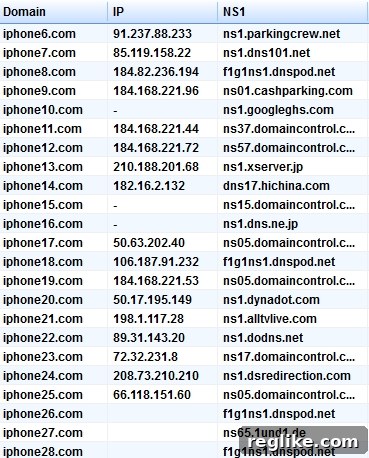
These long-term digital investments represent a calculated gamble. While some might label such actions as “cybersquatting” – the act of registering a domain name with the intention of profiting from a trademark owner’s brand – many in the domain industry view it as legitimate “domain investing.” The distinction often lies in intent and usage. Legitimate investors register generic or predictive terms with the hope of selling them at a premium to interested parties, or developing them into valuable online properties, without necessarily infringing on existing trademarks. The graphic below, which depicts the nameservers for these domains, indicates that a significant majority are currently parked, patiently awaiting their moment in the digital sun.
This widespread registration speaks volumes about the perceived enduring value of the iPhone brand and the belief that Apple will largely stick to a numerical naming convention for its flagship device. These registrants are betting on the brand’s longevity and the predictability of its product cycle, transforming abstract anticipation into tangible digital assets.
The Shifting Sands of Naming Conventions: iPhone Air vs. iPhone 7
While the pervasive registration of numbered iPhone domains suggests a belief in Apple’s continued numerical sequencing, the future of product naming is never guaranteed. It’s difficult to imagine Apple adhering strictly to a standard numbering system for the next two decades, potentially leading to an iPhone 28. The company has, in the past, shown a willingness to pivot its naming strategies, introducing monikers like ‘Pro,’ ‘Max,’ or ‘Air’ for its devices. Indeed, the original article pondered whether the iPhone 6 might instead be called ‘iPhone Air,’ a name for which Apple did not own the corresponding .com domain.
Such a deviation from sequential numbering would have profound implications for the legions of domain investors holding iPhone#.com domains. If Apple were to launch an “iPhone Ultra” instead of an “iPhone 15,” the speculative value of iPhone15.com would plummet, potentially rendering it a worthless asset for its current owner. This uncertainty adds a layer of risk and intrigue to these long-term investments, turning them into a fascinating game of predicting corporate strategy and market trends.
A Broader Trend: The iPad Precedent
The iPhone domain phenomenon is not an isolated incident; it mirrors similar patterns seen with other highly anticipated Apple products. When Apple unveiled the iPad 2 several years ago, the domain name landscape revealed a strikingly similar trend. Just as with the iPhone, nearly every iPad#.com domain up to iPad25.com was already registered. This pattern underscores a broader strategy among domain investors: to anticipate and secure names for popular product lines across major tech brands.
This consistent behavior points to a sophisticated understanding of market dynamics and brand value. It reflects a digital land grab, where prime online real estate is claimed years in advance, driven by the hope that a major corporation will eventually come knocking, willing to pay a premium for a domain directly tied to their next big product launch. The foresight required to consistently execute such a strategy highlights the entrepreneurial spirit thriving within the domain investing community.
The Mechanics of Long-Term Digital Investments
For domain investors, owning a domain like iPhone28.com is a purely speculative play. The investment involves an annual registration fee, which, while minimal per domain, can accumulate significantly when managing a portfolio of hundreds or thousands of names. The strategy typically involves “parking” these domains, as indicated by the nameserver graphic. Parked domains can generate passive income through advertising impressions or click-throughs, albeit often small amounts, while the owner waits for a potential buyer.
The ultimate goal for many is to sell these domains to Apple itself, or to a third party seeking to leverage the brand’s popularity, often at a substantial profit. The use of WHOIS privacy is common among these investors to avoid direct contact from potential buyers or, conversely, from companies seeking to challenge their ownership. This cat-and-mouse game between brand owners aiming for comprehensive control and investors anticipating future trends shapes a unique corner of the digital economy.
Risks, Rewards, and the Ethics of Digital Anticipation
The decision to invest in future product domains comes with inherent risks and potential rewards. The primary risk is that the anticipated name is never used by the brand owner. For instance, if Apple abandons numerical sequencing for iPhones after the “iPhone 15,” all subsequent numbered domains like iPhone16.com through iPhone28.com would likely become worthless for their original purpose. Another risk is a UDRP complaint; while many domain investors operate within legal boundaries, aggressive brand protection by tech giants can sometimes lead to legal battles over names deemed infringing.
Conversely, the rewards can be substantial. A successful prediction can lead to a lucrative sale, as demonstrated by the iPhone6.com scenario. These domains represent valuable digital assets that can appreciate significantly in value as the product launch approaches. Ethically, the line between legitimate domain investment and cybersquatting can be blurry. While registering a trademarked name in bad faith is illegal, registering a *potential* future product name that isn’t yet a trademark often falls into a legal gray area, viewed by many as a legitimate, albeit speculative, form of digital asset management.
Conclusion: The Enduring Quest for Digital Real Estate
The intricate dance between brand owners and domain investors, exemplified by the comprehensive registration of iPhone#.com domains, is a compelling subplot in the fast-paced world of technology. It underscores the enduring value of a strong brand, the power of speculative investment, and the constant human desire to anticipate the future. As Apple continues to innovate and delight consumers with new products, the digital gold rush for corresponding domain names will undoubtedly persist.
Whether it’s iPhone28.com, iPhoneAir.com, or an entirely new naming convention, the quest to secure prime digital real estate years, even decades, in advance remains a fascinating and often lucrative endeavor. This ongoing saga serves as a vivid reminder that in the digital age, a domain name is far more than just a web address—it’s a critical asset, a speculative bet, and a symbol of foresight in an ever-unfolding technological narrative.