
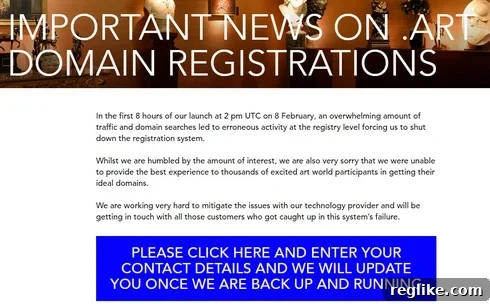
Registry blames overwhelming demand and searches for .art domains.
The .Art Domain Debacle: Unpacking the Unexpected Shutdown of a Highly Anticipated Launch
The digital art world, a vibrant and ever-evolving space, eagerly awaited the launch of the dedicated .art domain name. This new top-level domain (TLD) was designed to provide a distinctive online identity for artists, galleries, museums, and enthusiasts worldwide. However, the initial qualified launch phase, which commenced earlier this week, faced an unforeseen setback: a sudden technical shutdown. While the good news for eager registrants is that the registration process for .Art domains is now back online as of approximately 2 PM ET Friday, the temporary halt sparked significant discussion and raised questions within the domain industry.
Initially, the registry attributed the shutdown to “overwhelming demand and searches,” suggesting an unprecedented rush for these coveted art-focused web addresses. This explanation, however, immediately led to skepticism among industry observers, particularly given the sophisticated infrastructure that underpins such domain launches. This article delves into the details of the shutdown, explores the registry’s explanation, examines alternative theories, and discusses the broader implications for the .art domain and the new gTLD landscape.
A Vision for the Digital Art Frontier: What is .Art?
The inception of the .art domain marked a significant step forward in providing a dedicated digital space for the global art community. More than just a simple web address, a .art domain name is intended to serve as a recognizable and trusted online identifier, instantly signaling a connection to the world of art. Its purpose extends beyond mere categorization; it aims to foster a distinct digital ecosystem where authenticity, creativity, and artistic expression can thrive.
For artists, a .art domain offers a unique branding opportunity, allowing them to present their portfolios, showcases, and personal websites with an address that inherently resonates with their profession. Galleries can use it to build trust and authority, establishing themselves as legitimate entities in the art market. Museums and cultural institutions find it invaluable for enhancing their online presence, making their collections and educational resources more accessible under a relevant and memorable name. Beyond the professionals, art enthusiasts, collectors, and critics also stand to benefit, as it simplifies the process of finding and engaging with art-related content online. The vision was to create a digital landscape where every corner dedicated to art could proudly display its identity, streamlining discovery and fostering a more cohesive online art community.
The Launch That Wasn’t: A Qualified Phase Plagued by Technical Glitches
The eagerly anticipated launch of the .art domain was meticulously planned to unfold in a “qualified launch phase.” This specific phase was not an open free-for-all but rather a carefully controlled introduction designed to cater exclusively to individuals and entities with a verified, authentic connection to the art world. To ensure this exclusivity and maintain the integrity of the domain space, prospective registrants were required to obtain a special token directly from the .Art registry. This token system was a critical component of the eligibility verification process, effectively creating a restricted landrush phase where only qualified participants could secure their desired .art domain names.
The launch was set for 2 PM UTC on February 8th, amidst considerable excitement. However, this promising start was abruptly interrupted. Within a mere eight hours of going live, the entire registry system was temporarily shut down for “technical reasons.” John Matson, the CEO of UK Creative Ideas, the registry behind .art, issued a statement explaining the decision: “We launched at 2 pm UTC on February 8, and within the first 8 hours or so we saw an overwhelming volume of demand and searches. We saw erroneous activity and decided to temporarily shut down the registry.” Matson also added, somewhat optimistically, that they were “quite pleased to see that volume of demand.” The sudden halt left many qualified registrants in limbo, greeted instead by a generic message, as seen below:
Unraveling the Mystery: Why the Registry’s Explanation Raises Eyebrows
While the registry’s explanation cited “overwhelming volume of demand and searches” and “erroneous activity,” this reasoning immediately sparked skepticism among those familiar with the technical capabilities of modern domain name systems. The primary reason for this doubt lies in the identity of the backend provider for the .art domain: CentralNic. CentralNic is a global leader in providing registry services for new top-level domains, renowned for its robust infrastructure and proven ability to handle massive volumes of domain registrations.
To put CentralNic’s capacity into perspective, this is the very same registry backend that successfully processed over a million .xyz domain names within a mere 24-hour period during its launch. This track record clearly demonstrates that CentralNic possesses the scalability and resilience to manage an exceptionally high volume of registration requests and searches without buckling under pressure. Therefore, the assertion that the .art launch was overwhelmed by demand within just eight hours, leading to a complete shutdown, strikes many as an anomaly given the sophisticated backend at play.
The notion of “overwhelming demand” for a highly restricted, token-based launch phase also warrants closer scrutiny. Unlike an open, unrestricted general availability phase, a qualified launch inherently limits the number of eligible participants. Although John Matson refrained from disclosing the exact number of registration requests and searches received, industry experience with other new top-level domains suggests that the volume, even if substantial, would likely not be so extraordinary as to cripple a CentralNic-powered system. Unless there was an unprecedented, coordinated flood of activity by a third party – possibly malicious or exploitative – the explanation of simple “overwhelming demand” seems incomplete, fueling the search for alternative theories that might better explain the shutdown.
Beyond Demand: Exploring Alternative Theories for the Shutdown
Given the technical prowess of CentralNic, the backend provider, the registry’s explanation of mere “overwhelming demand” for the .art domain launch seems insufficient to fully account for the abrupt shutdown. This has led industry experts and observers to consider several alternative hypotheses that might shed more light on the “erroneous activity” mentioned by the registry CEO.
One prominent theory revolves around the sophisticated token system designed for eligibility verification. This system was put in place to ensure that only individuals and entities genuinely connected to the art world could participate in the qualified launch phase. It’s entirely plausible that the token process itself experienced a critical malfunction or was exploited. A flaw in how tokens were issued, validated, or utilized could have led to widespread “erroneous activity,” such as invalid tokens being used, legitimate tokens failing to register, or even a pathway for unauthorized registrations. Such a systemic breakdown in the core verification mechanism would necessitate a shutdown, regardless of the overall traffic volume, to prevent further compromise of the registration integrity.
Another compelling explanation points towards coordinated activity or even malicious intent from external parties. In the competitive domain industry, particularly with new, premium TLDs like .art, there’s always a risk of domain squatters, arbitrageurs, or bot networks attempting to register high-value names en masse. Even in a restricted launch, sophisticated bots could potentially exploit vulnerabilities in the token acquisition or registration process. A concerted effort to flood the system with invalid requests, perform dictionary attacks to guess premium names, or engage in other forms of digital disruption could easily manifest as “erroneous activity” and overwhelm the system’s operational logic, even if its raw processing power (CentralNic) remained stable. The goal might be to register desirable names for resale, disrupt the launch for competitive reasons, or simply test the system’s resilience.
Finally, while less dramatic, one cannot entirely rule out the possibility of internal system glitches within the registry’s own software, independent of external demand or malicious activity. Even the most thoroughly tested systems can exhibit unexpected behaviors under real-world load, especially during a first-time launch. A bug in the application layer, database interaction, or a subtle configuration error could trigger cascading failures that necessitated a temporary shutdown. Regardless of the precise cause, the incident underscores the complexities inherent in launching new gTLDs and the critical need for absolute robustness in every component of the registration ecosystem.
The Broader Landscape of New gTLDs: Lessons from the Digital Frontier
The challenges encountered by the .art domain launch are not entirely unique; they serve as a reminder of the inherent complexities and potential pitfalls within the broader landscape of new generic top-level domains (gTLDs). Since ICANN introduced the program to expand the internet’s naming system, thousands of new TLDs have emerged, ranging from industry-specific ones like .tech and .store to geographical extensions like .nyc. Each launch, regardless of its ultimate success, navigates a intricate web of technical hurdles, marketing strategies, user adoption rates, and security considerations.
Many new gTLDs have experienced their own set of initial glitches, from slow adoption rates to technical migration issues. Some have struggled to gain traction and achieve the critical mass of registrations needed to justify their existence, while others, like .xyz, have seen meteoric rises. The .art situation highlights that even with a highly anticipated and well-defined target audience, the technical infrastructure must be flawless. Any disruption, particularly during an early, restricted phase, can generate negative publicity and erode confidence.
This incident particularly underscores the paramount importance of robust infrastructure and a seamless user experience during a domain launch. A strong backend provider, such as CentralNic, is not merely a luxury but an absolute necessity for ensuring scalability, reliability, and security. The surprise stemming from the .art shutdown, despite being backed by CentralNic, emphasizes that even industry-leading technology can be tested by unforeseen circumstances, whether they be genuine demand surges, sophisticated attacks, or internal system vulnerabilities. For the success of any new gTLD, the promise of a unique online identity must be matched by an unwavering commitment to operational excellence from day one.
What’s Next for .Art? Rebuilding Trust and Moving Forward
Following the swift resolution of the technical issues, with the .art domain registration process now fully operational, the immediate focus for the registry, UK Creative Ideas, must shift towards rebuilding trust and ensuring a stable future. Transparency regarding the exact nature of the “erroneous activity” and the measures taken to prevent a recurrence would be highly beneficial. While some details may be proprietary or security-sensitive, a clear communication strategy can help reassure potential registrants and the wider internet community that the underlying issues have been definitively addressed.
Looking ahead, the registry will likely need to implement enhanced monitoring and incident response protocols. This could involve more rigorous pre-launch stress testing, continuous system audits, and a robust support system to handle any future technical challenges. Proactive communication with the art community, perhaps through dedicated forums or direct outreach, can also help mitigate any lingering concerns and foster a sense of security around the .art domain.
The initial hiccup may have temporarily dented confidence, but the inherent value proposition of the .art domain remains strong. For artists, galleries, and institutions, having a dedicated online space that clearly signifies their connection to the art world is a significant advantage. The long-term success of .art will ultimately depend on its ability to provide a reliable, secure, and intuitive platform for its target audience. By demonstrating resilience and a commitment to operational excellence, the registry can ensure that this initial setback is viewed as a minor bump on the road to becoming a thriving digital hub for global art.
Conclusion: A Setback, Not a Standstill, for the Art Domain
The unexpected shutdown of the .art domain’s qualified launch phase served as a stark reminder of the complexities inherent in launching new top-level domains, even those backed by leading infrastructure providers like CentralNic. While the registry attributed the issue to overwhelming demand and erroneous activity, the incident raised pertinent questions about the true nature of the problem, prompting theories ranging from token system malfunctions to coordinated malicious attacks. Despite this initial hurdle, the registration process is now operational, and the long-term vision for a dedicated digital space for the art world remains intact. This event, while a temporary setback, underscores the critical importance of robust infrastructure, clear communication, and unwavering vigilance in the dynamic landscape of domain name management, ensuring the continued evolution of online identity for communities worldwide.