
Fashion Brand Loses Cybersquatting Dispute Over Beaumont.com, Highlighting Key Domain Name Lessons
In the intricate world of domain name disputes, outcomes are rarely straightforward. A recent decision involving the domain name Beaumont.com serves as a powerful reminder of the complexities and crucial considerations for brand owners. Stone Fashion Group B.V., the proprietor of a fashion brand known as Beaumont, recently suffered a significant setback, losing a cybersquatting dispute they initiated against the long-standing owner of Beaumont.com.
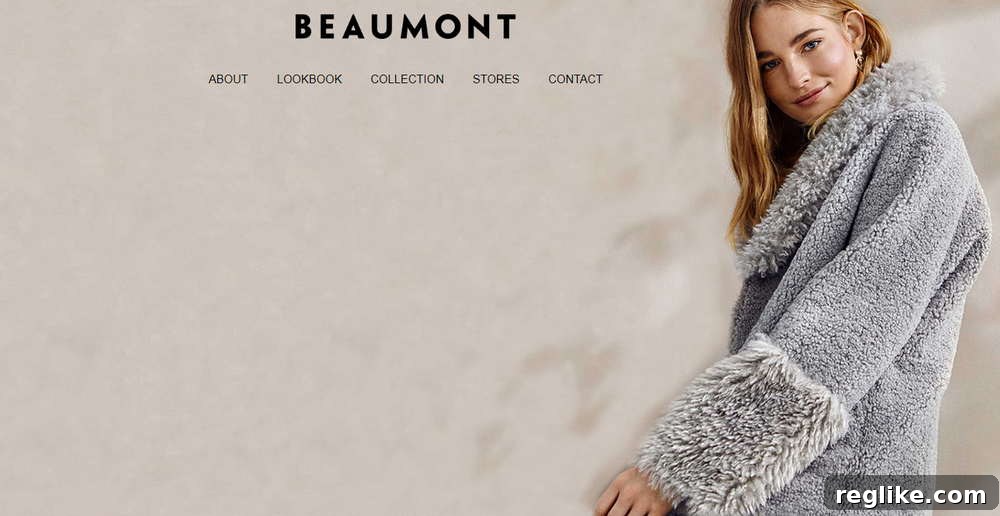
The Heart of the Matter: Stone Fashion Group’s Claim for Beaumont.com
Stone Fashion Group B.V., an established entity in the fashion industry, proudly owns and markets a brand under the name Beaumont. Their digital presence, reflecting their brand identity, is primarily maintained through the domain Beaumont.eu. Believing that Beaumont.com rightfully belonged to their brand, they filed a complaint under the Uniform Domain-Name Dispute-Resolution Policy (UDRP), alleging cybersquatting against the current domain owner.
The UDRP process is designed to provide a streamlined, administrative procedure for resolving disputes concerning abusive registration of domain names. For a complainant to succeed, they must prove three cumulative elements: firstly, that the domain name is identical or confusingly similar to a trademark or service mark in which the complainant has rights; secondly, that the registrant has no rights or legitimate interests in respect of the domain name; and thirdly, that the domain name has been registered and is being used in bad faith.
A Tale of Two Beaumonts: Geographic Connection and Early Registration
Central to this dispute, and ultimately crucial to its outcome, was the identity of the domain owner and the history of the Beaumont.com registration. While the domain owner chose not to formally respond to Stone Fashion Group’s complaint, the appointed panelist meticulously reviewed the available evidence, primarily focusing on public Whois data. This data revealed that the domain owner resides in Texas. Significantly, Beaumont is not just a fashion brand; it is also the name of a prominent city in Texas, located just outside of Houston. This geographical connection would prove to be a compelling factor in the panel’s assessment of legitimate interest.
Even more impactful was the registration date of Beaumont.com. Records indicated that the current domain owner was, in fact, the original registrant, having secured the domain way back in 1995. This early registration date predates virtually all modern brand trademark registrations and often serves as a powerful defense against claims of cybersquatting, especially when a generic or geographical term is involved.
Deconstructing Stone Fashion Group’s Arguments and Their Weaknesses
In their UDRP filing, Stone Fashion Group B.V. asserted that their Beaumont brand had been in existence for “more than 45 years.” While this claim suggests a long-standing brand presence, the complainant failed to provide concrete evidence to substantiate it. More critically, their registered trademarks for “Beaumont” all postdated the 1995 registration of Beaumont.com. This temporal disconnect is a common pitfall for complainants in UDRP cases. Without prior trademark rights or clear evidence of common law rights predating the domain registration, it becomes exceedingly difficult to argue that a domain was registered in bad faith specifically to target their brand.
The panelist noted the apparent contradiction: if the brand truly existed for over four decades, it raised questions as to why Stone Fashion Group was only now initiating a UDRP action. It’s plausible, and often expected, that a brand with such a purported history would have been aware of Beaumont.com’s existence when it registered its own operational domain, Beaumont.eu. This delay in action further weakened their claim of exclusive rights to the name.
The $2 Million Asking Price: A Catalyst for UDRP Action?
The UDRP filing, according to the WIPO decision, was seemingly triggered after Stone Fashion Group inquired about acquiring Beaumont.com. Upon their inquiry, they received an asking price of $2 million from the domain owner. While a high asking price in itself does not automatically constitute bad faith, it frequently acts as a catalyst for brand owners to file UDRP complaints. They often perceive such a price as an attempt to “sell back” a domain that they believe should inherently be theirs, especially if they consider it to be cybersquatted. However, the UDRP is not designed to be a domain name acquisition tool or a mechanism to force a sale at a preferred price; it is specifically for resolving cases of abusive registration.
The Panel’s Deliberation and Decisive Ruling
Despite the domain owner’s lack of formal response, the panelist meticulously applied the UDRP rules to the facts presented. The geographical significance of “Beaumont” as a city in Texas, coupled with the domain owner’s residence in the state, provided a strong basis for establishing legitimate interest. The domain owner had a clear connection to the name independent of the fashion brand.
The crucial factor, however, was the 1995 registration date. This pre-dated Stone Fashion Group’s trademark registrations by many years. When a domain name is registered significantly before a complainant’s trademark rights arise, it is exceedingly difficult to prove that the registration was done in “bad faith” to target that specific brand. The domain owner could not have had Stone Fashion Group’s brand in mind when registering Beaumont.com in 1995, as their trademark rights simply didn’t exist then.
Consequently, Stone Fashion Group failed to prove the second and third elements of the UDRP: that the domain owner lacked legitimate interest in the domain name, and that the domain name was registered and used in bad faith. The panel denied the transfer of Beaumont.com, allowing the original registrant to retain ownership.
Understanding Legitimate Interest in UDRP Cases
The concept of “legitimate interest” is vital in UDRP cases. It can manifest in various forms:
- Geographic Connection: As seen in this case, residing in a place named by the domain, or having a business connected to that location, often establishes legitimate interest.
- Generic or Descriptive Use: If the domain name is a common word, a descriptive term, or a geographical name, and the registrant can demonstrate a bona fide offering of goods or services, or a legitimate noncommercial use, this often constitutes legitimate interest.
- Prior Use: Even without a registered trademark, if a domain owner can show common law rights or prior use of the name in commerce, it can be a strong defense.
- No Intent to Profit from Complainant’s Mark: If the registrant had no knowledge of the complainant’s mark at the time of registration and is not attempting to capitalize on its goodwill, legitimate interest can be argued.
In the Beaumont.com case, the geographic connection and the demonstrably early registration well before the fashion brand’s trademarks were key to establishing the legitimate interest of the domain owner.
The Shadow of Reverse Domain Name Hijacking (RDNH)
This case also raised the specter of Reverse Domain Name Hijacking (RDNH). RDNH occurs when a complainant attempts to use the UDRP process to unfairly obtain a domain name from a legitimate registrant, rather than to genuinely combat cybersquatting. UDRP panelists can, in their discretion, make a finding of RDNH if the complaint was brought in bad faith, for example, to harass the domain owner or to attempt to seize a domain for which the complainant knows it has no legitimate claim.
In this instance, the panelist did not explicitly make an RDNH finding, partly due to the domain owner’s non-response. However, the WIPO decision hinted that the case *could* have been a candidate for RDNH, even without a formal response from the domain owner. Factors pointing towards this include the significant disparity in registration dates, the geographic significance of the term “Beaumont,” and Stone Fashion Group’s apparent awareness of the domain’s value ($2 million asking price) before filing the complaint. Brand owners contemplating UDRP actions must be extremely cautious not to overreach, as an RDNH finding can damage their reputation and potentially lead to legal repercussions.
Crucial Takeaways for Brand Owners and Domain Investors
The Beaumont.com UDRP decision offers invaluable lessons for anyone navigating the domain name landscape:
1. Proactive Domain Strategy is Paramount
Brand owners should prioritize registering relevant domain names, including .com variations, as early as possible. Waiting until a brand is established or until a desired domain is already owned significantly complicates acquisition efforts and can lead to costly disputes.
2. Thorough Due Diligence Before Filing UDRP
Before launching a UDRP complaint, a brand owner must conduct exhaustive research. This includes checking Whois records for registration dates, investigating the domain owner’s background (if public), and assessing any potential legitimate interests the current registrant might have, especially for generic or geographic terms. Overlooking these details can lead to a lost case and wasted resources.
3. Understanding Geographic and Generic Term Defenses
If a brand name is also a common word, a descriptive term, or a geographical location, domain owners are far more likely to have a legitimate interest that predates any specific brand’s trademark. Complainants need a very strong case to overcome such defenses.
4. UDRP is Not an Acquisition Tool
The UDRP is designed to combat clear cases of cybersquatting, where a domain is registered in bad faith specifically to profit from another’s trademark. It is not a mechanism to acquire valuable domains at a preferred price or to rectify a brand’s failure to register a domain name early on. Attempting to use it as such can backfire.
5. Be Wary of Reverse Domain Name Hijacking Claims
Brand owners should approach UDRP filings with integrity and genuine belief in their case. Filing a complaint where the evidence clearly favors the registrant can lead to an RDNH finding, which carries reputational risks and indicates an abuse of the administrative process.
6. The Importance of Evidence for Trademark Rights
Claims of long-standing brand use must be supported by concrete evidence. Unsubstantiated assertions about brand age or common law rights will not hold up in a UDRP proceeding, especially when pitted against verifiable domain registration dates.
Conclusion: Navigating the Complexities of Domain Name Disputes
The dispute over Beaumont.com is a classic example of how domain name ownership can intersect with geographic identity and historical registration. Stone Fashion Group B.V.’s loss underscores the critical importance of strong, evidence-backed claims in UDRP cases, particularly when dealing with generic or geographical terms and long-held domain registrations. For brand owners, the lesson is clear: proactive domain name management and careful consideration of all factors are essential before embarking on a UDRP journey. For domain investors and registrants, the case reinforces the strength of early registration and legitimate interest, even in the face of challenges from established brands. This decision stands as a testament to the UDRP’s purpose: to address genuine cybersquatting, not to facilitate brand expansion at the expense of legitimate domain ownership.