
Gene Therapy Giant’s Domain Ambition Backfires: The Regenxbio vs. RegenXHealth.com Reverse Domain Name Hijacking Saga
In a compelling demonstration of the complexities and potential pitfalls within domain name disputes, a major gene therapy company, Regenxbio Inc., faced a rare and significant finding of Reverse Domain Name Hijacking (RDNH). The National Arbitration Forum (NAF) panel determined that Regenxbio Inc. improperly attempted to seize the domain name RegenXHealth.com, which is legitimately operated by a distinct Houston-based men’s health medical practice. This ruling underscores the critical importance of due diligence and good faith in pursuing Uniform Domain Name Dispute Resolution Policy (UDRP) complaints, serving as a powerful reminder that the system is designed to protect legitimate registrants from overzealous brand enforcement.
The case pitted a publicly traded biotechnology firm specializing in gene therapy against a local medical clinic, highlighting the vast differences in their operational scope and target audiences. Regenxbio Inc. is a prominent player in the biopharmaceutical industry, focused on developing gene therapies for serious medical conditions. Their brand identity, including their REGENXBIO trademark, is intrinsically linked to cutting-edge scientific research and advanced medical solutions. Conversely, RegenXHealth.com serves as the online presence for a Houston medical practice dedicated to men’s health, offering clinical services directly to patients within a specific geographic area. The discrepancy in their core businesses—one developing therapeutic solutions, the other delivering clinical care—was a central factor in the NAF panel’s assessment.
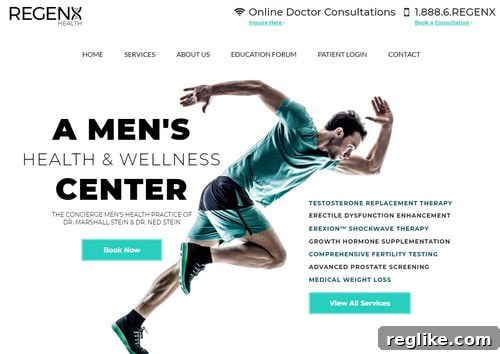
At the heart of the dispute was the domain name RegenXHealth.com. For the Houston medical practice, this domain is not merely an online address; it is a vital part of its branding, identity, and patient outreach efforts. The name clearly reflects the practice’s focus on “Regen”erative health and “X” denoting excellence or specific medical interventions, combined with the general term “Health.” It represents a natural and logical choice for a health-related business seeking an impactful and memorable online presence. The website provides information about their services, contact details, and serves as a digital storefront for their local operations. Such usage strongly indicates a legitimate interest in the domain, a foundational principle in UDRP cases.
Understanding Reverse Domain Name Hijacking (RDNH)
To fully grasp the gravity of the NAF panel’s decision, it is essential to understand what constitutes Reverse Domain Name Hijacking. RDNH is a formal finding within the UDRP framework, signifying that a complainant brought a UDRP action in bad faith, primarily to harass the domain name holder or to improperly seize a domain name to which they are not legitimately entitled. It’s an important safeguard to prevent large corporations or aggressive brand owners from using the UDRP as a tool for unfair domain acquisition, rather than its intended purpose of combating cybersquatting. While UDRP is generally designed to be a streamlined and cost-effective process for trademark owners to recover domains registered in bad faith, the RDNH mechanism ensures that this system is not abused.
A finding of RDNH is relatively uncommon, making the Regenxbio case particularly noteworthy. It sends a strong message to potential complainants: they must conduct thorough investigations and present well-founded arguments, backed by credible evidence, before initiating a UDRP complaint. The bar for proving cybersquatting is specific: the domain must be identical or confusingly similar to a trademark, the registrant must have no legitimate rights or interests in the domain, and the domain must have been registered and used in bad faith. Failing to meet these criteria, especially when coupled with deceptive practices or a clear disregard for the respondent’s legitimate interests, can lead to an RDNH finding.
The Disputed Claims: Regenxbio’s Unsubstantiated Allegations
Regenxbio’s UDRP complaint was built upon several claims that the three-member NAF panel ultimately found to be unsupported and, in some instances, disingenuous. One critical misrepresentation revolved around the identity of the domain registrant. Regenxbio asserted that the respondent, operating behind a privacy shield, was “unknown.” However, the panel noted that there was “ample evidence” to the contrary. This evidence included ongoing trademark proceedings between the two entities at the U.S. Patent and Trademark Office (USPTO) and readily accessible information from the respondent’s active website. This deliberate omission or misrepresentation by Regenxbio was a significant factor in the panel’s bad faith assessment, suggesting an attempt to obscure relevant facts that would weaken their case.
Furthermore, Regenxbio attempted to argue that the two companies were competitors, both providing “medical-related services.” The NAF panel swiftly dismissed this claim as “disingenuous at best” due to the “highly differentiated nature of the services.” As previously noted, Regenxbio operates at the cutting edge of gene therapy development, a highly specialized field of biotechnology. RegenX Health, conversely, provides direct patient care in men’s health services. While both fall under the broad umbrella of “medical,” their respective markets, client bases, and service delivery models are fundamentally distinct. A patient seeking gene therapy for a serious genetic condition is unlikely to confuse Regenxbio with a local clinic offering men’s health services, and vice-versa. This attempt to conflate vastly different medical services to establish competition was seen as a weak and misleading argument.
Finally, Regenxbio alleged that the respondent’s website prominently used and displayed Regenxbio’s REGENXBIO mark. The panel, however, found “no evidence” to support this assertion. This claim, if true, would have been a strong indicator of cybersquatting and an attempt to trade on the complainant’s reputation. The absence of such evidence further undermined Regenxbio’s credibility and bolstered the panel’s view that the complaint lacked factual basis. Legitimate businesses typically use their own branding, and the visual evidence from RegenX Health’s website, as depicted in the accompanying image, clearly shows branding consistent with a local medical practice, not an imitation of a gene therapy company.
The Panel’s Unanimous Conclusion: A Clear Finding of Bad Faith
The three-member panel, after carefully weighing all the presented evidence and arguments, delivered a clear and unanimous verdict. Their findings unequivocally supported a determination that Regenxbio Inc. had engaged in Reverse Domain Name Hijacking. The panel’s written decision detailed the specific points that led to this conclusion:
The Panel concludes that the evidence supports a determination that Complainant engaged in reverse domain-name hijacking. In reaching this determination, the Panel notes that: (1) Complainant asserted that Respondent, through the use of a privacy shield is “unknown” despite ample evidence, including the pending proceedings at the PTO and access to the Respondent’s website, that Complainant knew the Respondent’s identity; (2) Complainant’s argument that the parties are competitors, insofar as they both provide medical-related services, is disingenuous at best, given the highly differentiated nature of the services; and (3) Complainant’s assertion that Respondent’s website uses and displays Complainant’s REGENXBIO mark is not supported by the evidence
In view of the above, the Panel concludes that this proceeding was brought in bad faith and warrants a finding of reverse domain-name hijacking under Rule 15(e).
This detailed explanation from the panel leaves little doubt about the reasoning behind their decision. The repeated emphasis on “bad faith” in their concluding statement underscores the seriousness of Regenxbio’s conduct. Rule 15(e) of the UDRP Rules explicitly allows for a finding of RDNH when a complaint is deemed to have been brought in bad faith. This finding serves not only as a rebuke to the complainant but also as a protection for the domain name registrant, ensuring they are not unfairly stripped of their valuable online assets by unfounded legal challenges.
Broader Implications for Brand Owners and Domain Registrants
The Regenxbio vs. RegenXHealth.com case offers critical insights for both brand owners seeking to protect their intellectual property and domain registrants looking to safeguard their online presence. For brand owners, this case serves as a stark warning: aggressive domain enforcement strategies must be tempered with careful research and an honest assessment of the merits of a potential UDRP complaint. Failing to disclose relevant facts, making unsubstantiated claims, or attempting to misrepresent the nature of a business relationship can not only lead to an RDNH finding but also damage a company’s reputation and incur unnecessary legal costs.
Furthermore, the case highlights the importance of understanding the specific criteria for cybersquatting under UDRP. Simply possessing a strong trademark is not sufficient to claim any similar-sounding domain name, especially when the domain is being used legitimately by a distinct business. Brand owners must demonstrate that the domain registrant lacks legitimate rights or interests and, crucially, that the domain was registered and used in bad faith. The existence of parallel trademark proceedings at the USPTO, as was the situation here, also underscores the need for a holistic view of intellectual property disputes, rather than attempting to bypass one system with another through misdirection.
For domain registrants, this outcome is a significant victory, demonstrating that the UDRP system can effectively protect legitimate businesses from unwarranted attacks. It empowers smaller entities, like RegenX Health, to stand their ground against larger corporations when their domain usage is genuine and not intended to infringe on another’s trademark. This case also subtly suggests the value of maintaining clear business documentation and a transparent online presence that unequivocally showcases a legitimate interest in one’s domain name. Even when operating behind a privacy shield, having a clear and active website that defines your business can be crucial in defending against UDRP claims.
Conclusion: Upholding Integrity in Domain Dispute Resolution
The NAF panel’s finding of Reverse Domain Name Hijacking against Regenxbio Inc. in its pursuit of RegenXHealth.com is a landmark decision that reaffirms the integrity of the Uniform Domain Name Dispute Resolution Policy. It is a powerful reminder that the UDRP is a mechanism to combat genuine cybersquatting, not a tool for aggressive brand expansion or the casual appropriation of legitimately used domain names. The panel’s detailed reasoning, highlighting Regenxbio’s misrepresentations and unsubstantiated claims, sends a clear message to all parties involved in domain disputes: good faith, transparency, and a solid factual basis are paramount. This outcome not only protects RegenX Health’s rightful ownership of its domain but also reinforces the principles of fairness and equity that underpin the global domain name system, ensuring that legitimate businesses can continue to operate and thrive online without fear of undue corporate pressure.