
Bloomberg publishes a story about Nick Lim, who sold BitMitigate to Epik, and his continued controversial role in online free speech debates.
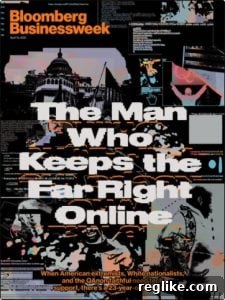
Unmasking the Digital Gatekeepers: Nick Lim, Epik, and the Enduring Battle for Online Freedom
In a world increasingly grappling with the complexities of online content moderation, a recent profile by Bloomberg has thrust Nick Lim into the spotlight. Lim, an influential yet enigmatic figure, made waves after selling his DDoS mitigation company, BitMitigate, to Epik in 2019. This extensive report not only explores Lim’s personal journey and his motivations for supporting controversial websites but also delves into the unique and often confrontational operational philosophy of Epik, a company that has positioned itself at the epicenter of the debate over free speech versus content moderation.
The narrative surrounding Lim and Epik offers a critical lens through which to examine the digital infrastructure that underpins the internet, revealing how critical services — from domain registration to DDoS protection — can become battlegrounds for ideological conflicts. As the digital landscape continues to evolve, understanding the roles of key players like Lim and Epik becomes crucial for comprehending the future of online discourse and the challenging pursuit of a balanced, open, and responsible internet.
Nick Lim: The Architect Behind Controversial Online Presence
At the young age of 23, Nick Lim has already carved out a significant, albeit controversial, presence in the tech world. His initial venture, BitMitigate, provided crucial distributed denial-of-service (DDoS) protection, a service that shields websites from malicious attacks designed to overwhelm and take them offline. The sale of BitMitigate to Epik in 2019 was a pivotal moment, intertwining Lim’s technological expertise with Epik’s self-proclaimed mission to be a haven for “free speech” online, particularly for sites that have been deplatformed by mainstream providers.
Though Lim has since moved on from an active role at Epik, he reportedly maintains a shareholder position and continues to be deeply involved in helping websites favored by white supremacists and QAnon followers stay online. His public stance is firmly rooted in an absolutist interpretation of free speech, advocating for the right of all content, regardless of its nature, to exist online without corporate interference. This perspective resonates with a segment of the internet population that views deplatforming as censorship and a threat to fundamental liberties.
However, the Bloomberg investigation, meticulously conducted by William Turton and Joshua Brustein, reveals more than just a philosophical commitment. Their deep dive into Lim’s background reportedly uncovers contradictions within his personal story, suggesting a more complex motivation than a simple dedication to free speech. These inconsistencies raise questions about the true drivers behind his actions and the broader implications of his work in facilitating the online presence of groups often associated with hate speech, misinformation, and extremism. His continued influence highlights the challenges faced by society in balancing the principles of free expression with the urgent need to combat harmful content.
The services Lim and companies like Epik provide are fundamental to a website’s survival. When a site is denied hosting, domain registration, or DDoS protection by major providers due to content violations, it effectively becomes inaccessible to most internet users. By stepping in to offer these vital services, Lim and Epik enable these entities to maintain their online footprint, albeit often within a more niche and less regulated segment of the internet. This dynamic creates a parallel digital infrastructure, commonly referred to as “alt-tech,” where controversial and sometimes dangerous ideologies can persist and even flourish away from mainstream scrutiny.
Epik’s Controversial Stance and Business Model in the Digital Ecosystem
Epik, a company primarily known as a domain registrar and web hosting provider, has deliberately positioned itself as a sanctuary for websites that have been banned or restricted by other internet service providers. Its acquisition of BitMitigate from Nick Lim solidified its reputation as a preferred partner for a diverse range of clients, including those associated with far-right movements, conspiracy theories, and various forms of extremism. Epik’s leadership, including CEO Rob Monster and executive Rob Davis, consistently defends this policy by asserting their commitment to unfettered free speech and their role as neutral technological facilitators, not content endorsers.
This business model, while controversial, highlights a significant fault line in the contemporary internet. On one side are those who advocate for aggressive content moderation, arguing that tech companies have a moral and social responsibility to prevent the spread of hate speech, disinformation, and incitement to violence. They contend that providing platforms for such content can lead to real-world harm, radicalization, and the erosion of democratic values. On the other side, Epik and its supporters champion the idea of an open internet where all legal speech is permitted, fearing that censorship, even of harmful content, can set a dangerous precedent and lead to an arbitrary suppression of unpopular opinions.
The Bloomberg article vividly illustrates Epik’s distinctive approach to public relations and its handling of scrutiny. When Bloomberg Businessweek sought an interview with Rob Monster to discuss Epik’s philosophical underpinnings and its relationship with Nick Lim, the response was nothing short of extraordinary. Instead of a conventional interview or a concise statement, Epik executive Rob Davis delivered an astonishing nine-page email. This extensive communication served not only as a defense of Epik’s operations but also as a broad attack against the media, whom Davis accused of attempting to demonize the company and its employees.
In October, Bloomberg Businessweek emailed Monster, requesting an interview to discuss Epik’s political philosophy and its relationship with Lim. [Rob] Davis, the Epik executive, sent a nine-page response arguing that Epik had been demonized unfairly and had done a great job of combating extremism. Davis accused the news media of trying to destroy the lives of Epik employees and said the interview request itself was part of an attempt to manipulate the 2020 presidential election. “The long and short of it,” he wrote, “is that we don’t give interviews to traitors of our country that participate in attempted coups sponsored by offshore money.” He cc’d close to 100 other recipients, including the Republican chair of the Federal Communications Commission, the antitrust division of the Federal Trade Commission, and Fox News host Sean Hannity.
The email’s content transcended a simple corporate defense, venturing into accusations of election manipulation and labeling journalists as “traitors of our country.” The decision to carbon copy nearly 100 recipients, including high-profile political figures and federal regulators like the FCC and FTC, along with a prominent Fox News host, signifies a deliberate strategy to publicly challenge and, some might argue, intimidate its critics, rather than engage in a nuanced discussion about its practices. This incident provides a unique insight into how Epik perceives its role and its adversaries in the ongoing online content wars.
A Consistent Pattern of Confrontational Engagements and Communication
The incident with Bloomberg is not an isolated event but rather a clear demonstration of Epik’s consistent and highly confrontational communication strategy, particularly when facing public criticism or operational setbacks. This distinctive approach has become a defining characteristic of the company’s public face, often escalating disputes rather than seeking resolution, and invariably drawing further attention to its controversial business model.
A notable example of this pattern occurred when PayPal terminated its services for Epik. In response, Rob Davis released an open letter that went far beyond addressing the immediate business decision. The letter veered into conspiratorial territory, mentioning “Hollywood pedophiles” and “Hunter Biden” in an apparent attempt to contextualize PayPal’s actions within a broader political narrative of persecution. This tactic sought to rally support from a specific audience by framing Epik as a victim of politically motivated deplatforming, rather than a company grappling with its own content policies.
Similarly, when GoDaddy, a major player in the domain name industry, ended its Afternic partnership with Epik, the company again responded by injecting political undertones into a commercial dispute. Epik publicly questioned the timing of GoDaddy’s termination letter, noting its arrival “two hours after the election was called for Joe Biden.” This statement, while seemingly a subtle observation, effectively tied a routine business severance to a highly charged political event, reinforcing the narrative that Epik was being targeted for political reasons rather than standard business considerations or policy violations.
Another striking instance involved a reaction from domain name investors to an ostensibly racist comment made by an Epik representative. Instead of internal damage control or a conciliatory public apology, Rob Davis chose a more aggressive route. He sent an email explicitly cc’d to the Federal Trade Commission (FTC), instructing critics to cease their comments and making a bold threat: that he could email 300 million people within 15 seconds. This demonstrates an extraordinary willingness to use intimidation tactics and leverage potential mass communication capabilities, even invoking regulatory bodies, to silence dissent and defend the company’s image, further alienating mainstream partners and industry peers.
These recurring patterns reveal a company that not only embraces controversy but actively uses it as a strategic tool. By consistently portraying itself as under attack by biased media, political adversaries, or shadowy forces, Epik cultivates an image of a principled, besieged entity fighting for internet freedom. This narrative successfully appeals to a segment of the population that distrusts mainstream institutions and feels marginalized by larger tech platforms, consolidating Epik’s niche but significant position in the online services market.
The Broader Debate: Free Speech, Deplatforming, and Online Responsibility
The events surrounding Nick Lim and Epik are central to one of the most critical and polarizing debates in the digital age: the delicate balance between absolute free speech and the ethical responsibilities of online platforms. “Deplatforming,” the act of removing individuals or organizations from internet services for violating terms of service, has become a potent, albeit controversial, tool in the fight against hate speech, misinformation, and incitement to violence. Proponents argue that private companies have both the right and the moral obligation to refuse service to entities that use their platforms to cause real-world harm or undermine democratic processes.
Conversely, critics of deplatforming, including figures like Lim and Epik’s leadership, often voice concerns about the potential for censorship and the suppression of legitimate, albeit unpopular, discourse. They argue that allowing tech companies to dictate acceptable content grants them immense, unchecked power that could eventually stifle dissent and lead to a less open internet. This perspective often emphasizes the idea that the best antidote to harmful speech is more speech, allowing ideas to be debated and refuted in the open marketplace of ideas. However, this ideal scenario often clashes with the reality of online echo chambers, the rapid virality of misinformation, and the potential for online rhetoric to incite real-world violence.
The emergence and continued operation of “alt-tech” providers like Epik significantly complicate this debate. By offering alternative infrastructure services, they ensure that deplatformed entities can continue to maintain an online presence, even if with reduced reach and visibility. This raises profound questions about the overall effectiveness of deplatforming. While it may limit the mainstream amplification of extremist content and reduce advertising revenue, it doesn’t necessarily remove such content from the internet entirely. Instead, it often pushes these groups to more insular platforms, potentially making them harder to monitor, counter, or engage with, while simultaneously fueling a narrative of victimhood and persecution among those who are deplatformed.
This dynamic forces a deeper and more uncomfortable examination of the ethical responsibilities of every layer of the internet’s infrastructure. Is the responsibility for content moderation solely on social media platforms, or do domain registrars, web hosts, DDoS protection services, and even payment processors also bear a share of the burden? There are no universally accepted answers, and different jurisdictions and corporations adopt vastly different approaches, contributing to a fragmented and often inconsistent global landscape of online governance. The case of Epik underscores that the lines between providing neutral technical services and tacitly enabling harmful content are increasingly blurred, demanding greater transparency and accountability from all internet infrastructure providers.
The Future of Online Services, Accountability, and Content Moderation
The critical issues brought to light by the Bloomberg investigation into Nick Lim and Epik are not isolated incidents but rather symptomatic of broader, ongoing challenges that will continue to shape the digital future. As governments worldwide intensify their efforts to regulate online content and as technology companies face increasing pressure from users, advertisers, and civil society to combat harmful material, the role of “free speech absolutist” providers like Epik will remain a subject of intense scrutiny and contention. The perpetual tension between facilitating open discourse and preventing the proliferation of dangerous narratives demands a continuous re-evaluation of policies, technological solutions, and corporate ethics.
Looking ahead, several developments could emerge. We might see more stringent regulatory frameworks extending beyond social media platforms to encompass infrastructure providers, compelling them to adopt clearer content policies and more robust enforcement mechanisms. There could also be a stronger push for greater transparency from all online service providers regarding their content moderation practices, their client rosters, and their responses to deplatforming requests. Simultaneously, the “alt-tech” ecosystem is likely to continue evolving, constantly seeking new and more resilient ways to bypass mainstream restrictions and establish parallel internet structures, fueled by significant financial incentives to cater to deplatformed clients.
Ultimately, the story of Nick Lim, BitMitigate, and Epik serves as a compelling case study in the overarching struggle to define the character and boundaries of the internet. It compels us to confront difficult questions about who holds the power to speak online, who decides what constitutes acceptable discourse, and what collective responsibilities we share as participants in an increasingly interconnected, yet ideologically fractured, digital world. Bloomberg’s diligent reporting not only casts a vital light on specific actors but also emphasizes the urgent necessity for a more coherent, ethically sound, and globally aligned approach to managing the vast, complex, and often volatile landscape of online information.