
Booking.com Unveils Villas.com: A Masterclass in Strategic Domain Acquisition
The digital travel landscape is constantly evolving, with companies vying for supremacy in niche markets. In a significant move that underscores the importance of a robust online presence, global travel booking giant Booking.com has officially launched Villas.com. This new platform is set to revolutionize the way travelers discover and book vacation rental properties, signaling a bold expansion into an increasingly competitive sector. But the story of Villas.com isn’t just about a new website; it’s a fascinating narrative of foresight, strategic investment, and an extensive domain name buying spree that has been a topic of speculation among industry insiders for nearly a year.
The Launch of Villas.com: Expanding the Travel Horizon
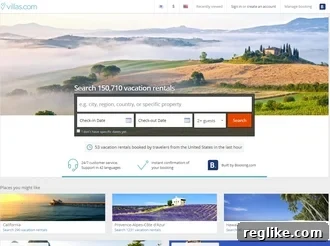
Villas.com emerges as Booking.com’s dedicated portal for vacation rentals, an offering designed to cater to a growing segment of travelers seeking more personalized, private, and spacious accommodation options. From luxurious beachfront villas to cozy countryside cottages and sprawling family homes, Villas.com aims to consolidate a diverse inventory under a single, memorable brand. This strategic launch positions Booking.com directly against established players in the vacation rental market, such as Airbnb, HomeAway, and VRBO, leveraging its unparalleled global reach and trusted booking infrastructure to gain a significant foothold.
The move is a clear indication that Booking.com, a subsidiary of Booking Holdings, is not content with its dominance in traditional hotel bookings. By extending its offerings to include vacation rentals, the company seeks to capture a larger share of the overall travel market, diversify its revenue streams, and provide a more comprehensive solution for every type of traveler. The decision to brand this new venture as Villas.com is particularly insightful, as it immediately conveys the platform’s core offering and taps into a widely understood concept of premium, private accommodation. This choice of a descriptive domain name is no accident; it is the culmination of a meticulously planned domain name acquisition strategy that began long before the site’s official unveiling.
Unraveling the Domain Mystery: A Year of Speculation
For almost a year, an intriguing mystery had captivated observers within the domain name industry: who was behind the systematic registration of dozens of country code top-level domain names (ccTLDs) and generic top-level domain names (gTLDs) incorporating the keywords “villa” and “villas”? This extensive acquisition campaign hinted at a major player making a preemptive strike, and the launch of Villas.com finally provides the definitive answer. Booking.com was the architect of this sophisticated domain name strategy, meticulously laying the groundwork for its expansion into the vacation rental market.
The first significant wave of these “villa” related registrations caught the attention of domain industry analysts as early as July 2013. At that time, a then-anonymous entity began snapping up domains such as villa.me, villa.am, villa.sh, and villas.biz. These initial acquisitions were merely the tip of the iceberg. Over the subsequent months, observers noted dozens more “villa” and “villas” domain names being purchased and registered, many of them through MarkMonitor, a registrar notoriously favored by large corporations for its enterprise-level brand protection services. The involvement of MarkMonitor itself served as a strong indicator that a prominent, well-resourced company was behind the campaign, rather than an individual or a smaller startup.
Clues and Confirmations: Piecing Together the Puzzle
As the domain registrations continued, the speculation intensified. Industry experts and domain name enthusiasts tried to connect the dots, eager to uncover the identity of this stealthy acquirer. A crucial clue emerged just a month before the official launch, when Villa.com changed registrars. Such a high-value domain moving registrars often precedes a major rebranding, a site launch, or a corporate acquisition. This specific registrar change was a strong signal that significant developments were imminent for a project centered around “villa” properties.
In the interim period leading up to the launch, several individuals within the domain and travel industries reported being approached regarding “villa” domain names they owned. These outreach efforts further suggested a coordinated and comprehensive strategy to secure a dominant online presence. Weeks before the official announcement, the pieces of the puzzle began to fall into place. Multiple sources, through private communications and industry chatter, converged on a common suspect: Booking.com. Their intuition and investigative efforts proved correct, as the launch of Villas.com confirmed the long-held suspicions.
Strategic Implications of Booking.com’s Domain Acquisition
Booking.com’s extensive domain name acquisition campaign, culminating in the launch of Villas.com, offers a textbook example of sophisticated digital strategy. This endeavor was not merely about owning a few good domain names; it was a substantial, multi-faceted defensive registration strategy designed to achieve several critical objectives:
1. Brand Protection and Defensive Registrations:
By acquiring a vast portfolio of “villa” and “villas” related domains across various extensions, Booking.com proactively protected its future brand from cybersquatting and potential competitors. This defensive strategy ensures that no other entity can easily launch a competing service under a similar, highly descriptive, and memorable domain name, thereby safeguarding market share and preventing brand dilution. It’s a proactive measure against anyone trying to capitalize on similar terms.
2. Establishing Market Authority and SEO Advantage:
The choice of a descriptive domain name like Villas.com offers inherent SEO benefits. Such domains are often easier for users to remember, type directly into their browser, and associate with the service offered. This direct relevance can contribute to higher click-through rates from search engine results pages and improve organic visibility over time. Furthermore, owning a broad array of relevant domain names can help reinforce brand authority and expertise within the specific niche of vacation rentals, signalling to search engines the comprehensiveness of Booking.com’s offering.
3. Seamless User Experience and Memorability:
Villas.com is an intuitive and memorable name, making it easy for customers to recall and navigate to the platform. In a crowded online travel market, simplicity and clarity are paramount. A descriptive domain name reduces cognitive load for users and enhances the overall brand experience, fostering trust and encouraging repeat visits. It speaks directly to the target audience, leaving no ambiguity about the site’s purpose.
4. Competitive Edge in the Vacation Rental Market:
The vacation rental market is booming, driven by changing traveler preferences for unique experiences and value. By launching Villas.com, Booking.com directly challenges key competitors like Airbnb and Expedia’s HomeAway/VRBO. The robust domain portfolio provides a strong foundation for this competitive push, ensuring Booking.com has the digital real estate to aggressively market its new venture and capture a significant share of this lucrative market segment.
The Enduring Value of Descriptive Domain Names
Booking.com’s strategic move with Villas.com powerfully illustrates a critical lesson in the digital age: while brand building is essential, the foundation often lies in the quality and relevance of a company’s domain name portfolio. It goes to show that leveraging a descriptive domain name, while incredibly powerful for branding, memorability, and SEO, often comes with more significant expenses than just the initial cost of acquiring a premium .com address. The additional costs can include the extensive defensive registrations across numerous ccTLDs and gTLDs, the acquisition of existing descriptive domains, and ongoing management fees. However, for a company with the vision and resources of Booking.com, this investment is clearly seen as a worthwhile expenditure, solidifying its position and future growth prospects in the global travel industry.
The saga of Villas.com serves as a compelling case study for any business looking to expand or establish a dominant online presence. It highlights that in today’s digital economy, a comprehensive domain name strategy is not merely a technical detail but a fundamental pillar of marketing, branding, and competitive advantage. By meticulously securing its digital perimeter, Booking.com has not only launched a new platform but has also demonstrated a profound understanding of how to build an unassailable position in the ever-evolving world of online travel.