
Booking.com, Cybersquatting, and UDRP: Unpacking Key Domain Law Insights with David Bernstein
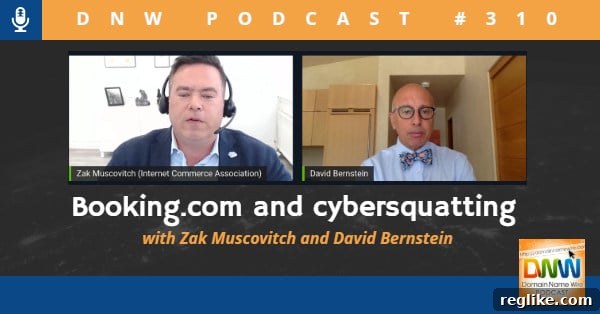
In the dynamic realm of internet commerce and intellectual property, the intersection of domain names, trademarks, and legal precedent continually shapes how businesses operate online. A standout session from a recent NamesCon Online event brought together two prominent figures to dissect these critical topics: Zak Muscovitch, General Counsel of the Internet Commerce Association, and David Bernstein, a distinguished partner at Debevoise & Plimpton LLP. Their discussion offered a wealth of insights, particularly surrounding the groundbreaking Booking.com Supreme Court case and its profound implications for dictionary word domains and the broader domain name ecosystem.
David Bernstein’s expertise is uniquely positioned at the forefront of domain name law. He not only served as the lead counsel for Booking.com in their seminal trademark dispute that reached the U.S. Supreme Court but also holds an impressive record as a UDRP (Uniform Domain-Name Dispute-Resolution Policy) panelist, having adjudicated more than 300 cases. This dual experience — navigating high-stakes litigation at the highest judicial level and resolving everyday domain disputes — provides an unparalleled perspective on the challenges and opportunities facing brand owners, domain investors, and legal practitioners today.
The Landmark Booking.com Supreme Court Case: A Shift in Trademarking Generic Terms
The Booking.com Supreme Court case, decided in 2020, marked a significant turning point in U.S. trademark law. At its core, the dispute centered on whether a generic term combined with a generic top-level domain (gTLD) like “.com” could acquire distinctiveness and thus be eligible for trademark protection. Historically, the prevailing view was that merely adding “.com” to a generic word would not transform it into a protectable trademark, as it would still primarily refer to the general category of goods or services.
However, the Supreme Court, in an 8-1 decision, affirmed that “Booking.com” could indeed be trademarked. The Court’s reasoning was rooted in the concept of “secondary meaning,” asserting that if consumers perceive a generic term combined with “.com” as a specific brand rather than a generic descriptor, then it can qualify for trademark registration. In Booking.com’s case, extensive evidence demonstrated that consumers associated “Booking.com” with a particular online travel agency, not just the generic act of “booking” online.
Bernstein, a key figure in this legal triumph, eloquently articulated the nuances of this landmark ruling during the NamesCon discussion. His insights illuminated how the Court focused on consumer perception, shifting the emphasis from the inherent genericness of the individual words to how the compound term functions in the marketplace. This decision effectively carved out a pathway for other brands that have achieved significant public recognition through descriptive or generic domain names to secure similar trademark protections.
Far-Reaching Implications for Dictionary Word Domains and Brand Owners
The Booking.com decision has sent ripples throughout the domain name industry and intellectual property circles, particularly impacting dictionary word domains. For many years, the conventional wisdom suggested that investing heavily in or attempting to trademark generic domain names was fraught with difficulty due to their inherent descriptive nature. The Supreme Court’s ruling challenges this long-held belief, introducing both opportunities and complexities:
- Enhanced Brand Protection for Descriptive Domains: Companies that have successfully built strong brands around descriptive or generic-plus-.com domain names now have a clearer legal precedent to seek trademark protection, provided they can demonstrate robust secondary meaning.
- Increased Scrutiny for Domain Investors: For domain name investors, the case underscores the growing importance of intellectual property due diligence. While the potential for a descriptive domain to become a protectable brand might offer new value, it also necessitates a more careful assessment of potential conflicts with existing or emerging brands.
- A Nuanced Approach to Genericness: The decision doesn’t blanket-approve all generic-plus-.com trademarks. Each case will still be evaluated based on specific evidence of consumer recognition and secondary meaning, making it a high bar to clear. It requires proving that the public identifies the term not just with a product category but with a unique source.
- Impact on Cybersquatting Disputes: In UDRP cases, the line between legitimate use of a generic term and bad-faith registration that infringes on a trademark could become even more complex. The Booking.com ruling may empower more complainants to assert trademark rights over descriptive domains, leading to more intricate disputes that require careful adjudication.
Navigating this evolving legal landscape requires a deep understanding of both trademark law and domain name policy, making expert insights like Bernstein’s invaluable.
Mastering Cybersquatting and Domain Disputes: Insights from a Prolific UDRP Panelist
Beyond his pivotal role in the Supreme Court, David Bernstein’s extensive experience as a UDRP panelist illuminates the practical application of trademark law in domain name disputes. With a track record of presiding over 300 UDRP cases, he brings a wealth of knowledge to the daily battles against cybersquatting and domain infringement.
Demystifying UDRP: The Framework for Domain Name Resolution
The Uniform Domain-Name Dispute-Resolution Policy (UDRP), established by ICANN, serves as an administrative mechanism for resolving disputes between trademark owners and domain name registrants. It provides an efficient and cost-effective alternative to traditional court litigation, primarily targeting instances of cybersquatting—the bad-faith registration of a domain name that is identical or confusingly similar to another’s trademark.
To succeed in a UDRP complaint, a complainant (the trademark holder) must prove three cumulative elements:
- The domain name is identical or confusingly similar to a trademark or service mark in which the complainant has rights.
- The respondent (the domain name registrant) has no rights or legitimate interests in respect of the domain name.
- The domain name has been registered and is being used in bad faith.
Bernstein’s experience as a panelist offers critical insights into how these elements are assessed, distinguishing between legitimate uses of descriptive terms and deliberate attempts to exploit brand reputation.
Memorable Cases and Crucial Lessons from the UDRP Front Lines
While specific case details remain confidential, Bernstein’s reflections on his extensive UDRP caseload often highlight recurring themes and offer practical lessons for the domain community. These “memorable cases” frequently showcase:
- Clear-Cut Cybersquatting: Cases involving blatant typosquatting (minor misspellings of famous brands) or direct imitation of well-known trademarks, where bad faith is unequivocally established.
- Disputes Over Generic and Descriptive Terms: More complex scenarios where the domain name incorporates a common dictionary word. Here, panelists meticulously evaluate whether the respondent has a legitimate interest in using the term generically or if their registration and use are primarily aimed at exploiting a complainant’s trademark. The Booking.com precedent adds new layers to this analysis, potentially making it easier for some descriptive terms to be deemed protectable trademarks.
- Instances of Reverse Domain Name Hijacking (RDNH): Situations where a trademark owner files a UDRP complaint in bad faith, attempting to improperly obtain a domain name from a legitimate registrant. Bernstein’s role often involves identifying and deterring such abusive practices, ensuring the UDRP policy is not weaponized.
- The Importance of Proactive Brand Protection: Many cases underscore the value of early trademark registration and continuous brand monitoring. These measures can often prevent disputes or significantly strengthen a brand owner’s position when a dispute arises.
Bernstein’s insights reinforce the UDRP’s effectiveness as a streamlined mechanism for trademark enforcement, while also acknowledging its limitations and the need for fair, balanced adjudication, especially in light of evolving trademark law.
NamesCon Online: A Premier Platform for Domain Industry Collaboration
The insightful discussion between Zak Muscovitch and David Bernstein is emblematic of the high-quality content regularly presented at NamesCon Online. As a leading global conference for the domain name industry, NamesCon serves as a crucial forum for registrars, registries, investors, legal professionals, and brand managers. It offers a vital platform for participants to engage with the latest trends, legal developments, market opportunities, and technological advancements shaping the digital landscape. These sessions are indispensable for staying informed about everything from new gTLD launches to pivotal legal precedents like the Booking.com case. Registration for upcoming NamesCon Online events is consistently available, fostering a continuous environment for learning, networking, and industry collaboration.
Beyond the Discussion: Essential Industry Updates
The podcast episode featuring this engaging conversation also provided listeners with concise updates on several other significant developments within the domain name sector:
Significant Shakeup at MMX (Minds + Machines)
MMX, known for its portfolio of new gTLDs such as .vip, .fashion, and .fit, has been an influential registry operator. A major shakeup within such a prominent entity can signal broader shifts in the new gTLD market, potentially affecting policies, pricing structures, and strategic directions for various domain extensions. These internal changes often reflect market consolidation, evolving business strategies, or responses to competitive pressures, which can create both challenges and new avenues for stakeholders across the domain industry.
Continuous Launch of New Top-Level Domains (TLDs)
The ongoing introduction of new TLDs remains a compelling driver of innovation and expansion across the internet. These extensions—ranging from industry-specific (e.g., .tech, .app) to geographically relevant (e.g., .nyc) or generic (e.g., .online)—provide fresh opportunities for businesses and individuals to establish unique online identities beyond the traditional .com. Monitoring new TLD launches, understanding their adoption rates, and assessing their branding potential is essential for effective domain strategy, whether for corporate branding, personal use, or investment purposes.
Vigilance Against Scam Alerts in the Domain Name Space
Regrettably, the domain industry continues to be a target for various fraudulent schemes. Periodic scam alerts serve as crucial reminders for domain owners and industry professionals to exercise extreme caution against phishing attempts, misleading renewal notices, deceptive transfer requests, and other forms of cybercrime. Staying informed about common scam tactics, using reputable registrars, and meticulously verifying all communications are vital practices for protecting valuable digital assets from malicious actors.
Updates Pertaining to Epik: A Relevant Player in the Domain Ecosystem
Epik.com has established itself as a notable and occasionally controversial entity within the domain registrar and aftermarket landscape. Updates concerning Epik often relate to its business operations, its involvement in specific domain-related controversies, or its broader impact on the domain market. As a platform that facilitates domain registration, hosting, and acts as a marketplace for a diverse range of domains, its activities are closely observed by industry analysts for their implications on domain policy, free speech debates, and the overall stability of the domain ecosystem.
Sponsor: We extend our gratitude to Dan.com, a premier platform for buying and selling domain names, for their generous support in bringing you this valuable content.
Engage Further: Listen to the Full Podcast and Explore More Insights
For those interested in a deeper dive into these critical discussions and industry developments, the complete podcast episode provides the full conversation between Zak Muscovitch and David Bernstein, alongside the detailed industry updates mentioned above.
Listen to the Podcast Episode (MP3) |
Download Episode (Duration: 31:30 — 25.3MB)
Stay connected and receive the latest domain industry news and insights directly:
- Subscribe via Email
- Subscribe via RSS
- Subscribe via Apple Podcasts
Explore a rich archive of domain industry knowledge by accessing previous podcast episodes here.