
Redactable Inc. Secures Premier Domain: A Landmark Victory in Brand Protection
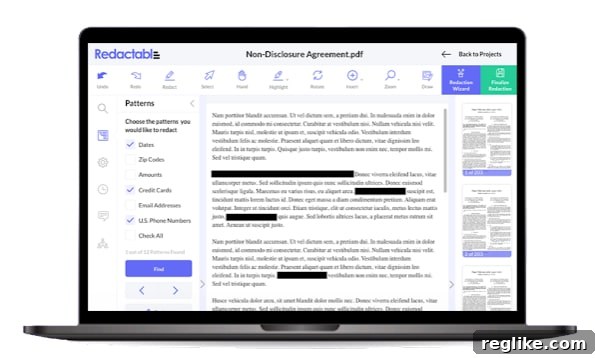
In a significant win for online brand identity and digital asset management, Redactable Inc., a pioneering Software-as-a-Service (SaaS) company specializing in document redaction, has successfully claimed ownership of the highly coveted Redactable.com domain name. This triumph, achieved through a Uniform Domain-Name Dispute-Resolution Policy (UDRP) proceeding, marks a crucial upgrade from their previous Redactable.co address, solidifying their online presence and reinforcing their brand authority in the competitive digital landscape.
The transition from a .co to a .com domain is often seen as a significant milestone for any growing business. While newer top-level domains like .co offer flexibility and are widely recognized, the .com extension remains the undisputed gold standard for credibility, memorability, and consumer trust. For Redactable Inc., a company dedicated to providing essential tools for secure document handling, securing the definitive .com domain is more than just a convenience; it’s a strategic move that enhances their market position, minimizes potential confusion, and fortifies their brand’s long-term digital security. This case provides valuable insights into the complexities of domain disputes and underscores the paramount importance of proactive domain name strategy for startups and established enterprises alike.
Understanding the UDRP: A Vital Mechanism for Brand Protection
The Uniform Domain-Name Dispute-Resolution Policy (UDRP) is an internationally recognized administrative procedure established by the Internet Corporation for Assigned Names and Numbers (ICANN). It serves as a streamlined and cost-effective mechanism for resolving disputes concerning domain names that infringe upon trademark rights. Rather than resorting to lengthy and expensive court litigation, trademark holders can initiate a UDRP proceeding to reclaim domain names registered in bad faith or without legitimate interest.
For a complainant to succeed in a UDRP case, they must generally prove three key elements:
- The disputed domain name is identical or confusingly similar to a trademark or service mark in which the complainant has rights.
- The respondent (the current registrant of the domain name) has no rights or legitimate interests in respect of the domain name.
- The domain name has been registered and is being used in bad faith.
The Redactable Inc. case perfectly illustrates the application of these principles, showcasing how a strong brand name, coupled with a lack of legitimate use by the respondent, can lead to a successful domain transfer. The UDRP process is a critical tool for businesses navigating the intricate world of online branding, offering a relatively swift path to rectify instances of cybersquatting and trademark infringement in the domain space.
The Genesis of the Dispute: Redactable.co vs. Redactable.com
Redactable Inc., operating under the domain name Redactable.co, found itself in a common predicament faced by many businesses: a crucial .com counterpart of their brand name was held by another party. The respondent in this case was James Robinson, president of PaperFree Corporation, a company focused on document management. Robinson had acquired the Redactable.com domain name just a month prior to the dispute and subsequently redirected it to his company’s website. The domain had been previously listed for sale on the BrandBucket marketplace for $2,195, a seemingly modest price in the context of domain name valuation for a growing SaaS company.
Robinson’s defense centered on the argument that “redactable” is a generic term, directly related to the act of document redaction, and therefore, forwarding it to his document management company’s website was a logical and legitimate use. This argument is frequently deployed by respondents in UDRP cases, aiming to demonstrate legitimate interest in a domain. However, the success of such an argument heavily depends on whether the term truly lacks distinctiveness or if a complainant has established strong secondary meaning through a recognized trademark. In the case of Redactable Inc., their established brand and operational use of “Redactable” as a company name and service mark likely played a pivotal role in countering the generic term defense, illustrating that while a word might have a common meaning, its specific use as a brand can establish unique rights.
The Cost of Inaction: A Startup’s Domain Dilemma
A notable point of contention and a crucial lesson for startups emerged from Redactable Inc.’s initial decision not to acquire Redactable.com earlier. The company stated in the UDRP filing that they did not purchase the domain during their early startup phase due to its “exorbitant” price, which was $2,195. This revelation highlights a common, yet potentially costly, oversight for new businesses.
For startups, securing the ideal domain name, particularly the .com variant, should be a top priority. While initial capital might be limited, investing a relatively small sum like $2,195 for a brand-defining .com domain can prevent significant future expenses and brand dilution. The cost of pursuing a UDRP, including legal fees and administrative charges, can often far exceed the initial asking price of a desired domain. In this instance, Redactable Inc. ultimately had to expend considerably more than $2,195 to initiate the UDRP and engage legal counsel, a stark contrast to the initial investment required to prevent the dispute altogether. This case serves as a potent reminder that what may seem like an “exorbitant” cost for a domain during a startup’s infancy can turn out to be a bargain compared to the long-term legal battles and brand confusion that can arise from not owning your primary brand domain. Proactive domain acquisition is a cornerstone of robust brand protection strategy.
The Panel’s Verdict: A Clear Path to Redactable.com
The UDRP proceeding was adjudicated by Panelist Dennis Foster of the National Arbitration Forum. After careful consideration of the arguments presented by both Redactable Inc. and James Robinson, Panelist Foster ruled unequivocally in favor of Redactable Inc. The decision mandated the transfer of the Redactable.com domain name to the complainant, solidifying their ownership and control over this crucial digital asset. This ruling underscores the effectiveness of the UDRP in upholding trademark rights against opportunistic domain registrations, especially when a clear case of confusing similarity, lack of legitimate interest, and bad faith use can be established.
The panel’s decision is not merely a technical transfer; it is a validation of Redactable Inc.’s brand and its right to operate under the most recognizable domain extension. For a SaaS company relying heavily on its online presence and brand reputation, securing the .com domain provides an invaluable boost to credibility, customer recall, and overall market trust. It minimizes the risk of customers inadvertently landing on competitor or irrelevant sites and reinforces Redactable Inc.’s position as the authoritative source for redaction software solutions.
An Unexpected Twist: The Lease-to-Own Conundrum
An intriguing aspect of this case involved the respondent’s claims regarding the acquisition method of the Redactable.com domain. James Robinson stated that he had “terminated his lease” of the domain in October and further asserted that “The Lessor claims that the disputed domain name will not be leased to any other entity, but will be offered for sale at the price of US$2,950.” This statement suggests that the domain may have been acquired through a lease-to-own option, a less conventional method of domain acquisition compared to outright purchase.
Typically, in a lease-to-own agreement for a domain name, the full ownership transfer to the lessee only occurs after all payments have been completed. The detail that the domain was transferred to Robinson’s name upon acquisition, rather than after the full payment, raises questions about the specific terms of the acquisition through BrandBucket. This scenario highlights the complexities that can arise from alternative domain acquisition strategies and underscores the need for extreme caution and thorough due diligence for both buyers and sellers. For domain owners considering payment plans or lease-to-own options, it is critical to keep meticulous records and closely monitor how their domains are being used, as unconventional acquisition methods can introduce ambiguities and potential legal complications, particularly in the context of future disputes. Understanding the exact nature of domain rights and transfer mechanisms is paramount to avoid such convoluted situations.
The Value of Expertise: Legal Representation in UDRP Cases
The legal representation disparity in this case also offers a valuable insight. Redactable Inc. was skillfully represented by Craig Beaker of Perkins Coie, a prominent law firm, indicating a professional and strategic approach to the dispute. In contrast, the respondent, James Robinson, appeared to be self-represented. This difference in legal expertise often plays a significant role in UDRP proceedings.
UDRP cases, while designed to be more accessible than traditional litigation, still involve intricate legal arguments, precedents, and specific evidentiary requirements. Having experienced legal counsel who specialize in intellectual property and domain disputes can significantly bolster a complainant’s chances of success. Lawyers can meticulously prepare the case, articulate legal arguments effectively, and navigate the procedural nuances of the UDRP process. For self-represented parties, the learning curve can be steep, and the lack of specialized knowledge can disadvantage their position, even if they believe they have a strong case. This outcome reinforces the notion that investing in expert legal representation for complex domain disputes is often a wise and strategic decision for businesses seeking to protect their valuable online assets.
Conclusion: Lessons Learned for Domain Strategy and Brand Security
The Redactable.com UDRP victory is more than just a domain transfer; it’s a compelling case study offering crucial lessons for businesses of all sizes, particularly startups and those in the SaaS sector. It underscores the undeniable importance of owning the primary .com domain for brand credibility, market trust, and long-term digital asset protection. The initial “exorbitant” price of $2,195, which Redactable Inc. bypassed, ultimately led to significantly higher costs and effort in reclaiming their rightful domain, serving as a powerful reminder that proactive domain acquisition is an essential, not optional, investment in brand security.
This case further illuminates the efficacy of the UDRP as a vital mechanism for trademark holders to combat cybersquatting and domain name infringement. It also sheds light on the complexities of non-traditional domain acquisition methods and the critical advantage of professional legal representation in navigating such specialized disputes. For any company building a brand in the digital age, the journey of Redactable Inc. to secure Redactable.com should serve as a clear directive: prioritize your domain strategy, safeguard your intellectual property, and be prepared to defend your digital identity, ensuring your online presence accurately reflects your brand’s authority and integrity.