
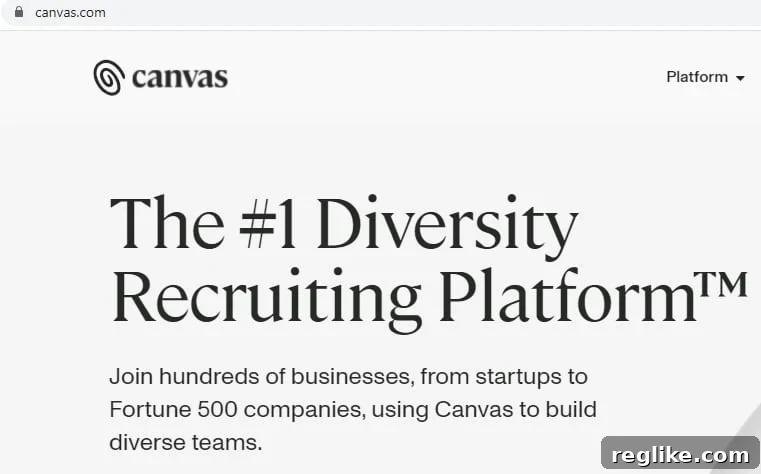
Canvas.com Defies Court Order Amid High-Stakes Trademark Battle: A Deep Dive into the Legal Drama
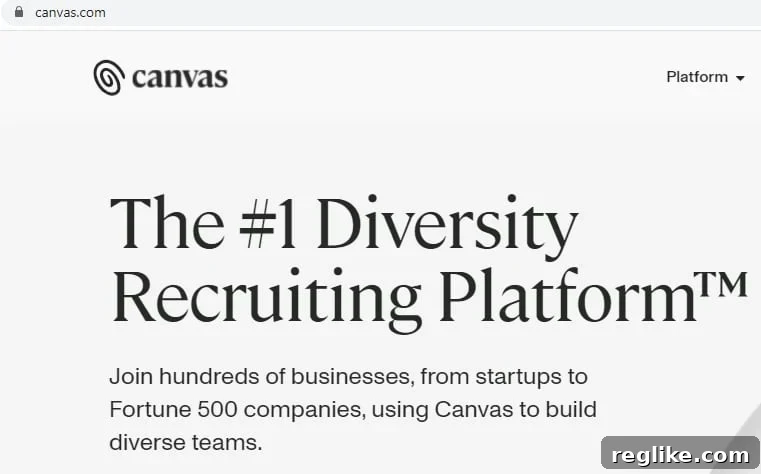
In an unfolding legal drama that has captured the attention of the tech and legal communities, the diversity recruiting platform known simply as Canvas is continuing to operate under its existing brand and the prominent Canvas.com domain name. This defiance comes despite a clear court-ordered deadline mandating an immediate rebranding and cessation of domain use, a deadline which has now firmly passed. The company’s strategy appears to hinge on a critical appeal to the 10th Circuit Court of Appeals, hoping for a stay that could provide a temporary reprieve in this high-stakes intellectual property battle.
The Genesis of a High-Stakes Trademark Dispute
The core of this contentious legal skirmish lies in a trademark infringement claim brought forward by Instructure (NYSE: INST), a well-established education technology company. Instructure is renowned for its own “Canvas” learning management system, a widely adopted platform in educational institutions globally. The company alleges that the diversity recruiting platform’s use of the “Canvas” name directly infringes upon its existing and well-recognized trademark, leading to significant market confusion.
Instructure’s “Canvas” has cultivated substantial brand equity and recognition within the education sector over many years. When another company, particularly one operating in a related technological space, adopts an identical or confusingly similar name, it creates a potential for consumers to mistakenly associate the two entities or believe they are affiliated. This “likelihood of confusion” is the cornerstone of trademark law, designed to protect businesses from unfair competition and consumers from misleading branding.
The recruiting platform, founded with the aim of connecting diverse talent with companies, has also built its own identity under the “Canvas” brand. However, the legal system prioritizes the protection of existing trademarks, especially when a dominant player like Instructure has invested heavily in establishing its brand identity.
The District Court’s Uncompromising Ruling
The legal proceedings took a decisive turn on January 5, when U.S. District Judge Dale A. Kimball granted a preliminary injunction in favor of Instructure. This judicial order was not merely a suggestion; it was a forceful directive with immediate and far-reaching implications for the diversity recruiting platform. Judge Kimball gave Canvas a strict 15-day window to cease all use of the “Canvas” brand, delete all online content and posts that utilized the brand, and, crucially, to stop operating under the prized canvas.com domain name.
A preliminary injunction is a powerful legal tool, often issued when a court believes there is a high likelihood that the plaintiff (in this case, Instructure) will ultimately prevail in the full trial, and that without immediate action, the plaintiff would suffer irreparable harm. The swiftness and severity of Judge Kimball’s order underscored the court’s view on the merits of Instructure’s trademark infringement claim and the urgency of preventing further market confusion.
As the January 20 deadline loomed, the diversity recruiting platform attempted to secure a reprieve from the court’s stringent demands. On January 19, their request for a stay on the injunction was met with a firm denial. Judge Kimball reiterated his January 20 deadline, leaving no room for ambiguity. The message from the district court was unequivocally clear: compliance was mandatory and immediate.
Defiance and the Desperate Plea to the Appeals Court
Despite the unequivocal ruling and the passing of the court-imposed deadline, which was January 20, the date of this report (January 24) finds the diversity recruiting platform Canvas still actively using its brand and the canvas.com domain. This act of non-compliance is a calculated risk, signaling the company’s reliance on a higher judicial authority to intervene.
Understanding the severe ramifications of immediate rebranding, Canvas strategically filed an Emergency Motion to Stay Entry of Preliminary Injunction Pending Appeal with the 10th Circuit Court of Appeals on January 20, the very day the district court’s deadline expired. This emergency motion is a desperate plea for the appeals court to temporarily suspend Judge Kimball’s injunction while the full appeal process unfolds. It’s a lifeline for the company, seeking to avoid what it describes as catastrophic business consequences.
In its filing, Canvas vehemently argued that forcing an immediate change to its brand and domain name would effectively “devastate the business.” The company contends that such an abrupt and fundamental shift would render any future favorable decision by the appeals court moot, as the damage to its operations, customer base, and market position would already be irreparable. This argument highlights the immense operational and financial burden that rebranding entails, far beyond merely changing a logo or website address. It speaks to the potential loss of brand equity, customer trust, and operational continuity.
The appeals court has acknowledged Canvas’s urgent motion and has set a deadline of January 26 for Instructure to respond. This critical date will see Instructure present its counter-arguments, likely emphasizing the urgency of enforcing the preliminary injunction and the irreparable harm it continues to suffer due to the ongoing infringement.
The Monumental Challenge of Rebranding Under Pressure
The diversity recruiting platform’s strong resistance to rebranding is not without solid business reasoning. For any company, changing its core brand identity and domain name is a monumental undertaking, fraught with complexities and significant costs. When faced with a mere 15-day deadline, the task becomes virtually impossible without severe business disruption.
Consider the scope of rebranding for an active online platform:
- Website and Digital Assets: Every page, every image, every piece of content on Canvas.com would need to be updated. This includes legal disclaimers, privacy policies, terms of service, and all user interfaces.
- Domain Name Transition: Securing a new, suitable domain name, migrating all web traffic, updating DNS records, and ensuring seamless redirection for existing links is a technically challenging process that requires careful planning to avoid downtime and lost traffic.
- Marketing and Communications: All marketing materials, from email templates and social media profiles to advertisements and brochures, would need immediate overhaul. Public announcements, press releases, and internal communications strategies would be essential to manage the transition and inform stakeholders.
- Product and Platform Naming: If the platform itself is referred to as “Canvas,” all references within the software, tutorials, help documentation, and user guides would require extensive revision.
- Legal and Regulatory Updates: Business registrations, contracts with clients and vendors, and any intellectual property filings would need to be updated to reflect the new brand.
- Loss of Brand Equity: Years of investment in building brand recognition, customer loyalty, and market trust would be significantly diluted, forcing the company to essentially start from scratch in establishing its new identity.
- Customer Confusion: A sudden and unplanned brand change risks alienating existing users and creating confusion, potentially leading to churn and a loss of market share.
The sheer logistical nightmare and the financial drain associated with such an enforced, rapid rebranding justify the company’s desperate attempt to secure a stay. For a startup or growing platform, such a demand could indeed be business-ending.
Understanding the Appeals Process: A Glimmer of Hope?
The decision now rests with the 10th Circuit Court of Appeals. When considering an emergency motion to stay, appellate courts typically weigh several factors:
- Likelihood of Success on the Merits: Does the appealing party (Canvas) have a strong likelihood of winning the full appeal against the preliminary injunction?
- Irreparable Harm: Will the appealing party suffer irreparable harm if the stay is not granted? This is where Canvas’s argument about business devastation is critical.
- Harm to the Non-Moving Party: What harm would Instructure suffer if the stay *is* granted? Instructure would argue that continued trademark infringement causes ongoing irreparable harm.
- Public Interest: How would granting or denying the stay affect the public interest? This often involves ensuring fair competition and consumer protection.
Given the short timeframe and the profound repercussions of immediately changing its domain name and brand, it is entirely logical and strategically sound for Canvas to exhaust all legal avenues, including waiting for the appeals court to rule. An appeals court stay, if granted, would not be a final victory for Canvas, but merely a temporary pause, allowing the company to continue operating under its current brand while the more extensive legal battle over the preliminary injunction unfolds. It would buy them time, which in such high-stakes litigation, is often invaluable.
Potential Outcomes and Broader Implications
The outcome of the 10th Circuit Court of Appeals’ decision carries immense weight for both companies and could set precedents for future trademark and domain name disputes in the rapidly evolving tech landscape.
- If the Stay is Granted: Canvas would gain a crucial breathing room. They could continue using their brand and domain while the full appeal against the preliminary injunction is heard. This would allow them to either prepare for a more orderly rebranding process if they ultimately lose, or continue their operations unimpeded if they win the appeal.
- If the Stay is Denied: This would be a devastating blow to the diversity recruiting platform. They would be immediately compelled to comply with Judge Kimball’s order, facing potential contempt of court charges if they fail to do so. The financial and operational fallout would be severe, potentially forcing the company into a complete operational shutdown or a fire-sale rebranding effort.
Beyond the immediate future of the diversity recruiting platform, this case underscores the increasing importance of robust intellectual property due diligence, especially for technology companies establishing a brand. The digital age, with its vast interconnectedness and global reach, amplifies the potential for trademark conflicts across different industries, even when initial market segments seem distinct. The “Canvas” vs. “Canvas” dispute serves as a stark reminder that a strong brand name is a valuable asset, fiercely protected by law, and its infringement can lead to costly and protracted legal battles.
Conclusion: A Tense Stand-Off Continues
As the legal clock ticks towards Instructure’s response deadline on January 26, the tech world watches with bated breath. The defiance of the diversity recruiting platform Canvas against a direct court order represents a rare and aggressive legal maneuver, born out of the belief that immediate compliance would spell an irreversible end for their business. This ongoing legal drama highlights the critical importance of trademark protection, the complex challenges of domain name disputes, and the profound impact of judicial orders on business operations. Whether the 10th Circuit Court of Appeals will grant the much-needed stay or uphold the district court’s injunction remains to be seen, but one thing is clear: the battle over the “Canvas” brand and “Canvas.com” is far from over, and its resolution will undoubtedly send ripples throughout the industry.