
Miller Lite’s Epic Domain Stunt: A Super Bowl Marketing Masterclass
The Super Bowl isn’t just a sporting event; it’s an annual battleground for brands, vying for attention with multi-million dollar advertisements. In an arena saturated with high-production value commercials, standing out requires more than just a catchy jingle or a celebrity cameo. It demands audacious creativity, a willingness to challenge norms, and a strategy that extends far beyond the traditional 30-second spot. Miller Lite, a perennial player in the beer industry’s fierce rivalry, exemplified this spirit with a remarkable and highly unconventional marketing campaign that leveraged the very fabric of the internet: the domain name system.
Unpacking the Unprecedented URL: A Digital Marathon
In a move that captured headlines and sparked widespread discussion across the digital marketing landscape, Miller Lite unleashed a groundbreaking marketing stunt centered around an incredibly long and deliberately cumbersome URL. The campaign was designed not just to entertain, but to actively engage consumers in a way that defied typical digital interaction. The centerpiece was an astonishing 836-character URL, anchored by a 62-character second-level domain: thismillerlitemarketingstuntwilldistractyoufromultrasbiggamead.com. Including the .com top-level domain, this alone totaled 66 characters, a veritable digital tongue-twister even before considering the lengthy subdomains that comprised the full 836-character behemoth.
This wasn’t merely a quirky domain; it was a carefully constructed digital gauntlet. The sheer length of the URL made it virtually impossible to remember, and certainly not something one could easily type without significant effort and concentration. It was a deliberate act of friction in a world obsessed with seamless user experience, turning a simple web address into a puzzle, a challenge, and ultimately, a memorable brand interaction.
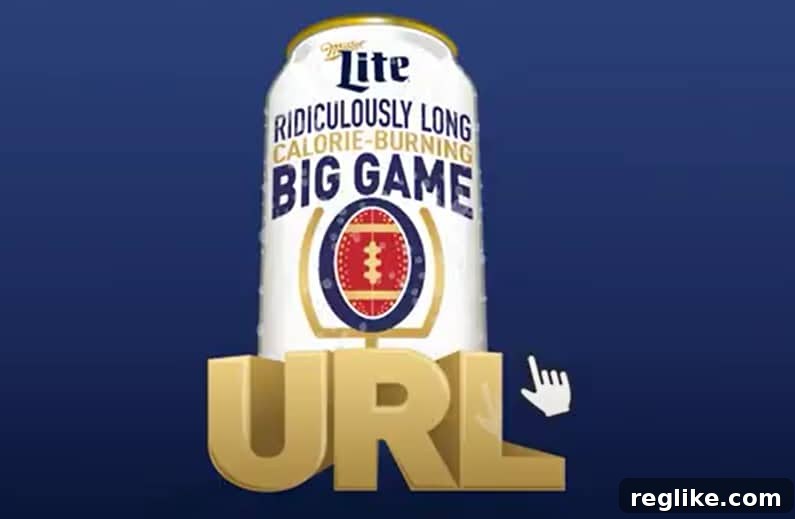
The Ingenious Hook: Rewarding Persistence with $8 and Brand Buzz
The primary incentive for engaging with this digital marathon was a tangible reward: the first 5,000 individuals who successfully typed in the entire 836-character URL on February 7th (the day the campaign went live, likely coinciding with Super Bowl Sunday or a key pre-game period) would receive $8 deposited directly into their Venmo accounts. This wasn’t just about giving away money; it was a meticulously planned strategy linking the digital effort to a real-world, brand-relevant value proposition. An $8 reward is often just enough to purchase a six-pack of beer, subtly reinforcing Miller Lite’s product and providing a direct, albeit small, sales incentive.
The choice of Venmo as the payment platform was also strategic. Venmo, a popular peer-to-peer payment app, boasts a younger, digitally native user base—precisely the demographic Miller Lite aimed to target with its innovative campaign. This integration made the reward process swift, modern, and aligned with the digital nature of the stunt itself, further enhancing the campaign’s appeal and virality.
Creating Intentional Friction: The Art of the Non-Copyable URL
One of the most intriguing aspects of Miller Lite’s strategy was the deliberate decision to publish the URL in formats that actively discouraged easy copy-pasting. The URL appeared in print ads, on billboards, and potentially other non-digital mediums, forcing participants to manually transcribe the lengthy string of characters. In an age where digital convenience is paramount, this move was a bold statement, transforming a passive ad viewing into an active, almost laborious, participation process.
This “friction marketing” served multiple purposes. Firstly, it elevated the perceived value of the $8 reward; participants had to *earn* it through effort. Secondly, it created a genuine buzz and a challenge among consumers. While it’s true that some tech-savvy individuals would likely resort to URL shorteners or share the transcribed URL on social media, the initial barrier amplified the exclusivity and novelty of the stunt. It turned the act of visiting a website into an event, something worth talking about and sharing, regardless of whether one managed to snag the reward.
The Super Bowl Advertising Landscape: A Battle Beyond the Screen
Super Bowl advertising is arguably the most competitive and high-stakes marketing environment globally. With ad slots costing millions of dollars for mere seconds of airtime, brands are under immense pressure to deliver campaigns that not only resonate with viewers but also generate sustained conversation and measurable impact. Miller Lite’s long URL stunt exemplifies a growing trend in Super Bowl marketing: extending the campaign beyond the TV broadcast into interactive digital and social spaces.
This integrated approach allows brands to maximize their investment by creating multiple touchpoints and engagement opportunities. Miller Lite’s stunt wasn’t just an ad; it was an interactive game, a social media talking point, and a clever digital experiment rolled into one. It demonstrated a keen understanding of modern consumer behavior, recognizing that today’s audiences crave participation and novelty, not just passive consumption of advertising.
A Direct Jab at the Competition: The Michelob Ultra Rivalry
The explicit mention of “Ultra’s Big Game Ad” within Miller Lite’s domain name was a masterstroke of competitive marketing. It wasn’t just a marketing stunt; it was a direct, playful, yet potent jab at a key rival, Michelob Ultra, which also heavily invests in Super Bowl advertising. This cheeky rivalry added another layer of intrigue to the campaign, transforming it into a brand-on-brand spectacle that resonated with consumers familiar with the ongoing “beer wars.”
By directly referencing Ultra, Miller Lite not only aimed to distract from its competitor but also cleverly associated its own brand with the Super Bowl buzz surrounding *all* major beer ads. It leveraged Ultra’s anticipated presence to amplify its own message, turning a competitor’s strength into an opportunity for engagement and differentiation. This kind of strategic counter-marketing is a hallmark of highly competitive industries, and Miller Lite executed it with remarkable precision and wit.
The Broader Implications: Domain Names as Marketing Tools
Miller Lite’s campaign offers valuable insights into the evolving role of domain names in digital marketing. While traditionally viewed as mere addresses, this stunt highlighted their potential as dynamic, interactive marketing tools. It challenged the conventional wisdom that domains must be short, memorable, and keyword-rich for SEO. Instead, it demonstrated how a domain’s characteristics—in this case, its extreme length and specific wording—can become the campaign itself.
This approach moves beyond basic SEO considerations towards a strategy of “brand experience through domain interaction.” It’s not about being easily found through search engines for generic terms, but about creating an exclusive, memorable journey that encourages active participation and word-of-mouth. While not a universally applicable strategy, it serves as a powerful reminder that creativity and breaking conventions can unlock new avenues for brand engagement, especially in high-visibility events like the Super Bowl.
The campaign also underscores the ongoing relevance of domain names in an era increasingly dominated by social media handles and app-based interactions. It proved that a well-conceived domain strategy, no matter how unconventional, can still capture public imagination and drive significant brand engagement, reminding marketers to think beyond the obvious and embrace the unexpected.
What Does This Mean for Future Marketing Stunts?
Miller Lite’s long URL stunt is a testament to the power of innovative thinking in marketing. It successfully blended traditional advertising channels (print) with digital engagement (URL typing, Venmo rewards) and social media virality. It created a memorable, interactive experience that generated significant buzz, achieved brand differentiation, and directly challenged a competitor.
The ultimate success of such a campaign isn’t solely measured by the number of $8 payouts, but by the qualitative impact on brand perception, consumer engagement, and the volume of earned media. By making headlines and sparking conversations, Miller Lite likely achieved a return on investment far greater than the aggregate $40,000 (5,000 x $8) in rewards distributed.
This campaign sets a high bar for future Super Bowl advertisers and digital marketers alike. It encourages brands to consider how every element of their digital presence, including something as fundamental as a URL, can be transformed into a unique, engaging, and memorable brand experience. The key takeaway is not necessarily to replicate an 836-character URL, but to embrace the spirit of creative disruption and consumer-centric gamification that Miller Lite so brilliantly demonstrated.
It will be fascinating to observe how other brands, inspired by such bold moves, continue to innovate with domain names and digital interactions in future high-stakes marketing environments. The playing field of attention is ever-evolving, and only the most creative and daring will truly make a splash.