
Protecting Authenticity: The Champagne Bureau’s Bold Stand with a .us Domain
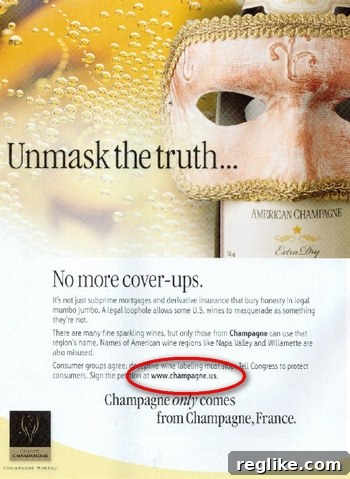
In a world increasingly valuing authenticity and origin, the battle over product names and geographical indications has intensified. One of the most prominent and long-standing disputes centers around the prestigious name “Champagne.” This week, an intriguing advertisement in the back of The New Yorker magazine caught the attention of many, not just for its subject matter but also for its clever use of a digital asset: the Champagne.us domain name.
This placement marks a strategic move by the Champagne Bureau, a Washington D.C.-based lobbying group dedicated to safeguarding the integrity of genuine Champagne. The ad isn’t merely a promotion; it’s a direct call to action, urging American consumers and advocates to sign a petition. The petition’s core objective is clear: to pressure Congress into addressing and rectifying a specific legal loophole that currently permits certain U.S. sparkling wine producers to label their products as “champagne,” despite them not originating from the revered Champagne region of France.
For connoisseurs and casual drinkers alike, the distinction between true Champagne and other sparkling wines is paramount. Champagne, by definition, is a sparkling wine produced exclusively within the Champagne region of France, using specific grape varieties (Chardonnay, Pinot Noir, and Pinot Meunier) and adhering to a rigorous production method known as Méthode Champenoise. This stringent adherence to origin and tradition is what grants Champagne its unparalleled prestige, quality, and often, its higher price point. The ongoing debate in the U.S. challenges this fundamental principle, creating confusion for consumers and undermining the protected status of one of the world’s most iconic beverages.
The Heart of the Matter: A Legal Loophole and Grandfathering Clause
The controversy stems from a peculiar “grandfathering” scheme embedded within a 2006 U.S. law. While this law generally prohibits new American sparkling wine producers from using the term “champagne,” it controversially allows a select group of existing U.S. producers who were already using the term before the law’s enactment to continue doing so. This provision was a concession, a compromise designed to protect established American brands that had historically employed the name, albeit incorrectly by international standards. However, this legal carve-out inadvertently perpetuates the very mislabeling it aimed to curtail for future entrants.
The impact of this loophole is multifaceted. For the French Champagne industry, it represents a direct challenge to its intellectual property rights and a dilution of its brand identity. For consumers in the United States, it creates a landscape of potential deception. Without a clear understanding of geographical indications, a shopper might mistakenly believe they are purchasing a product with the heritage and quality assurances of authentic French Champagne, only to find themselves with a sparkling wine that, while potentially excellent in its own right, does not share the same lineage or production standards.
The .us Domain: A Deliberate and Ironic Choice?
Perhaps one of the most intriguing aspects of this campaign is the choice of the Champagne.us domain name. On the surface, it presents a delightful irony: how can something so intrinsically French be associated with a .us domain, typically reserved for entities with a strong American connection? If true Champagne originates exclusively from the Champagne region of France, then what is the philosophical or geographical basis for “Champagne.us”?
Upon deeper reflection, however, the choice becomes clear and strategically brilliant. The Champagne Bureau, while representing French interests, is based in Washington D.C. and primarily targets American consumers and legislators. The .us domain serves to underscore that this is an American issue, a petition directed at the American Congress, concerning American consumer protection and American legal reform. It effectively signals that the fight for authentic Champagne is being waged on U.S. soil, addressing a U.S. specific problem. It grounds the global issue of geographical indications within a national context, making it more relatable and actionable for the intended audience.
Understanding Geographical Indications (GIs)
The “Champagne” debate is a microcosm of a larger global movement to protect Geographical Indications (GIs). GIs are names or signs used on products that correspond to a specific geographical location or origin, possessing qualities or a reputation that are due to that origin. Famous examples include Parmigiano Reggiano cheese, Scotch Whisky, Idaho Potatoes, and Roquefort cheese. These designations are crucial for several reasons:
- Consumer Protection: GIs help consumers make informed purchasing decisions, assuring them of the product’s origin, quality, and traditional production methods.
- Producer Protection: They prevent unauthorized use of the name by producers from other regions, ensuring fair competition and safeguarding the reputation of the original product.
- Economic Value: Products with GIs often command premium prices due to their unique qualities and heritage, bringing economic benefits to the regions and communities that produce them.
- Cultural Preservation: GIs protect traditional knowledge, local expertise, and cultural heritage associated with specific products.
While the European Union has robust protections for GIs, the United States has a somewhat different approach, often favoring trademark law and common usage over strict geographical indication enforcement, leading to ongoing disputes like the “Champagne” controversy.
The Arguments: Protecting Authenticity vs. Historical Usage
The petition championed by the Champagne Bureau is a strong argument for upholding international standards and protecting the integrity of geographical indications. Their stance is rooted in the belief that allowing non-French sparkling wines to be labeled as “champagne” misleads consumers, undermines the global reputation of true Champagne, and sets a dangerous precedent for other protected designations.
On the other side, some American sparkling wine producers argue for the right to continue using the term based on historical usage and established brand recognition. They might contend that “champagne” has become a generic or descriptive term for sparkling wine in the U.S. over decades, and stripping them of this naming right would cause significant economic harm and disrupt long-standing business practices. This perspective often clashes with international agreements and the very essence of geographical indications.
The Road Ahead: Education, Advocacy, and Legislative Action
The Champagne Bureau’s campaign, prominently featured in a publication like The New Yorker and amplified through the accessible Champagne.us domain, is a vital step in educating the American public. It aims to raise awareness about the nuances of wine labeling, the significance of origin, and the implications of intellectual property rights in the food and beverage industry.
For consumers who appreciate the rich history, meticulous craftsmanship, and undeniable quality that define genuine Champagne, this petition offers an opportunity to voice their support for authenticity. It encourages them to consider not just the taste of their sparkling wine, but also its story, its heritage, and the global efforts to protect these valuable designations.
Ultimately, the success of this petition hinges on its ability to galvanize public support and translate that into meaningful legislative action. Should Congress decide to close the grandfathering loophole, it would not only be a victory for French Champagne producers but also a significant win for consumer protection and the broader principle of respecting geographical indications worldwide. It would reinforce the idea that names matter, and that authenticity, especially in premium products, deserves to be protected and celebrated.
The call to action is clear: if you believe in safeguarding the integrity of time-honored products and supporting transparency in labeling, the opportunity to make your voice heard awaits at Champagne.us. This campaign is more than just about wine; it’s about upholding standards, ensuring fair trade, and preserving the cultural and economic value of unique products born from specific lands.