
The Rise of AI-Native Browsers: OpenAI’s Strategic Move with ChatGPT Atlas and Extensive Domain Protection
The landscape of artificial intelligence is rapidly evolving, with companies not only vying for supremacy in model development but also extending their reach into the very conduits through which users interact with the internet. A new and fiercely contested frontier has emerged: the web browser. Much like Google’s historic strategy of integrating search deeply into its browser, consumer-facing AI giants are now launching their own browsing solutions. This tactical shift aims to enhance user stickiness, create proprietary data feedback loops for model improvement, and ultimately secure a larger slice of the burgeoning AI market share.
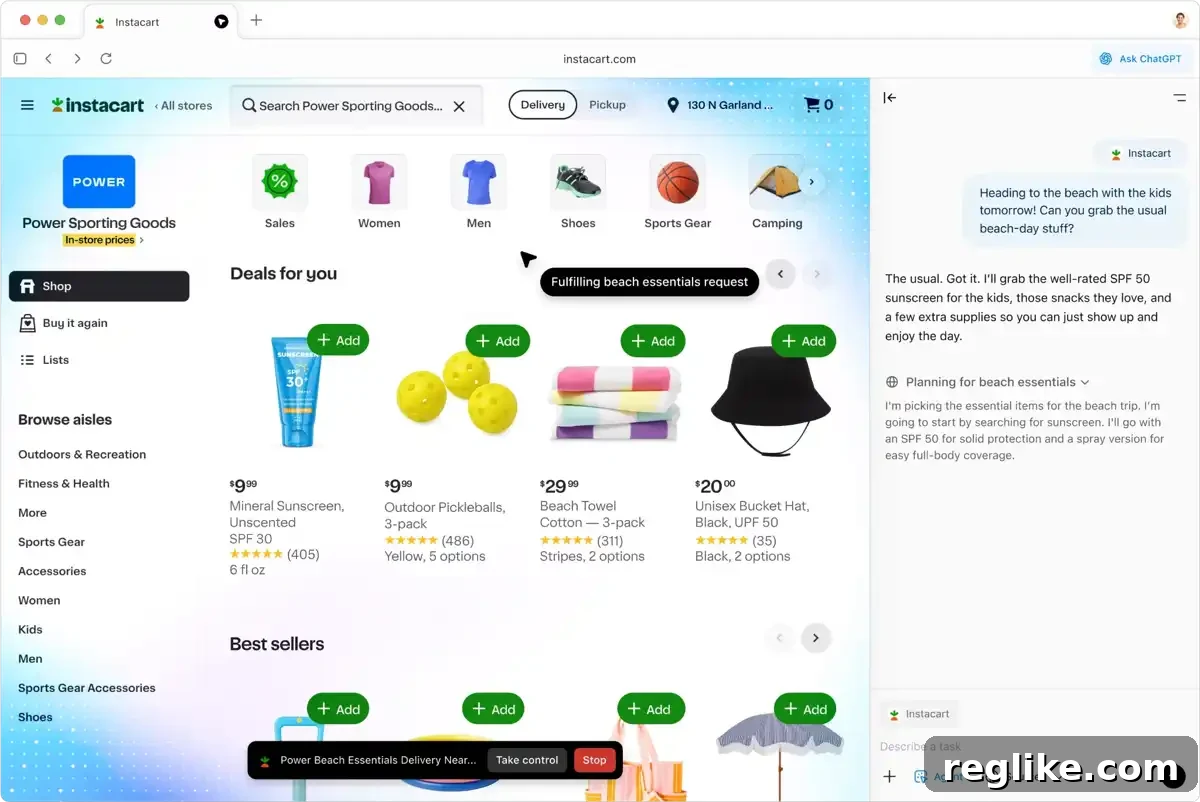
Following this emerging trend, Perplexity recently unveiled its AI-powered browser, Comet, setting the stage for what many anticipated would be a competitive response. True to form, OpenAI, the powerhouse behind ChatGPT, swiftly announced its own entrant: ChatGPT Atlas, specifically designed for Mac users. This move signals a profound strategic pivot, indicating that the next major battleground for AI market dominance will unfold within our daily browsing experience. The introduction of such AI-native browsers promises a more integrated, intelligent, and personalized interaction with the web, fundamentally reshaping how we access and process information.
OpenAI’s Extensive Domain Registration Strategy for ChatGPT Atlas
Coinciding with the announcement of ChatGPT Atlas, OpenAI embarked on an extraordinary domain registration spree, a move that underscores the strategic importance of this new product. The company meticulously registered the primary domain, chatgptatlas.tld, across a vast array of top-level domains (TLDs). This proactive brand protection strategy didn’t stop at mere registration; it also involved leveraging blocking services to secure the name in other TLDs where direct registration might be impractical or uneconomical. The scale of this operation is immense, encompassing hundreds of distinct domain names, each representing a potential entry point for users or, conversely, a vulnerability if left unprotected.
The breadth of OpenAI’s domain acquisition is truly remarkable, extending far beyond the typical .com or .org registrations. For instance, the company secured domains like chatgptatlas.fun, chatgptatlas.beauty, and chatgptatlas.realty. This eclectic mix of TLDs highlights a comprehensive approach to digital brand fortification, aiming to cover virtually every corner of the internet. By casting such a wide net, OpenAI is attempting to preemptively safeguard its brand identity against potential misuse, cybersquatting, and attempts to mislead consumers.
An examination of current domain availability reveals the sheer effectiveness of this strategy. Today, it appears that only a select few top-level domains remain unregistered by OpenAI for “ChatGPT Atlas.” These typically fall into specific categories: those with prohibitive registration costs (such as certain premium TLDs like .auto), TLDs with highly restrictive registration policies that limit who can register (e.g., country-code TLDs requiring local presence), or smaller, less commonly used TLDs managed by niche registries. This selective non-registration indicates a calculated risk assessment, balancing the comprehensive protection desired against the practicalities and economics of universal domain ownership.
The Rationale Behind Universal Domain Protection in the Digital Age
In an increasingly interconnected digital world, establishing and protecting a brand’s online presence is paramount. For a company of OpenAI’s stature, launching a product as significant as ChatGPT Atlas necessitates an ironclad brand defense strategy. The primary motivation behind registering or blocking hundreds of domain names is multi-faceted:
- Brand Identity and Integrity: Securing a wide array of TLDs ensures that the “ChatGPT Atlas” brand is consistently represented across the internet, preventing diluted messaging or fragmented user experiences. It reinforces the official source of the product and builds trust.
- Preventing Cybersquatting and Typosquatting: Cybersquatters often register domain names incorporating famous trademarks with the intention of selling them back to the brand owner at an inflated price or using them for malicious purposes. Typosquatters register common misspellings to siphon off traffic. By proactively acquiring these domains, OpenAI neutralizes these threats, protecting its reputation and user base.
- Safeguarding Against Phishing and Malware: Malicious actors frequently use deceptive domain names that closely resemble legitimate ones to launch phishing attacks, distribute malware, or host fraudulent content. Extensive domain registration significantly reduces the surface area for such attacks, making it harder for cybercriminals to impersonate ChatGPT Atlas.
- Future-Proofing and Market Dominance: As the internet continues to evolve with new TLDs being introduced regularly, a comprehensive registration strategy ensures long-term brand control. It also signals a strong commitment to the product and an intent to dominate its market segment, discouraging competitors or opportunists from encroaching on the brand’s digital territory.
- User Trust and SEO Benefits: Owning key domain variations can funnel traffic back to the official site, improving search engine visibility and user access. Users encountering various TLDs with the same brand name can be confidently redirected to the authoritative source, reinforcing trust and ease of access.
This aggressive domain strategy mirrors the actions of tech giants in the past, who understood the critical link between pervasive online presence and market leadership. For OpenAI, it’s not just about launching a browser; it’s about owning the digital footprint of a potentially revolutionary product.
The Complexities and Perceived Futilities of Comprehensive Domain Registration
While the benefits of extensive domain protection are clear, the strategy of attempting to register or block a brand name across all available top-level domains is often considered an arduous, if not largely futile, endeavor. The sheer number of TLDs has exploded over the past decade, moving far beyond the traditional .com, .net, and .org to include hundreds of generic TLDs (gTLDs) like .app, .shop, .cloud, and even obscure ones like .pizza or .ninja, not to mention countless country-code TLDs (ccTLDs). Managing such a vast portfolio becomes a significant administrative and financial burden.
Critics of this all-encompassing approach often point out that if a malicious actor is determined to squat on a brand’s name, they can simply alter a letter, add a hyphen, or introduce a slight variation to find an available option that still leverages the brand’s equity (e.g., chatgpt-atlas.com or chatgpt-atlas-browser.com). This “typosquatting” or “variant squatting” makes universal domain ownership an almost Sisyphean task. Furthermore, the cost associated with maintaining hundreds of registrations annually can quickly escalate, leading companies to question the return on investment for less popular or relevant TLDs.
For smaller registries operating less prominent TLDs, securing a major brand’s presence might not be a priority, or the TLDs might have very specific community-based registration requirements that make a blanket registration difficult. Consequently, companies like OpenAI must perform a careful cost-benefit analysis, deciding which TLDs are critical for immediate protection and strategic importance, and which can be left unprotected without significant risk. This nuanced approach acknowledges that perfect protection is unattainable, and resources must be allocated judiciously.
The Future of AI in Web Browsing and Its Implications
The entry of AI powerhouses like OpenAI and Perplexity into the browser market signifies a pivotal shift in how we conceive of and interact with the internet. These AI-native browsers are not just web rendering engines; they are intelligent agents designed to seamlessly integrate advanced AI capabilities directly into the browsing experience. Imagine real-time content summarization, automated research assistance, proactive information retrieval, context-aware content creation, and hyper-personalized recommendations, all built directly into your browser.
This evolution promises a dramatically enhanced user experience, making information consumption and content generation more efficient and intuitive. However, it also raises important questions about data privacy, competition, and the future of the open web. AI browsers, by their nature, will likely collect vast amounts of user interaction data to refine their underlying models, leading to debates about data ownership and ethical usage. The intensified competition could also lead to further consolidation in the tech industry, potentially creating new “walled gardens” where specific AI models and services are favored.
Ultimately, OpenAI’s strategic move with ChatGPT Atlas, complemented by its robust domain protection initiative, is more than just a product launch. It’s a declaration of intent, signaling that the future of AI is deeply intertwined with the fundamental tools we use to navigate the digital world. As AI capabilities become more ubiquitous, owning the user interface – the browser – becomes a critical lever for influencing how users access, create, and understand information, shaping the digital ecosystem for years to come.