
China’s Domain Market Faces Unexpected Decline Amid Global Digital Boom
In a surprising turn of events that sharply contrasts with the global surge in online presence, China’s domain registration landscape experienced a significant downturn last year. The latest report from the China Internet Network Information Center (CNNIC), the authoritative body overseeing internet development in the country, paints a challenging picture for the demand and growth within the Chinese domain market. This trend is particularly noteworthy as businesses worldwide were actively migrating to digital platforms to navigate the challenges posed by the COVID-19 pandemic, making China’s decline a unique anomaly requiring closer examination.
A Deep Dive into the Numbers: China’s Domain Registrations Contract
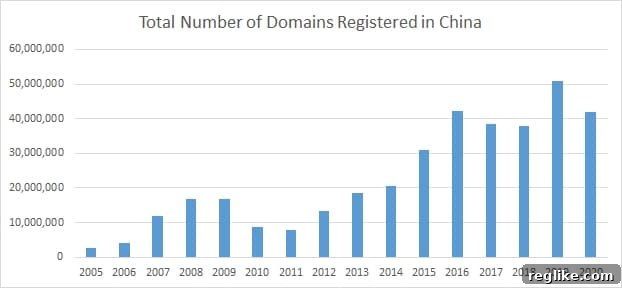
The statistics released by CNNIC reveal a substantial contraction in the total number of registered domains across China. In 2020, the nation saw its domain count fall dramatically from an estimated 51 million to approximately 42 million. This precipitous drop of nearly 9 million domains occurred during a period when most economies were witnessing an unprecedented acceleration in digital transformation. Companies, both large and small, were investing heavily in establishing and expanding their online footprints, securing domain names as a fundamental step in adapting to a new, digitally-centric world.
This counter-intuitive trend in the world’s second-largest economy raises critical questions about the underlying dynamics of China’s internet infrastructure and digital strategy. While the rest of the world embraced digital expansion as a lifeline against the pandemic’s disruptions, China’s domain market appears to have moved in the opposite direction. This divergence suggests that factors unique to the Chinese context are at play, driving its market performance distinctly from global patterns.
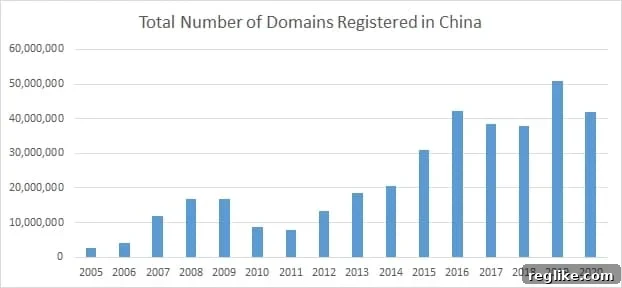
To put this in historical perspective, consider the trajectory of domain registrations in China over the past two decades. The following chart illustrates the fluctuating landscape, revealing periods of both rapid expansion and sharp decline, offering crucial context to the current situation:
Unraveling the Discrepancy: The Dominance of Domain Investors in China
The stark contrast between the reported 42 million registered domains and the relatively modest 4.4 million websites in China provides a crucial insight into the nature of the Chinese domain market. This significant disparity strongly suggests that a substantial portion of domain names in China are not actively linked to functioning websites or businesses. Instead, they are predominantly held by investors, speculators, and individuals engaged in domain trading. This investor-centric model distinguishes China’s domain market from many Western counterparts, where domain registrations are more directly tied to active business operations and personal online presences.
The heavy influence of domain investors explains why the market is particularly sensitive to external pressures, regulatory shifts, and speculative bubbles. Unlike domains registered for immediate business use, investor-held domains are prone to being dropped or renewed based on market sentiment, potential resale value, and the perceived profitability of the domaining industry. This inherent volatility makes the market susceptible to rapid fluctuations, which are clearly visible in the historical data. The chart above highlights three distinct periods of significant decline over the last two decades: 2010-2011, 2017-2018, and most recently, 2020.
Historical Precedents: Understanding Past Market Contractions
The recurring dips in China’s domain registration figures are not new phenomena. Each historical downturn provides valuable lessons about the unique regulatory environment, speculative tendencies, and external shocks that shape the country’s digital landscape. Analyzing these past events helps us understand the complex interplay of factors contributing to the most recent decline.
The 2010-2011 Dip: Regulatory Changes and Investor Exodus
The initial boom in .cn domain registrations, which began around 2007, was fueled by aggressive promotional strategies, including highly discounted pricing – often as low as $1 or even less. This attracted a massive wave of investors, both domestic and international, eager to capitalize on the perceived future growth of the Chinese internet. The affordability and low barrier to entry made .cn domains an attractive speculative asset.
However, this period of unrestrained growth was abruptly curtailed in 2010 when the Chinese government introduced stringent new regulations. These rules mandated that all owners of .cn domains submit extensive identification information, including official photos and government-issued ID documents. The aim of these regulations was multifaceted: to combat cybercrime, reduce spam, enhance national cybersecurity, and gain greater control over the online space. While arguably necessary for market stability and security, the sudden imposition of these strict verification requirements proved to be a significant deterrent for many domain investors, particularly those operating outside China who found the process cumbersome or invasive. Consequently, a large number of investors chose to simply abandon their .cn domains rather than comply, leading to the substantial dip observed between 2010 and 2011. This event underscored the significant influence of government policy on the behavior of market participants in China.
The 2017-2018 Dip: The Burst of the “Chip” Domain Bubble
Just a few years later, around 2015, the Chinese domain market witnessed another speculative frenzy centered around what became known as “Chip” domains. This term, short for “Chinese premium,” referred to short, usually numeric or highly brandable domain names, often in .com or .cn extensions, which were perceived to hold immense value within the Chinese market due to their scarcity and memorability. Investors flocked to these assets, driving prices to astronomical levels in anticipation of quick, substantial returns. The allure of these “premium” domains created a classic speculative bubble, drawing in new participants hoping to strike it rich.
However, as with most speculative bubbles, the “Chip” domain market eventually became unsustainable. The rapid price appreciation outpaced any intrinsic value or genuine end-user demand, leading to an inevitable correction. The bubble burst between 2017 and 2018, causing a sharp devaluation of these highly-priced assets. Many investors who had bought in at the peak found themselves holding depreciating assets, leading to a wave of dropped domains as confidence evaporated. This period served as a stark reminder of the risks associated with speculative investments in an unregulated or loosely regulated market, further illustrating the sensitivity of China’s domain landscape to investor sentiment and market fads.
The 2020 Dip: COVID-19 and Unprecedented Market Uncertainty
The most recent decline in 2020 was directly linked to the onset and global spread of the COVID-19 pandemic. When the virus first hit China in early 2020, it created an immediate and profound sense of economic uncertainty. Chinese investors, like their counterparts worldwide, became highly cautious about all forms of investment, including the domain market. The pandemic’s unprecedented nature triggered widespread fear and a flight to safety, leading many to liquidate speculative assets or simply cease renewing non-essential domains.
The impact was felt broadly across various domain extensions, including .cn, .com, and others, indicating a systemic reaction rather than a localized issue. This decline is particularly striking when juxtaposed with global trends, where domain registrations actually soared during COVID-19. Businesses and individuals across North America, Europe, and other regions rapidly accelerated their digital transformation initiatives, acquiring new domains to launch e-commerce sites, remote work platforms, and online services. China’s inverse reaction highlights the unique risk appetite of its domain investor community and perhaps a different perception of long-term digital stability during a crisis. As the pandemic’s economic fallout continues to evolve, the full recovery of China’s domain market remains uncertain, potentially reflecting ongoing investor nervousness and the lingering impact of global economic instability on a market heavily influenced by speculative capital.
Conclusion: A Unique Trajectory for China’s Digital Footprint
The significant decline in China’s domain registrations in 2020, a period marked by global digital acceleration, underscores the unique and complex dynamics of its internet market. Unlike many other nations where domain growth is primarily driven by active business expansion and individual online presence, China’s market is heavily influenced by a robust, yet volatile, investor community. The historical analysis reveals that this market is highly susceptible to a confluence of factors: stringent government regulations, the speculative nature of investment bubbles, and broader economic shocks such as a global pandemic.
The three distinct dips over the past two decades—caused by new identification requirements, the “Chip” domain bubble burst, and the economic uncertainty of COVID-19—each highlight how external forces can quickly alter the trajectory of China’s digital landscape. As the world continues to grapple with the long-term implications of the pandemic and an increasingly digital future, it remains to be seen how China’s domain market will evolve. A sustainable rebound may necessitate a rebalancing of the market, potentially shifting from a purely investor-driven model towards one that more closely aligns with genuine end-user demand and long-term business development. Understanding these intricacies is crucial for anyone looking to navigate or invest in China’s ever-evolving digital ecosystem.