
Former GoDaddy Executive Christine Jones Secures Third in Arizona Republican Primary Battle
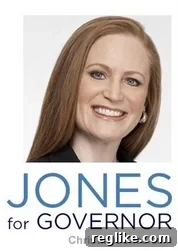 The political landscape of Arizona saw a significant contest unfold in the recent Republican primary, culminating in a spirited race for the gubernatorial nomination. Among the notable figures vying for the top spot was Christine Jones, a prominent former general counsel for internet giant GoDaddy. Despite a robust campaign and considerable backing, Jones ultimately lost her bid to become the next governor of Arizona, securing a third-place finish in a highly competitive field. This election was not just a typical primary; it was a deeply scrutinized event that highlighted the intricate dynamics of corporate influence, conservative voter appeal, and the challenging transition from the business world to the political arena.
The primary election, held yesterday, delivered a clear winner in Doug Ducey, the then-current Arizona treasurer and former CEO of the widely recognized ice cream franchise Cold Stone Creamery. Ducey captured a significant 37% of the total vote, demonstrating a strong mandate from Republican voters. Christine Jones, making her debut in such a high-stakes political race, concluded her campaign with 16.7% of the vote. While this placed her third, it represented a respectable showing for a newcomer against seasoned politicians and well-established public figures within the state’s Republican party. The outcome has sparked conversations about the future of conservative politics in Arizona and the potential for new faces to make an impact, even if not immediately victorious.
The GoDaddy Connection: Bob Parsons’ Million-Dollar Intervention
One of the most talked-about aspects of Jones’s campaign was the highly visible and often controversial involvement of GoDaddy founder, Bob Parsons. A staunch supporter of Jones, Parsons contributed an astonishing sum exceeding $1 million to fund a series of aggressive attack ads targeting Doug Ducey. This significant financial investment underscored the depth of Parsons’ commitment to Jones’s political ambitions and added a layer of intrigue to the primary race, drawing national attention to what might otherwise have been a regional contest.
Parsons was quite vocal about his motivations behind the substantial spending. He told reporters that his commercials were a direct response to what he perceived as a dismissive and inaccurate characterization of Christine Jones by Doug Ducey. Ducey had reportedly claimed Jones was merely a “line employee” at GoDaddy, an assertion that deeply offended Parsons. As general counsel, Jones held a critical position within GoDaddy, unequivocally ranking among the company’s top executives. Parsons’ defense of Jones highlighted not only his personal loyalty but also a broader concern about misrepresenting professional credentials in political campaigns.
This episode served as a vivid example of how personal relationships and corporate loyalties can spill over into the political sphere, shaping campaign narratives and influencing public perception. The hefty sum spent by Parsons undeniably changed the dynamic of the race, forcing Ducey’s campaign to respond to the allegations and defend his characterizations. It also raised questions about the role of super PACs and individual donors in primary elections, especially when such significant amounts are deployed to influence outcomes.
Navigating the Conservative Landscape: Challenges and Controversies
Running in a Republican primary in a state as politically significant as Arizona inherently requires candidates to appeal to a generally conservative base. Christine Jones and her fellow contenders, including Ducey, predictably leaned considerably to the right in their policy proposals and rhetoric to attract the crucial Republican voter demographic. Issues such as border security, fiscal conservatism, and limited government were central to their platforms, resonating with a significant portion of the electorate.
However, navigating this conservative landscape presented unique challenges for Jones, particularly given her previous association with GoDaddy’s often provocative marketing strategies. Unsurprisingly, one of the most prominent attacks leveled against Jones during her campaign revolved around her brief cameo in a rather risqué GoDaddy Super Bowl commercial. These commercials, known for their edgy humor and sometimes suggestive content, were designed to capture attention during the massive viewership of the Super Bowl. While effective in the realm of brand marketing, such an appearance became a liability in the more staid and morally conscious world of Republican primary politics.
Opponents seized upon this cameo, using it to question Jones’s conservative credentials and suitability for public office. In a state where social conservatism holds considerable sway, an association with “risqué” advertising could be interpreted negatively by a segment of the voting base. This particular line of attack underscored the difficulty candidates face when their past professional lives, especially those in the private sector with unconventional marketing, collide with the often strict expectations of political decorum. It highlighted how even seemingly minor past associations can be weaponized in the cutthroat environment of a political campaign, forcing candidates to constantly defend their public image and values.
Analyzing the Outcome: A Strong Showing for a Newcomer
Despite the challenges, the well-funded attacks, and the significant baggage from her corporate past, Christine Jones’s 16.7% take in a crowded field was arguably a far better outcome than many political observers might have predicted when she initially announced her candidacy. Venturing into a gubernatorial primary with no prior elected experience against established political figures and well-funded opponents is an incredibly ambitious undertaking. Her ability to garner nearly one-fifth of the Republican primary vote suggests a level of public appeal and campaign effectiveness that should not be underestimated.
Her campaign managed to generate considerable buzz and engage a segment of the electorate, demonstrating that her message resonated with a significant number of Arizona Republicans. This performance can be viewed as laying a foundational groundwork, showcasing her capacity to connect with voters and effectively run a campaign, even in defeat. For a first-time candidate, achieving such a percentage in a high-profile statewide race is often seen as a stepping stone rather than a definitive end.
Doug Ducey’s victory, securing 37% of the vote, positioned him as the clear frontrunner heading into the general election. His success was attributed to a combination of his experience as state treasurer, his business background with Cold Stone Creamery, and a campaign strategy that effectively consolidated the Republican base while fending off attacks from both Parsons and other challengers. Ducey’s win demonstrated the preference of many primary voters for a candidate with a more traditional political resume and a proven track record within state government.
The Road Ahead: Future Implications for Jones and Arizona Politics
While the gubernatorial bid may not have resulted in an immediate victory for Christine Jones, her foray into Arizona politics has undoubtedly yielded invaluable assets. Most prominently, her participation in such a high-profile race has granted her significant, newly found name recognition across the state. This heightened public profile is a valuable commodity, whether she chooses to remain in the political sphere or return solely to the business world.
In the realm of business, this enhanced name recognition could prove immensely beneficial. Her public exposure, coupled with her extensive legal and executive experience at GoDaddy, positions her as a formidable figure. She could leverage this recognition for new ventures, consulting opportunities, or leadership roles in various industries, where her strategic insights and media savvy would be highly prized. The narrative of a high-profile executive who dared to enter the political fray, even if unsuccessful, often adds to one’s professional gravitas and public appeal.
Alternatively, should Jones decide to run for another office in the future, her experience in this gubernatorial primary will serve as an indispensable learning curve. She has gained firsthand insight into the mechanics of statewide campaigning, the nuances of voter engagement, and the unforgiving nature of political scrutiny. Future campaigns would benefit from her understanding of media relations, fundraising, and coalition-building. A strong third-place finish in a crowded primary often sets the stage for future attempts, as candidates learn from their experiences and refine their strategies. Her demonstrated ability to attract a significant portion of the vote against formidable opponents suggests that her political career might be far from over.
The 2014 Arizona Republican gubernatorial primary, with Christine Jones’s notable participation, stands as a testament to the dynamic and often unpredictable nature of political contests. It showcased the power of personal endorsements, the challenges of public image management, and the enduring appeal of traditional political experience. As Arizona continues to evolve, the impact of such races and the emergence of figures like Christine Jones will undoubtedly continue to shape its political landscape for years to come.