
Google Chrome’s Latest Experiment: Hiding the Full URL and Its Far-Reaching Implications for Web Users
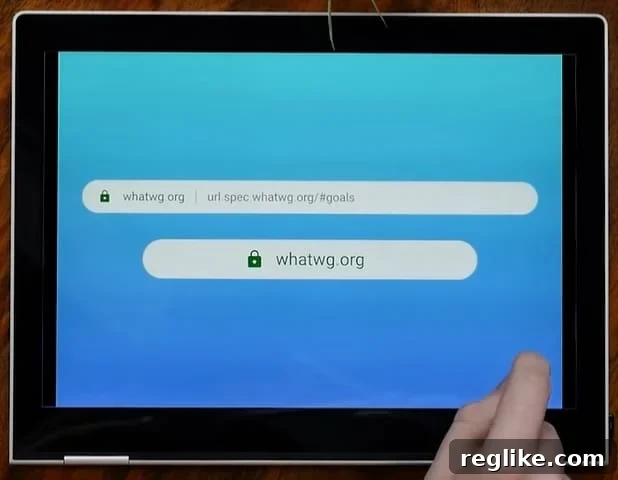
Google, a global leader in web innovation, is once again at the forefront of a significant change concerning how users interact with the internet. The company is actively conducting an experiment within its widely used Chrome browser that alters the display of Uniform Resource Locators (URLs) in the address bar. This test, which involves obscuring the full web address, has ignited a lively debate among web users, security experts, and privacy advocates regarding its potential impact on user experience, online security, and the very architecture of the decentralized web.
For years, Google has continuously explored various methods to present a website’s identity, not only in its search results but also directly within the browser’s interface. These initiatives are often driven by a dual aim: to simplify the browsing experience for the average user and to bolster security measures against an ever-evolving landscape of online threats. However, such fundamental shifts frequently prompt discussions about the delicate balance between user convenience, essential transparency, and the control users have over their browsing environment.
Understanding Chrome’s New URL Display Experiment
The core of Google’s latest experiment, as highlighted by a report from Android Police, involves a significant alteration to the address bar’s default behavior in Chrome Canary, a developer-focused version of the browser where new features are tested. In this experimental setting, the address bar only displays the “second-level domain” (SLD) and the “top-level domain” (TLD). For instance, a full URL like `https://www.example.com/blog/article-title.html?param=value` would be truncated to simply `example.com`.
This means that all subsequent parts of the URL – including the entire path (e.g., `/blog/article-title.html`), query parameters (`?param=value`), and fragments (e.g., `#section`) – are no longer immediately visible. While the full URL is obscured by default, it’s believed that users might still be able to access the complete address by performing an additional action, such as hovering over or clicking on the Omnibox (Chrome’s combined address bar and search box). However, this introduces an extra step for users who rely on the full URL for quick reference and navigation, potentially disrupting established browsing habits.
The Indispensable Value of Full URLs for Web Navigation and Security
For a considerable segment of internet users, especially those who are more technically adept or who frequently engage with complex web applications, the ability to instantly view the entire URL is not merely a preference but a fundamental requirement. A full URL serves as much more than just a site’s address; it’s a rich source of context, authentication, and navigational cues that empower informed browsing decisions. Here’s why complete URLs are considered crucial by many:
- Contextual Awareness and Website Structure: The path components within a URL (e.g., `/products/category/item-id/`) offer immediate insights into a user’s current location within a website’s hierarchy. This detailed information allows users to understand the content’s context, easily navigate back to parent sections, or anticipate the structure of related pages. Without this, users might feel lost within larger, more intricate websites.
- Verification of Authenticity and Trust: For discerning users, the full URL is a primary tool for verifying a page’s legitimacy. It enables them to meticulously inspect the domain name for subtle variations (e.g., `paypal.com` versus a cleverly disguised `paypa1.com` or `secure-paypal.co.uk`) and identify if content is hosted on an unexpected subdomain or an entirely different domain, which are tell-tale signs of phishing attempts or malicious sites.
- Information Retrieval and Content Specificity: Many modern websites incorporate dates, unique content identifiers, or descriptive keywords directly into their URLs. Seeing these elements in the address bar allows users to quickly gauge the recency of information, locate a precise document, or understand the nature of the content without having to scroll through the page itself. This is particularly valuable for researchers and information gatherers.
- Developer and Power User Workflows: Web developers, SEO professionals, digital marketers, and power users frequently interact with URLs in advanced ways. They copy specific paths, manipulate query parameters for testing, share direct links to deeply nested content, or analyze URL structures for SEO purposes. Hiding these critical components significantly complicates these professional workflows and diminishes productivity.
- Security and Privacy Indicators: Beyond the basic `https://` prefix, advanced users often scrutinize the full URL for other security clues, such as unexpected parameters that might indicate tracking, or unusually long and complex strings that could signify a compromised link or a redirection chain. The ability to quickly identify these anomalies is a key part of personal online security hygiene.
The argument for maintaining full URL visibility is deeply rooted in the principle of transparency, advocating for empowering users with comprehensive information to make autonomous and informed decisions while navigating the web.
Google’s Stated Rationale: Enhancing User Safety and Simplicity
Google’s official explanation for these URL display experiments primarily revolves around two core objectives: significantly enhancing user safety and simplifying the overall browsing experience for the general public. From Google’s perspective, these changes are a proactive measure to shield less technically savvy internet users from the ever-growing sophistication of online scams and malicious attacks.
Google engineers have openly discussed their philosophical approach to making URLs more “human-friendly” and less intimidating. In a video published in January 2020, they articulated how the inherent complexity of full URLs – with their numerous characters, slashes, and parameters – can be confusing and overwhelming. This complexity, they argue, inadvertently makes it harder for users to distinguish legitimate websites from deceptive ones. This perspective forms the bedrock of Google’s official reasoning for this new test: to empirically determine “if this makes it easier for users to identify phishing and social engineering sites.”
Combating Phishing and Social Engineering More Effectively
One of the paramount goals of this experiment is to bolster defenses against phishing and social engineering attacks. Malicious actors frequently craft URLs that, at first glance, appear remarkably similar to legitimate ones. They achieve this by employing lengthy, convoluted paths, or by registering tricky subdomains designed to obscure their true, malicious origin. By simplifying the address bar display to focus solely on the second-level and top-level domain, Google intends to guide users to prioritize the most crucial component of a website’s identity – its core brand or entity. The hypothesis is that this emphasis will make it significantly harder for scammers to trick users with elaborate or misleading path structures that reside after the main domain.
Fostering a Cleaner, More Intuitive User Interface
Beyond the critical aspect of security, Google also aims to cultivate a cleaner, less cluttered, and ultimately more intuitive user interface. The sheer amount of information contained within a full URL, with its myriad of characters, slashes, and often obscure parameters, can appear daunting and visually overwhelming to users whose primary goal is simply to consume content. A simplified display, by reducing this visual noise, could potentially contribute to a more aesthetically pleasing and less intimidating browsing experience, particularly on devices with smaller screens like smartphones or for individuals who are new to navigating the internet. This design philosophy aligns with a broader trend in user interface design towards minimalism and ease of use.
The “Domain as Brand” Philosophy
From the vantage point of brand identity and domain name perception, Google’s strategy to primarily display the second-level domain (SLD) and top-level domain (TLD) carries a certain inherent logic. This approach actively reinforces the notion of the domain name as the central element of a brand’s online presence and its core digital identity. In an increasingly competitive digital landscape where brand recognition is paramount, emphasizing `yourbrand.com` over the full, often verbose, path could indeed assist users in more quickly recognizing, recalling, and trusting a particular brand.
This streamlined approach aligns with how a significant portion of the general public perceives and remembers websites: they tend to recall the primary brand name, not necessarily the intricate internal folder structure or specific page identifiers. By effectively reducing visual clutter and bringing the brand name to the forefront, Google might be attempting to render the internet a more accessible, understandable, and less overwhelming space for a broader demographic. This could, in theory, foster a stronger and more direct connection between users and the primary entities or brands they engage with online.
The Counter-Argument: Concerns Over Transparency and Centralization
Despite Google’s publicly stated noble intentions, these ongoing URL display experiments have not been without substantial criticism from various corners of the web community. Many observers, including the aforementioned Android Police, contend that obscuring the full web address can lead to a range of detrimental effects, particularly with respect to transparency, user autonomy, and the fundamental, open nature of the internet itself.
However, it’s also worth considering that making the web address less important, as this feature does, benefits Google as a company. Google’s goal with Accelerated Mobile Pages (AMP) and similar technologies is to keep users on Google-hosted content as much as possible, and Chrome for Android already modifies the address bar on AMP pages to hide that the pages are hosted by Google. Modifying addresses on the desktop is another step towards making them irrelevant, which hurts the decentralized nature of the internet as a whole.
This compelling critique posits that Google’s actions, while often framed as universally user-centric and security-driven, may also align conveniently with the company’s broader strategic objectives. By deliberately rendering the direct web address less prominent and less readily available, Google potentially diminishes a user’s conscious awareness of the true origin of the content they are consuming. This becomes particularly pertinent when that content is not served directly from its original host but rather from Google’s own caching and distribution infrastructure, as is the case with Accelerated Mobile Pages (AMP).
Erosion of Transparency and User Control
The paramount concern articulated by critics is the gradual erosion of transparency. The act of hiding crucial segments of a URL removes valuable contextual information that is essential for users to make fully informed browsing decisions. This shift subtly moves control from the user, who might legitimately wish to inspect every detail of an address, to the browser itself, and by extension, to Google’s proprietary algorithms that determine what information is deemed “essential” or “safe” enough for immediate display. This approach, which can be perceived as paternalistic even if well-intentioned for some, can feel disempowering for users who value comprehensive data and complete control over their digital environment.
Impact on the Decentralized Web Architecture
The internet, at its very core, was engineered and designed as a fundamentally decentralized network. In this architecture, every single piece of content, every resource, possesses a unique, identifiable, and directly accessible address. Each URL meticulously points to a specific resource housed on a specific server, which is independently managed by its respective owner. De-emphasizing the full URL can thus be interpreted as a subtle yet significant step toward a more centralized web experience, where users become less acutely aware of the independent origins and diverse ownership of the vast content they interact with. In the long term, this could inadvertently encourage a greater reliance on dominant platforms like Google to mediate access to web content, rather than fostering direct, unmediated interaction with myriad individual websites.
The Risk of a “Walled Garden” Effect
A further concern raised by critics is that such incremental changes contribute to what is often termed a “walled garden” effect. In such an environment, users primarily experience the internet through an interface largely controlled and curated by a dominant platform. If users become increasingly accustomed to not seeing or needing full URLs, they might grow less inclined to navigate directly to sites, less likely to scrutinize the origin of content presented to them, and potentially more susceptible to Google’s influence over their browsing habits, web traffic flow, and overall digital behavior. This raises fundamental questions about internet freedom and the principles of an open web.
Finding a Balance: The Evolving Future of URL Display
The ongoing debate surrounding how URLs are displayed encapsulates a fundamental and enduring tension in the realms of web design, user experience, and browser development: the complex act of balancing user simplicity and enhanced security with the critical aspects of transparency and individual user control. On one side, the objectives of protecting users from increasingly sophisticated phishing attacks and streamlining the browser’s interface are undeniably laudable and necessary goals in the modern digital landscape. On the other side, the full URL remains an exceptionally powerful and versatile tool for effective navigation, critical verification, and a comprehensive understanding of the intricate structure of the global web.
Looking ahead, future iterations of Chrome’s URL display functionality could potentially explore more nuanced and compromise-oriented solutions. For example, implementing a clear, persistent visual indicator that a URL has been truncated, seamlessly combined with an easily accessible “reveal full URL” button or a context menu option, might offer a more palatable balance for diverse user groups. Furthermore, providing users with the ability to customize their preferences – allowing them to choose between a simplified default view or a consistently full URL display – would effectively address the varying needs and technical proficiencies across the broad spectrum of internet users.
Ultimately, the long-term success and widespread acceptance of such browser experiments will hinge significantly on comprehensive user feedback and whether the perceived benefits of simplified URL presentation truly outweigh the potential drawbacks of lost information and the broader implications for web transparency. As the internet continues its rapid and dynamic evolution, the way we perceive, interact with, and utilize its most foundational building block – the Uniform Resource Locator – will undoubtedly remain a subject of continuous discussion, innovation, and careful consideration within the global web community.
Conclusion: A Continuous Evolution of Web Interaction and Digital Trust
Google’s latest Chrome experiment, which involves strategically hiding parts of the URL in the address bar, is far more than a mere cosmetic interface tweak; it signifies a potentially profound shift in how users might perceive, understand, and fundamentally interact with web addresses. While this initiative is undeniably driven by the commendable intentions of enhancing user safety and simplifying the overall browsing experience, it simultaneously ignites crucial conversations about the delicate balance between transparency and security, the nuances of user autonomy, and the very future architecture of the open internet.
For a segment of the user base, particularly those less familiar with the technical intricacies of the web, this change may be welcomed as a progressive step towards a safer and more accessible online environment, offering protection from increasingly sophisticated malicious online threats. However, for another significant group, composed of power users, developers, and privacy advocates, it represents a concerning move that diminishes vital information, potentially contributing to a subtle centralization of control and an erosion of the open, decentralized nature that has historically defined the internet. As Google presses forward with its testing and refines its approach, the broader web community will undoubtedly continue to observe closely, meticulously weighing the immediate benefits of perceived simplicity against the enduring, fundamental value of full transparency and comprehensive user empowerment.