
Revolutionizing Domain Management: CIRA’s Fury Platform and the Future of Registry Services
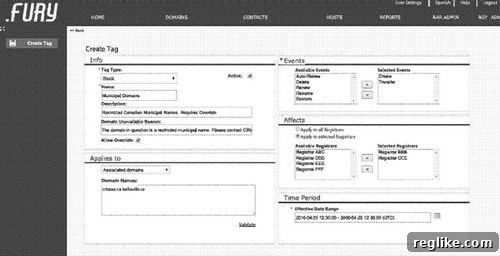
In the dynamic world of domain name registration and management, efficiency, flexibility, and real-time adaptability are paramount. The Canadian Internet Registration Authority (CIRA), renowned for its stewardship of Canada’s country code Top-Level Domain (ccTLD), .CA, has long been at the forefront of internet infrastructure innovation. Expanding its influence beyond its domestic domain, CIRA has also ventured into offering comprehensive registry services to other TLDs, leveraging its robust technological backbone. A recent development underscores CIRA’s commitment to advancing the domain industry: the organization has filed a groundbreaking patent application that could redefine how registries manage their vast inventories of domain names.
The patent application, submitted to the U.S. Patent and Trademark Office, is titled “Registry Domain Name Management” and pertains specifically to integral aspects of CIRA’s proprietary Fury registry platform. This filing, available for public review as a PDF document, outlines an inventive system designed to streamline and enhance the entire lifecycle of domain name administration. At its core, the proposed system introduces a centralized and highly intelligent method for associating “tags” with domain names, empowering registries with unprecedented control and adaptability.
The Challenge of Traditional Domain Management
For years, managing the intricate details of domain names – from pricing structures and availability to specific usage policies – has presented significant operational challenges for many registries. Traditional methods often involve laborious, manual processes that are prone to error and notoriously slow to adapt to market changes. Imagine a registry dealing with millions of domain names, needing to implement a new premium pricing tier, offer a time-sensitive discount to specific registrars, or block certain sensitive terms from registration. In many legacy systems, such changes would necessitate manual updates across vast spreadsheets, the distribution of static PDF lists to registrars, or even hard-coding data directly into the system. This not only creates bottlenecks and inefficiencies but also introduces delays in disseminating crucial information to registrars, who are the primary interface with end-users and businesses.
The reliance on static data means that dynamic market conditions, such as sudden shifts in demand for particular keywords (think of the cryptocurrency boom and the rapid rise in value of related domain terms), are incredibly difficult to capitalize on or respond to in real-time. Registrars, in turn, often struggle with ensuring they have the most up-to-date information, potentially leading to inconsistencies in pricing or availability shown to their customers. This outdated paradigm highlights a clear need for a more agile, centralized, and automated approach to domain name management, a need that CIRA’s Fury platform aims to address head-on.
Introducing CIRA’s Tag-Based System for Dynamic Control
CIRA’s patent application details an innovative system where registries can centrally apply various “tags” to domain names. These tags are essentially metadata attributes associated with individual domain names or groups of domain names within a robust database. The genius of this approach lies in its ability to influence how domain transactions – such as registrations, renewals, transfers, or even deletions – are processed. When a registrar initiates an action via standard protocols like EPP (Extensible Provisioning Protocol), the system dynamically queries the database for any attached tags, and this tag information then dictates the handling of the transaction.
Consider the scenario of premium domains. Instead of maintaining a separate list of high-value domains and their corresponding prices, often communicated through cumbersome PDFs or static files to registrars, CIRA’s system allows a registry to simply apply a “premium price tag” to a domain. When a registrar attempts to register that domain, the tag information is immediately retrieved, notifying the registrar of the adjusted price. This eliminates ambiguity, ensures consistency, and provides real-time pricing information directly within the EPP call, vastly improving the efficiency and accuracy of the registration process.
The flexibility extends beyond just premium pricing. These tags can also facilitate sophisticated pricing strategies, such as offering discounted pricing tailored to specific registrars or for promotional campaigns. This empowers registries to foster stronger partnerships and drive market adoption. Furthermore, the system supports complex bundling requirements, enabling certain domains – like close IDN (Internationalized Domain Name) variants that often need to be registered together to prevent cybersquatting or user confusion – to be designated as a bundle, ensuring they are acquired as a set. This level of granular control and automation is a significant departure from the hard-coded or manually updated systems prevalent in the industry today.
Key Benefits of the Fury Platform’s Tagging System
The implementation of CIRA’s tag-based management system within the Fury platform brings a multitude of advantages for both registries and registrars, ultimately benefiting the entire domain ecosystem:
- Unparalleled Flexibility and Agility: Registries can adapt quickly to market trends, adjust pricing dynamically based on demand, or introduce new policies without significant technical overhead. This responsiveness allows for swift exploitation of emerging opportunities and mitigation of risks.
- Enhanced Efficiency and Automation: Manual updates and the laborious distribution of pricing lists become relics of the past. The centralized system automates the application of rules and characteristics, drastically reducing human error and operational costs.
- Consistent and Transparent Pricing: Registrars receive real-time, accurate pricing and policy information directly through their EPP interactions, ensuring that the prices shown to end-users are always correct and up-to-date. This eliminates pricing discrepancies and improves trust.
- Optimized Revenue Generation: Registries gain finer control over their pricing strategies, allowing for more precise identification and monetization of premium domains, implementation of effective discount programs, and dynamic adjustments to maximize revenue based on market conditions.
- Improved Registrar Experience: By providing clear, immediate, and consistent information, the system streamlines the registrar’s workflow, making it easier to serve customers and manage their domain portfolios. This fosters better relationships between registries and registrars.
- Scalability for Growth: As TLDs grow and their inventories expand, the tag-based system provides a scalable solution for managing an ever-increasing number of domains and complex sets of rules without compromising performance or manageability.
- Robust Policy Enforcement: The ability to apply “block tags” ensures that specific domains are restricted from certain actions for security, legal, or policy compliance reasons, providing an additional layer of control and integrity to the domain space.
- Data-Driven Insights: A centralized system for tagging can also facilitate better data collection on how different tags perform, allowing registries to make more informed, strategic decisions about their domain offerings and pricing models.
Delving into the Patent: Tag Types and Specific Requirements
The patent application offers a detailed glimpse into the various types of tags and the specific information required for their effective implementation. This granular control is what sets CIRA’s system apart, enabling registries to customize their domain management strategies with precision. The summary provided in the patent outlines several key tag categories:
Generally, Group tags are used to associate a number of domain names for organization purposes. Premium tags are used to override default prices by applying a price increase. Discount tags are used to override default prices by applying discounts. Block tags are used to restrict actions from being carried out with specific domain names. When a Registry assigns a domain name to a tag they can also fill out associated tagging information and characteristics that may include but not be limited to: a name of the tag, a pricing model of the tag, a registry event affecting the tag, registrars affected by the tag, domain names that will be affected by the tag, and a length of time that the tag applies. In assigning the domain names to a tag, specific information is required, for example a Group Tag require at least a name; a Block Tag requires a Name, an Event, a Registrar, a Time Period; and a Discount and Premium requires a Name, an Event, a Registrar, a Time Period and the Discount/Premium.
This breakdown reveals the intelligent design behind each tag type:
- Group Tags: These are foundational for organization, allowing registries to categorize and manage domains in logical sets. While requiring at least a “Name” for identification, their utility lies in enabling bulk operations or applying other tags to an entire group.
- Premium Tags: Designed for revenue optimization, these tags explicitly override default pricing to implement an increase. To ensure precision, a Premium Tag requires a “Name,” a specific “Event” (e.g., registration, renewal), an “Event” that triggers the premium pricing (e.g., registration), a “Registrar” (if the premium applies to specific registrars), a “Time Period” (for limited-time premium offers), and the explicit “Discount/Premium” value.
- Discount Tags: Mirroring premium tags but in reverse, these enable price reductions. They also require a “Name,” an “Event,” a “Registrar” (for targeted discounts), a “Time Period,” and the exact “Discount/Premium” value. This allows for highly targeted promotions and strategic pricing.
- Block Tags: These are critical for security and policy enforcement, preventing specific actions on designated domain names. A Block Tag necessitates a “Name,” an “Event” to be blocked (e.g., registration, transfer), an optional “Registrar” (if blocking only applies to certain entities), and a “Time Period” during which the block is active.
The ability to specify characteristics like the pricing model, the registry event affected, specific registrars, and the duration of the tag’s application gives registries an unprecedented level of granularity and control over their domain portfolios. This contrasts sharply with the limitations of current systems, where such complex, conditional rules are often cumbersome or impossible to implement efficiently.
Looking Ahead: The Future of Domain Name Management
CIRA’s patent application for its Fury platform’s tag-based domain management system is more than just a technological advancement; it represents a significant step forward in the evolution of the domain industry. By offering a centralized, flexible, and automated approach to managing domain characteristics, CIRA is setting a new standard for efficiency, responsiveness, and control in registry operations. This innovation promises to alleviate long-standing challenges associated with manual processes and static data, paving the way for more dynamic pricing models, targeted marketing strategies, and robust policy enforcement.
As the digital landscape continues to expand and the demand for domain names grows, such innovations become increasingly vital. CIRA’s work with the Fury platform showcases a proactive vision for the future, where domain name management is agile, intelligent, and seamlessly integrated into the broader internet infrastructure. This patent could well serve as a blueprint for how registries worldwide will operate in the coming years, ensuring a more fluid, reliable, and secure experience for registrars and domain registrants alike.