
Grammy-Nominated Artist Clinton Sparks Reclaims Digital Identity in Landmark Domain Dispute
In an era where a strong online presence is paramount for any public figure or brand, the loss of a crucial digital asset can spell disaster. For Grammy-nominated DJ, producer, and songwriter Clinton Sparks, this nightmare became a reality when his official domain name, ClintonSparks.com, was inadvertently allowed to expire. What followed was a fascinating and concerning case of domain squatting and sophisticated SEO manipulation, culminating in a successful fight to reclaim his digital identity. This detailed account sheds light on the vulnerabilities of online branding and the robust mechanisms available for recourse.
The story of ClintonSparks.com begins in 2002, when Sparks, in conjunction with his Get Familiar Music Company, prudently registered the domain. At the time, the internet was rapidly transforming the music industry, and securing a personal domain was a forward-thinking move to establish an online hub for his burgeoning career. Sparks has built an impressive resume over the years, collaborating with superstars like Lady Gaga, Akon, and P. Diddy, and earning a Grammy nomination for his work. His official website was not just a static page; it was a vital part of his brand, a central point for fans, industry contacts, and media to connect with his music, projects, and persona. The foresight to register his exact-match domain was a testament to understanding the burgeoning importance of digital branding.
However, even the most established brands can fall victim to administrative oversights. In 2017, due to a lapse in management by his then-agent, the domain ClintonSparks.com was inexplicably allowed to expire. Domain expiration is a common occurrence, often stemming from overlooked renewal notices, changes in administrative contacts, or simply a lack of vigilance. For a celebrity’s brand, allowing such a valuable digital asset to lapse is akin to leaving the front door of their public image wide open. The period following expiration is a critical window during which the domain becomes available for registration by anyone, opening the door for opportunistic actors to seize control.
Indeed, it didn’t take long for an opportunistic party to step in. A Ukrainian SEO expert swiftly registered ClintonSparks.com, recognizing the inherent value associated with a domain name that matches a well-known personality. This move wasn’t a simple act of “cybersquatting” – the practice of registering, trafficking in, or using a domain name with bad faith intent to profit from the goodwill of a trademark belonging to someone else – but rather a more elaborate scheme designed to exploit search engine algorithms. The new registrant wasted no time in deploying a deceptive strategy to maximize the domain’s SEO potential and generate illicit gains.
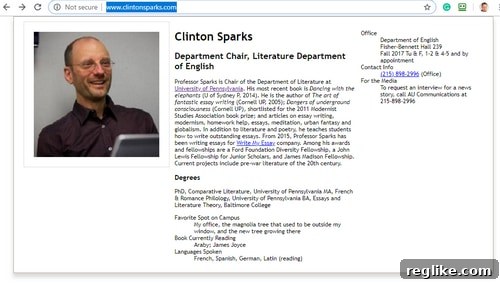
Upon acquiring the domain, the Ukrainian SEO expert did not attempt to impersonate Clinton Sparks directly or launch a malicious site in his name. Instead, they crafted an entirely fake online profile, ostensibly for a “University of Pennsylvania professor.” The website featured a prominent picture that was, in reality, of an American University professor, further highlighting the deceptive nature of the setup. This intricate ruse was carefully designed to confuse search engines and manipulate their ranking algorithms. The fake professor’s profile page then included strategic backlinks to two seemingly disparate entities: the legitimate UPENN.edu website and, more revealingly, an academic essay writing service. The intention was clear: by associating a high-authority domain name (ClintonSparks.com, with its latent celebrity value) with a reputable educational institution (UPENN.edu) and a service that thrives on search engine visibility (the essay writing service), the orchestrator aimed to bolster the essay service’s backlink profile and elevate its search rankings through illicit means. This type of “black hat” SEO tactic, which relies on deceptive practices rather than genuine content, poses a significant threat to the integrity of search results and brand reputation.
The existence of such a deceptive site on his former domain presented a serious threat to Clinton Sparks’ brand and professional image. While not directly impersonating him, the unauthorized use of his name for an SEO scheme could cause confusion among fans and industry professionals, potentially harming his reputation and diluting his brand equity. Recognizing the urgency and the complex nature of the situation, Sparks and Get Familiar Music Company decided to fight back. They enlisted the expertise of attorney John Berryhill, a highly respected figure in the domain name law community. Berryhill is known for his extensive experience and successful track record in Uniform Domain-Name Dispute-Resolution Policy (UDRP) cases.
Berryhill’s involvement was particularly notable because he typically represents respondents in UDRP disputes, defending domain owners against complaints. However, he occasionally takes on “interesting cases” for complainants, particularly when they involve unique facts or present an opportunity to clarify domain law. The ClintonSparks.com dispute, with its intricate web of domain expiration, celebrity branding, and sophisticated SEO manipulation, clearly fell into this category, capturing Berryhill’s attention. His decision to represent Sparks underscored the gravity and peculiarity of the case, signaling a strong belief in the merits of the complaint.
Sparks and Get Familiar Music Company formally filed a UDRP complaint with the National Arbitration Forum, one of the leading providers of UDRP services. The UDRP is an international arbitration process established by ICANN (Internet Corporation for Assigned Names and Numbers) to resolve disputes regarding the abusive registration of domain names. To succeed in a UDRP complaint, complainants must demonstrate three key elements: first, that the domain name is identical or confusingly similar to a trademark in which the complainant has rights; second, that the registrant has no rights or legitimate interests in respect of the domain name; and third, that the domain name has been registered and is being used in “bad faith.” In Sparks’ case, his established reputation and Grammy nomination provided clear evidence of his trademark rights to “Clinton Sparks.” The “Ukrainian SEO expert” had no legitimate claim to the name, and the deceptive website, designed solely for SEO manipulation, was a quintessential example of bad faith registration and use.
The UDRP process typically involves the complainant filing a detailed complaint, the respondent having an opportunity to respond, and an independent panel then reviewing the evidence to issue a decision. In this instance, the arguments presented by Sparks and Berryhill would have meticulously laid out how the domain name was identical to Sparks’ personal brand and trademark, how the registrant lacked any legitimate rights to use the name, and how the creation of a fake academic profile linking to an essay writing service constituted clear “bad faith” intended to exploit the domain’s inherent value. The panel would have evaluated the evidence, including the deceptive website content and the timing of the registration after the expiration, to reach a verdict.
Ultimately, the legal efforts bore fruit, and Clinton Sparks successfully won the rights to his domain name, ClintonSparks.com. This victory was more than just reclaiming a website; it was a triumph for brand integrity and a clear message against deceptive online practices. The successful UDRP outcome reaffirms the policy’s effectiveness in protecting intellectual property rights in the digital realm and provides a crucial precedent for other celebrities and brands facing similar challenges. For Clinton Sparks, regaining control of his digital identity means he can once again direct fans and collaborators to an official, trustworthy source of information, free from the shadow of opportunistic SEO schemes.
The Clinton Sparks domain dispute serves as a powerful reminder of several critical lessons for individuals and businesses navigating the digital landscape. Firstly, proactive domain name management is non-negotiable. Regular auditing of domain registrations, timely renewals, and secure administrative contacts are essential to prevent inadvertent expirations. Secondly, the case highlights the persistent threat of cybersquatting and the evolving sophistication of black hat SEO tactics. Domain hijackers are always seeking opportunities to leverage established brands for their own illicit gains, often with schemes far more complex than simple direct impersonation. Finally, it underscores the importance of legal recourse mechanisms like the UDRP. When digital assets are compromised, understanding and utilizing these policies is vital for safeguarding online identity and brand reputation. The successful reclamation of ClintonSparks.com ensures that the Grammy-nominated artist can continue to build his legacy without the digital noise of unscrupulous opportunists.