
Mastering Website Security: Navigating the Nuances of Cloudways Bot Protection
In the increasingly digital landscape, website security is no longer a luxury but a fundamental necessity. Every site owner, from a small personal blog to a sprawling e-commerce platform, faces a relentless barrage of automated threats. These threats come in the form of bots – software applications designed to perform automated tasks over the internet. While some bots are beneficial, others pose significant risks, consuming valuable server resources, compromising data, and impacting site performance and reputation. This is where robust bot protection services become indispensable.
Cloudways, a leading managed cloud hosting platform renowned for its performance and scalability, recently enhanced its security arsenal by integrating MalCare’s comprehensive bot protection service. This addition was heralded as a significant step towards fortifying websites against the pervasive threat of malicious automated traffic. The promise was clear: to block nefarious bots, shield websites from a wide array of attacks, and crucially, alleviate the strain on server resources. My recent experience with this new feature provided valuable insights into its efficacy, its unique challenges, and how it truly operates in a live environment.
The Dual Nature of Bots: Friends or Foes?
Before delving deeper into the specifics of Cloudways’ bot protection, it’s essential to understand the distinction between good bots and bad bots. This dichotomy forms the core challenge for any bot management system.
Good Bots: The Unsung Heroes of the Internet
- Search Engine Crawlers: Bots like Googlebot, Bingbot, and others are vital for indexing website content, making it discoverable through search engines. Without them, your site would effectively be invisible.
- Monitoring Bots: Services that check your website’s uptime, performance, and broken links, ensuring a smooth user experience.
- Aggregator Bots: Services like Stitcher, RSS feed readers, and content syndication tools that fetch updates from your site, helping distribute your content to a wider audience.
- Social Media Bots: Tools that automatically post or update content across social platforms, enhancing reach and engagement.
Bad Bots: The Digital Nemeses
- Spam Bots: Designed to flood comment sections, forums, or contact forms with unwanted advertisements or malicious links.
- Scrapers: Bots that illegally copy website content, product listings, or pricing information, often used for competitive analysis or creating duplicate content sites.
- Brute-Force Attackers: Bots that attempt thousands of login combinations to gain unauthorized access to administrative panels, often targeting WordPress login pages.
- DDoS Bots (Botnets): Networks of compromised machines that launch Distributed Denial of Service attacks, overwhelming servers with traffic to take websites offline.
- Vulnerability Scanners: Bots that probe websites for security weaknesses, looking for exploits to compromise the system.
The intricate challenge for any bot protection service lies in discerning between these two categories. Blocking bad bots is crucial, but inadvertently blocking good bots can severely hamper a website’s visibility, reach, and functionality.
Activating Cloudways Bot Protection: Initial Impressions
With the understanding of bot types in mind, I proceeded to activate Cloudways’ bot protection. The premise was incredibly appealing: a streamlined solution to a complex problem. The initial report was quite encouraging. The service immediately began to identify and block a substantial volume of what it deemed malicious traffic. This immediate response hinted at a powerful underlying mechanism, actively defending against the constant barrage of digital threats.
However, the experience quickly revealed a critical aspect of this powerful tool: it functions with significant efficacy, but sometimes a little too well. This robust filtering mechanism, while excellent at stopping overt threats, occasionally demonstrated a tendency to “throw the baby out with the bathwater” – meaning it indiscriminately blocked certain legitimate services that were vital for my website’s operation and content distribution, particularly if left unmonitored and unconfigured.
The Double-Edged Sword: Blocking the Good with the Bad
My firsthand testing brought to light several instances where the bot protection, while diligently performing its duty, impeded useful services. For example:
- Podcast Feed Distribution: It blocked the Stitcher podcast service from accessing my podcast feed. For content creators, podcast aggregators are essential for distributing audio content to a wider audience. Preventing these services from accessing feeds directly impacts listener reach and discoverability.
- Public Relations and Content Visibility: Various public relations (PR) services, such as Meltwater, were also blocked from accessing the site. Services like Meltwater are instrumental in monitoring mentions, tracking industry trends, and ensuring that published content reaches journalists, influencers, and relevant stakeholders. Blocking them directly hinders efforts to amplify content and expand its readership.
These examples highlight a common challenge in automated security solutions: their algorithms, while designed for broad protection, may not always differentiate between a benign, high-volume legitimate bot and a malicious one without human intervention or specific configuration. For website owners who rely on diverse platforms for content dissemination and analytics, this indiscriminate blocking necessitates active management and fine-tuning.
Effective Defense Against True Threats
On the flip side, the bot protection demonstrated remarkable effectiveness against unequivocally malicious or resource-intensive traffic. A notable success was its ability to mitigate a deluge of bot attempts from Ahrefs. While Ahrefs is a legitimate SEO tool, its extensive crawling can sometimes consume significant server resources, especially for smaller sites, without directly benefiting the site owner in a tangible, immediate way. For many site owners, its primary utility often lies in aiding competitors or other SEO professionals, rather than directly contributing to the site’s immediate performance or user experience. The ability to automatically block such aggressive crawlers without direct configuration proved to be a valuable asset, freeing up server resources for actual user traffic.
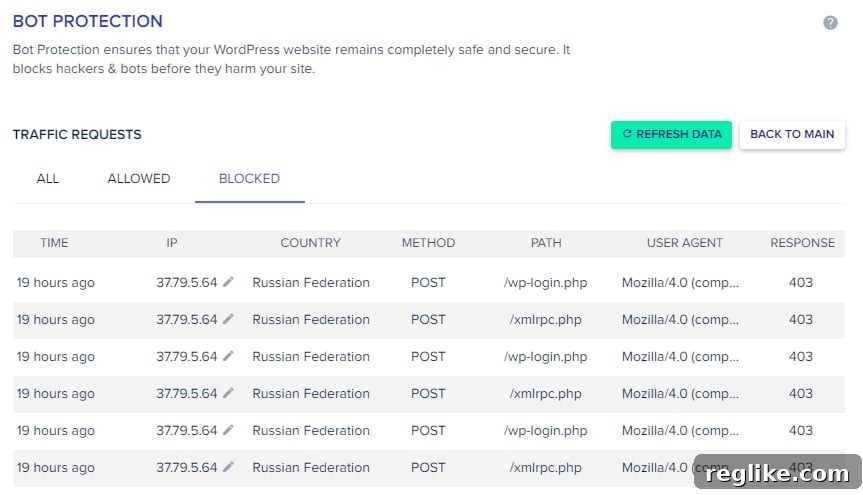
Moreover, one of the most reassuring and universally beneficial features of Cloudways bot protection is its capability to block WordPress login attempts. The dashboard consistently reported blocking approximately 2,000 invalid login attempts every single day. This statistic alone underscores the constant threat of brute-force attacks against WordPress installations. By automatically thwarting these relentless attempts, the service significantly enhances the security posture of WordPress sites, reducing the risk of unauthorized access and freeing administrators from the burden of constantly monitoring such threats.
Usability and Control: The Whitelist vs. Blacklist Dilemma
While the feature offers a whitelist mechanism, allowing users to explicitly permit specific IP addresses or bots that it has chosen to block, my preference, and indeed that of many website administrators, leans towards a blacklist-based approach. A blacklist model would empower users by presenting a list of identified bots and allowing them to selectively choose which ones to block, rather than having to identify and whitelist legitimate ones after they’ve been inadvertently blocked. This proactive control would streamline the management process, making it more intuitive and less reactive.
Furthermore, an ideal bot protection solution would also offer granular control over specific resources. The ability to block access by known malicious IP addresses to particular endpoints, such as XMLRPC, is highly desirable. XMLRPC is a legitimate WordPress API, but it is frequently abused by attackers for brute-force login attempts, DDoS attacks, and even content manipulation. A feature that allows users to restrict access to such vulnerable resources from suspicious IPs would add another critical layer of security, providing targeted defense against common attack vectors.
Dashboard Insights and Data Reliability
During my testing period, I encountered some inconsistencies with the Cloudways dashboard’s ability to load detailed data regarding bot attempts. It often took several days of checking and re-checking for the data to finally appear, and even then, its functionality was intermittent. Reliable and timely data reporting is crucial for effective bot management. Without accurate and up-to-date insights into which bots are being blocked and why, it becomes challenging for site administrators to make informed decisions about whitelisting, blacklisting, or adjusting security policies. Improving the stability and responsiveness of the data reporting mechanism would significantly enhance the overall utility of the bot protection service.
The Net-Net: A Powerful but Blunt Instrument
In conclusion, Cloudways’ bot protection is undeniably a valuable addition to its security offerings. It effectively blocks a significant volume of malicious traffic, protecting websites from various attacks and reducing server load. The sheer number of daily blocked login attempts alone makes it a worthwhile feature for any WordPress user on the platform. However, it operates as a somewhat blunt tool, requiring active engagement and careful configuration from the user. Its propensity to block beneficial bots alongside malicious ones means that website owners cannot simply “set it and forget it.”
Optimizing Bot Protection: Best Practices for Website Owners
To fully leverage Cloudways bot protection and similar security tools, website administrators should adopt a proactive management approach:
- Regular Monitoring: Consistently review the bot protection logs and reports (once dashboard stability improves) to understand what traffic is being blocked.
- Strategic Whitelisting: Identify essential services and bots that are inadvertently blocked and add them to your whitelist. This includes crucial aggregators, monitoring services, and legitimate API integrations.
- Understanding Traffic Patterns: Familiarize yourself with your website’s normal traffic patterns. This helps in quickly identifying anomalies or legitimate services that might be mistaken for threats.
- Layered Security Approach: Bot protection should be part of a broader security strategy that includes strong passwords, regular software updates, a Web Application Firewall (WAF), and diligent backup practices.
- Feedback to Cloudways: Provide feedback on desired features, such as enhanced blacklisting capabilities and more reliable data reporting, to help evolve the service.
In the dynamic world of online security, no single solution offers a complete panacea. Cloudways bot protection is a robust and beneficial layer of defense, but its true power is unlocked when combined with informed user management and a comprehensive understanding of your website’s unique operational needs. For those managing websites on Cloudways, this feature represents a significant step forward in simplifying complex security challenges, provided they are willing to engage with its nuances and fine-tune its settings for optimal performance and protection.