
.Club Domain: Riding the Wave of Clubhouse App’s Phenomenal Success
In the dynamic world of domain names, a powerful synergy has emerged, propelling the .club domain into unprecedented territory. This surge in popularity is directly linked to the meteoric rise of the Clubhouse app, a social audio platform that has redefined online interaction. The striking resemblance in nomenclature has created a perfect storm, making .club domains a natural extension for the vibrant communities forming within the app.
The Explosive Growth of .Club Domains
The excitement surrounding the .club domain has been palpable, particularly among those closely following the industry. Colin Campbell, the visionary founder of .Club, has been a vocal proponent of this recent boom, sharing compelling statistics that paint a clear picture of its escalating demand. His social media feeds have been abuzz with updates, highlighting the extraordinary pace of registrations and sales.
Just one snapshot from his tweets revealed an astonishing level of activity. On a single day, the .club registry witnessed “Absolute Pandemonium,” reporting an impressive 469 premium name sales, a staggering 7,401 regular registrations, and a total of $75,000 in sales. These figures are not isolated incidents but rather representative of a consistent trend observed over recent weeks, with hundreds of premium .club domains being snatched up daily.
The only way to describe it is “Absolute Pandemonium”
Yesterday hit 469 premium name sales, 7401 registrations and 75K in sales at https://t.co/KMcRncDdxN @thedomains @getdotclub @domainnamewire @DInvesting @GoDaddy@onlinedomaincom @dnjournal
@DomainGang pic.twitter.com/Ax9aGYOQBS— Colin.club (@ColinDotClub) January 15, 2021
To put this growth into perspective, a comparative analysis of the first seventeen days of January revealed staggering increases. Premium .club registrations soared by an astounding 737% compared to the same period last year. Simultaneously, standard registrations experienced a robust 92% increase. This dramatic uptick underscores a significant shift in market interest. While some premium registrations remain relatively affordable, often around the $20 mark, many others command considerably higher prices, reflecting the perceived value and desirability of these domains.
Clubhouse App: The Unmistakable Catalyst
The driving force behind this unprecedented demand for .club domains is unequivocally the Clubhouse app. Launched as an invite-only, iOS-exclusive social media platform, Clubhouse swiftly captured the attention of celebrities, thought leaders, and digital enthusiasts alike. Its unique value proposition lies in its exclusive focus on live, spoken-word interactions, creating an experience akin to a dynamic, communal radio broadcast rather than a pre-recorded podcast. Unlike podcasts, which are typically produced and consumed on demand, Clubhouse conversations unfold in real-time, offering an ephemeral and authentic engagement that users find incredibly compelling.
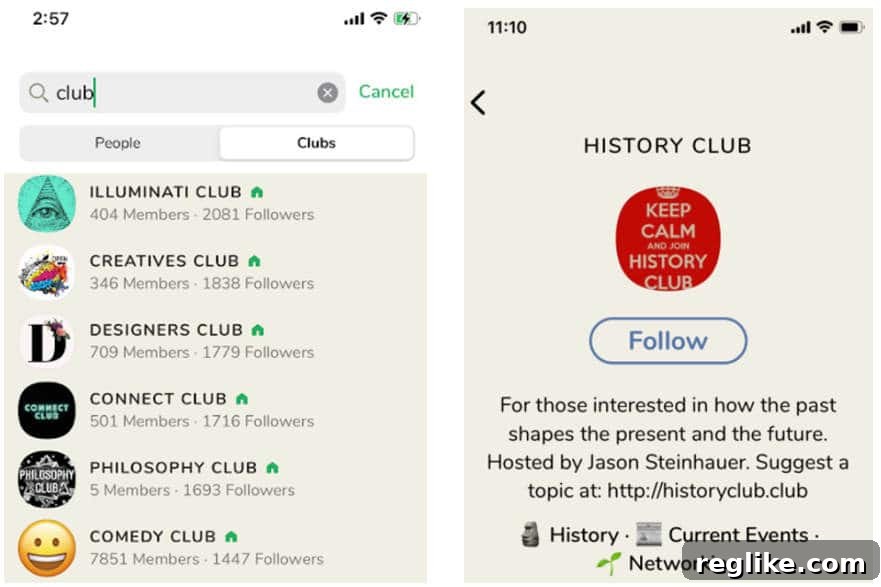
Within the Clubhouse ecosystem, users can follow individuals or join specific groups, which are aptly named “clubs.” These clubs serve as virtual gathering places for communities built around shared interests, professions, or causes. From deep dives into specific historical events to discussions on emerging technologies, these clubs foster rich, interactive dialogue, enabling participants to learn, network, and engage directly with experts and peers. This core feature – the “club” – is central to the app’s identity and user experience.
The Perfect Nomenclatural Alignment: .Club and Digital Identity
The direct lexical match between Clubhouse’s “clubs” and the “.club” Top-Level Domain (TLD) has created a powerful, organic synergy. This isn’t just a happy coincidence; it’s a perfect storm for digital branding. As Clubhouse users form and grow their communities within the app, there’s a natural inclination to extend their presence beyond its confines, establishing a dedicated online home for their “club.” The .club domain offers an intuitive and immediately recognizable solution for this digital expansion.
Consider the example of the “History Club” on Clubhouse, prominently featured in the accompanying image. It’s no surprise that this thriving community has chosen to register and promote historyclub.club as its official website. This strategic move provides a centralized hub where members can find additional resources, schedules for upcoming sessions, membership information, and potentially exclusive content, all under a domain name that instantly communicates its purpose and affiliation with the app. This direct correlation makes the .club TLD an undeniable asset for anyone looking to solidify their Clubhouse identity with a robust web presence.
This natural fit is transforming how communities perceive their digital footprint. A .club domain instantly signals to potential members and followers that they are part of a specific group, fostering a sense of belonging and easy recognition. For content creators, entrepreneurs, and community leaders on Clubhouse, securing a corresponding .club domain is becoming an essential step in building a comprehensive and cohesive digital brand, providing a stable platform independent of the app’s inherent limitations.
Beyond the App: Domain Investing and Community Building on Clubhouse
The influence of Clubhouse extends beyond merely inspiring direct domain registrations. The platform has also emerged as a significant hub for discussions around domain investing. Rooms dedicated to entrepreneurship, technology, and investment frequently feature conversations about digital assets, including domain names. This exposure is attracting a new wave of interest in domain investing, especially among users who are already deeply engaged with the app and understand the value of its “club” ecosystem.
As Clubhouse continues its trajectory of growth, reaching more users globally, the .club domain is increasingly seen as a strategic investment. Domain investors, both seasoned and novice, are recognizing the potential long-term value of these domains, particularly those that align with popular Clubhouse themes, club names, or broad community interests. The logic is simple: as the app’s user base expands, so too does the pool of potential registrants and users who will seek out a dedicated web presence for their clubs, thus driving demand for relevant .club domains.
Furthermore, .club domains are facilitating genuine community building beyond the app’s live audio format. While Clubhouse excels at ephemeral, real-time interaction, a .club website provides permanence. It can serve as:
- An official home for the club, offering a structured environment for information sharing.
- A resource hub for archiving past discussions, sharing documents, or curating member-exclusive content.
- A membership portal for managing club rosters, collecting fees, or coordinating offline events.
- A public-facing platform to attract new members and showcase the club’s activities and achievements to a wider audience.
This complementary relationship ensures that the communities fostered within Clubhouse have a robust, accessible digital identity that endures and evolves, creating a more comprehensive and valuable experience for their members.
The Future Outlook: Sustaining the Momentum
The future of both the Clubhouse app and the .club domain looks exceptionally promising. Clubhouse, despite its current invite-only and iOS-exclusive status, is poised for massive expansion. Once it opens its doors to Android users and potentially removes the invite barrier, its user base could explode exponentially, further amplifying the visibility and relevance of the “club” concept. However, this growth also brings challenges related to content moderation, scalability, and increasing competition from established social media giants launching similar audio features.
For the .club domain, the question is whether this current surge can be sustained. The powerful, almost symbiotic relationship with Clubhouse suggests that the momentum could continue as long as the app maintains its popularity. Factors that will influence sustained growth include the continued innovation and expansion of the Clubhouse platform, ongoing marketing and awareness efforts by the .Club registry, and the broader trend of individuals and organizations embracing alternative TLDs for niche branding and clearer digital identity.
The remarkable alignment between the Clubhouse app and the .club domain serves as a compelling case study in how new technologies can revitalize and drive demand for specific domain extensions. It highlights the strategic importance of choosing a domain that not only represents your brand but also resonates with the platforms and communities you aim to engage with. As the digital landscape continues to evolve, the .club domain, buoyed by the success of Clubhouse, stands as a testament to the power of a perfectly chosen name in a connected world.
The ongoing narrative of .club’s rise alongside Clubhouse will undoubtedly be a fascinating one to watch, offering insights into the evolving dynamics of social media, digital branding, and the ever-expanding domain name market.