
The intricate world of domain name management is constantly evolving, driven by the need for better security, efficiency, and accountability across the internet. At the heart of this infrastructure lies the Whois database, a critical component that stores essential information about registered domain names and their owners. Understanding how this system works is vital for anyone involved with the internet, from individual domain owners to large enterprises and cybersecurity professionals.
In a significant move aimed at streamlining domain data management, the Internet Corporation for Assigned Names and Numbers (ICANN), the global non-profit organization responsible for coordinating the internet’s naming system, embarked on a journey to transition .com and .net domains to a “Thick Whois” model. This shift, first publicly proposed in late 2016 and slated for implementation starting in May 2018, represents a fundamental change in how domain registrant data is stored and accessed, promising both practical benefits and notable challenges for the entire domain ecosystem.
To fully grasp the implications of this transition, it’s essential to first understand the distinction between “Thin Whois” and “Thick Whois,” two different approaches to managing domain registration data. For many years, popular top-level domains (TLDs) like .com and .net have operated under a Thin Whois system, a distributed model that divides the responsibility of data management between the domain registrar and the registry operator.
Under a Thin Whois model, when you register a domain name, say through a registrar like GoDaddy or Namecheap, your personal or organizational contact information – the registrant name, address, email, and phone number – is primarily held and managed by your chosen registrar. The registry operator, such as Verisign for .com and .net, maintains a more limited set of technical information. This typically includes critical data points like the domain’s nameservers (which direct traffic to your website), its current status (e.g., active, expired, locked), and its initial creation and expiration dates. This means that to get a complete picture of a domain’s Whois record, one might sometimes need to query both the registrar and the registry, a process that can be less efficient and more prone to inconsistencies.
The transition to Thick Whois simplifies this fragmented system by centralizing all domain registration data. With Thick Whois, the registry operator takes on the responsibility of managing every piece of Whois data associated with a domain name, including all registrant contact information, administrative contacts, technical contacts, nameservers, and registration dates. This creates a unified and comprehensive record directly at the registry level, eliminating the need to consult multiple sources to gather complete domain information. The vision is to provide a single, authoritative source for all Whois data, making queries more straightforward and potentially more reliable.
ICANN formally opened a public comment period on the proposed implementation of Thick Whois for existing TLDs, including the widely used .com and .net. This period allowed various stakeholders – registrars, registrants, intellectual property owners, law enforcement, and internet governance enthusiasts – to provide feedback on the proposed policy changes, highlighting the collaborative and often complex nature of internet policy-making.
The timeline established by ICANN for this significant shift was ambitious. The plan mandated that all new domain registrations for .com and .net begin submitting data as Thick Whois records starting in May 2018. Following this initial phase, a more substantial undertaking was scheduled: the migration of all existing Thin Whois data to the Thick Whois model, with a target completion date of February 2019. This extensive migration required significant technical infrastructure updates and coordination between numerous registrars and the registry operator, Verisign, to ensure a smooth transition of millions of domain records without service disruption.
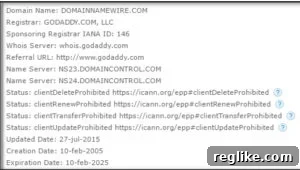
One of the most immediate and tangible benefits of a Thick Whois system is the streamlined access to domain registration data. For individuals and organizations that frequently need to pull Whois records – such as cybersecurity researchers, brand protection specialists, or even journalists investigating online activities – the Thick Whois model offers considerable efficiency gains. In the Thin Whois era, these users often had to contend with rate limits imposed by individual registrars, which restrict the number of queries that can be made within a certain timeframe. This could be a significant hindrance, even for relatively modest data retrieval tasks. With a centralized Thick Whois database at the registry, the process of obtaining comprehensive domain information becomes a single, more consistent query, potentially easing data access for legitimate purposes.
Beyond simplified access, Thick Whois promises improved data accuracy and consistency. By having a single entity – the registry – responsible for all Whois data, there’s a greater potential for standardized data formats and robust validation processes. This centralization can help minimize discrepancies that might arise when data is distributed across multiple registrars with varying data management practices. More accurate and consistent Whois data is invaluable for various internet functions, including facilitating domain transfers, resolving disputes, and ensuring legal compliance. It also aids law enforcement and intellectual property rights holders in identifying and contacting responsible parties associated with domain names, which is crucial in combating online fraud, phishing, and copyright infringement.
However, like any significant infrastructural change, the transition to Thick Whois also presents a unique set of challenges and concerns. A primary worry revolves around data privacy and the potential for increased vulnerability to malicious actors. The very rate limits imposed by registrars in the Thin Whois system, while sometimes inconvenient for legitimate users, served as a crucial defense mechanism against bulk data harvesting by spammers, fraudsters, and other malicious entities. With a centralized repository of all registrant data under Thick Whois, there’s a heightened risk that if this central database were compromised or improperly accessed, it could provide a more efficient pathway for bad actors to collect sensitive personal information, potentially leading to more sophisticated spam campaigns, identity theft, or targeted attacks. This concern became even more pronounced with the advent of regulations like the General Data Protection Regulation (GDPR), which significantly impacted public Whois data accessibility and underscored the delicate balance between transparency and individual privacy rights.
Another significant point of contention, particularly in the context of the .com and .net TLDs, concerns the potential financial implications. Verisign (NYSE: VRSN), the registry operator for these highly valuable domains, holds a unique contractual agreement with ICANN. This agreement includes provisions that allow Verisign to request a wholesale price increase for domain registrations if it is required to implement a new “consensus policy.” The transition to Thick Whois, being a new policy mandated by ICANN, falls under this clause. Consequently, the implementation of Thick Whois presented Verisign with a legitimate argument for seeking an adjustment to their pricing structure.
The timing of this implementation was particularly strategic, as it coincided with Verisign’s negotiations with the U.S. Department of Commerce for renewing its Cooperative Agreement in 2018. This Cooperative Agreement is a foundational document that dictates the pricing caps and other operational parameters for .com domains, making it a critical factor in Verisign’s financial outlook. It was widely anticipated that Verisign would leverage the significant undertaking of migrating to a Thick Whois system – an expensive and technically complex endeavor involving millions of domain records – as a key point in their discussions to justify a potential increase in the wholesale price of .com registrations. This dynamic highlighted the intricate interplay between technical policy decisions, contractual obligations, and the broader economic landscape of the domain name industry.
Beyond the financial considerations, the technical challenges of migrating such vast quantities of data from various registrars to a single registry system were substantial. Ensuring data integrity, maintaining service availability, and resolving data conflicts across millions of records required meticulous planning, rigorous testing, and seamless coordination. Any misstep could lead to data loss, service disruptions, or inaccurate Whois records, impacting domain owners globally.
The move to Thick Whois is just one piece of the ever-evolving puzzle of internet governance and domain management. In the years following its implementation, the conversation around Whois has further intensified, particularly concerning data privacy and the impact of regulations like GDPR. The debate continues to center on how to balance the legitimate need for access to accurate domain registrant information (for cybersecurity, intellectual property protection, and law enforcement) with the fundamental right to privacy for individuals. This has led to the exploration of “gated” Whois access models and various anonymization techniques for publicly available data.
Ultimately, ICANN’s decision to mandate Thick Whois for .com and .net domains marked a pivotal moment in the history of domain name management. It underscored a commitment to centralized data, aiming for greater efficiency, accuracy, and accessibility for legitimate users. However, it also brought to the forefront critical discussions about data privacy, the power dynamics within the internet ecosystem, and the economic implications of policy decisions. As the internet continues to grow and evolve, the systems that govern its core infrastructure will undoubtedly continue to adapt, striving to meet the demands of a global, interconnected digital world while navigating complex technical, legal, and ethical considerations.