
Master Your .tel Domain: A Comprehensive Setup and Management Guide
In the vast landscape of the internet, where every business and individual strives for unique digital identity, specialized domain extensions emerge to serve specific purposes. Among these, the .tel domain stands out as a distinctive solution for centralizing contact information. While its utility might be a subject of ongoing discussion in the domain community, there’s undeniable value in understanding how to effectively set up and manage this unique online asset. This guide aims to demystify the process, offering a smooth journey from registration to a fully functional .tel presence, optimized for both users and search engines.
The .tel domain was introduced with a singular vision: to act as a personal or business digital contact card, a hub for all your communication details. Instead of hosting a traditional website with pages, a .tel domain directs users to a highly structured page of contact information, social media links, location data, and more. For those looking to present a clear, concise, and easily accessible point of contact, a .tel domain can be an invaluable tool. It simplifies how people find and connect with you, whether for personal branding, small business outreach, or professional networking.
Understanding the Unique Appeal of .tel Domains
At its core, a .tel domain isn’t a conventional website hosting platform. Telnic, the registry operator for .tel, designed it as a global directory. This means when you register a .tel domain, you’re not purchasing web hosting in the traditional sense. Instead, you’re securing a specific entry within Telnic’s centralized database, where all your contact details are stored and managed. This fundamental difference shapes the entire setup and management experience, offering both distinct advantages and a few unique quirks.
The primary advantage lies in its focus. In an age of information overload, a .tel domain cuts through the noise, providing immediate access to crucial contact details without the need to navigate complex websites. It’s inherently mobile-friendly, designed to display contact information clearly on any device, making it ideal for on-the-go communication. Moreover, its standardized format makes it machine-readable, potentially aiding in its discoverability by search engines and applications looking for specific contact data.
The .tel Domain Registration Process: What to Expect
Registering a .tel domain shares similarities with other domain extensions, but also presents some key differences. The journey begins with choosing an accredited registrar. While I initially registered my surname, allemann.tel, through a specific provider, the general steps apply across various registrars. Prices for .tel domains can vary, so it’s wise to shop around and compare offerings before making a commitment.
Once you’ve selected your registrar, the registration flow will require you to provide standard WHOIS information. This includes details such as your name, address, and email. What’s particularly noteworthy for a .tel domain, given its purpose as a contact hub, is the option for WHOIS privacy. While many traditional domains offer this to shield personal information, the very essence of a .tel domain is to make contact information readily available. Therefore, carefully consider your privacy settings in light of how you intend to use your .tel page. Some users might opt for privacy for personal domains, while businesses might prefer transparency for easy access.
Accessing Your .tel Management Portal
A crucial distinction arises immediately after completing your registration. Unlike traditional domains where you might immediately begin configuring DNS records or pointing to a web host, .tel domains require a slightly different approach to management. Upon registration, you might receive a standard receipt, but not always explicit instructions on how to set up your .tel page. This can be a point of initial confusion for many.
My experience, for instance, involved logging back into my registrar account and finding a specific note detailing how to access the .tel management system. The message often directs users to a separate portal, usually hosted by Telnic or a Telnic-integrated platform, rather than the registrar’s generic domain management interface. For example, my specific instruction indicated logging in at a URL like https://telhosting.moniker.com, using a unique username format (e.g., “MONIKER” plus your account ID) and my existing registrar password. This separate login is essential because you’re managing content within Telnic’s specialized directory, not just pointing DNS records.
Navigating Your .tel Profile: Tips for a Smooth Setup
Once you successfully log into the .tel management portal, you’ll find an interface designed for populating your contact profile. The system is generally intuitive, guiding you through various fields to input your information. However, like any specialized platform, there can be a few areas where users might encounter minor hurdles.
Accurate Contact Information: The Core of Your .tel Identity
The most important aspect of your .tel page is, naturally, your contact information. This includes phone numbers, email addresses, social media links, physical addresses, and more. When filling out these fields, accuracy is paramount. This is especially true for phone numbers, which often require a specific format.
One common sticking point is the international phone number format. You must include the country code as part of your number. For instance, in the U.S., the country code is +1. Many users in the U.S. might not instinctively know this, or might try common but incorrect prefixes like “00.” Telnic’s interface would greatly benefit from providing clear examples or even a dynamic lookup tool for country codes, to prevent users from entering invalid information. Always ensure your phone numbers are entered with the correct international prefix (e.g., +1 for the United States, +44 for the United Kingdom, +49 for Germany) to ensure global reach and functionality.
Optimizing Keywords and Additional Details
Beyond basic contact information, your .tel profile allows you to add keywords and additional information that can enhance its discoverability. These keywords act as descriptors, helping users and search engines understand what your .tel page is about. Think of terms that people would use to search for you or your business. Adding relevant keywords can significantly boost the utility of your .tel presence.
However, when adding these details, especially within multi-tabbed input sections, be aware of a potential user interface quirk. My experience revealed that the “save” function might not work as intuitively as expected. Typically, in a multi-tabbed pop-up box, you can fill out information across several tabs and then click a single “Save” button to commit all changes. This is often not the case with the .tel management system.
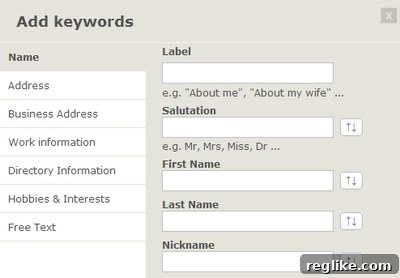
As illustrated in the example above, you might need to explicitly click “Save” on *each* tab you’ve modified. Failing to do so can result in only the content from the very last tab you were on being saved and published, while changes made on preceding tabs are lost. This can be frustrating, leading to repeated edits and potential data loss. Always double-check that you’ve saved all sections before exiting the editing interface.
Publishing Your .tel Domain: Go-Live and Propagation
One of the most appealing aspects of the .tel system is the speed at which your page goes live. Once you’ve completed and saved your profile information, your .tel page typically becomes accessible to the public within 15 minutes. This rapid deployment is a significant advantage, particularly when compared to the sometimes lengthy propagation times associated with traditional domain name changes or website launches.
Demystifying DNS Propagation and Caching for .tel Domains
While the .tel system itself is designed for quick updates, the broader internet infrastructure can introduce delays, leading to a common point of confusion: why don’t my changes appear instantly for me? This phenomenon is largely due to DNS propagation and caching.
DNS (Domain Name System) is the internet’s phonebook, translating human-readable domain names into IP addresses. When you make changes to any domain, these changes need to propagate across the global network of DNS servers. This process can take anywhere from a few minutes to 48 hours, depending on various factors like your ISP’s caching policies and the TTL (Time To Live) settings of the DNS records. While .tel domains technically use Telnic’s centralized system for content, the way internet service providers (ISPs) and local devices cache this information still applies.
I experienced this firsthand. After making several updates to my .tel page, I noticed they weren’t reflected on the live domain. Even after contacting Telnic, who confirmed they saw the updated information on their end, the discrepancy persisted. The realization dawned that this was a client-side caching issue, similar to how changes to traditional nameservers take time to propagate. My browser, or perhaps my local ISP’s DNS resolver, was still displaying an older, cached version of my .tel page.
To troubleshoot such issues, a few steps can be helpful:
- Clear Your Browser Cache: Browsers store local copies of websites to speed up loading times. A hard refresh (Ctrl+F5 or Cmd+Shift+R) or clearing your browser’s cache can force it to fetch the latest version.
- Try an Incognito/Private Window: These browser modes usually bypass cache, offering a fresh view.
- Use a Different Browser or Device: If the problem persists on one browser, check it on another, or even on your phone, to see if the issue is localized.
- Wait: Sometimes, patience is key. ISP caches will eventually refresh, ensuring you see the most current version.
Understanding this aspect of internet infrastructure is crucial for managing any online presence, including your .tel domain, as it helps in diagnosing why updates might not appear immediately on your specific device.
Unlocking the SEO Potential of Your .tel Domain
The question of how .tel domains interact with search engines is vital for anyone looking to maximize their online visibility. While a .tel domain isn’t a replacement for a full-fledged content website, it offers unique SEO advantages, particularly in the realm of direct contact and local search.
Search engines like Google are constantly striving to provide users with the most relevant and accurate information. A .tel domain, by its very design, offers structured, verifiable contact information directly. This aligns perfectly with search engine goals, especially for queries where a user is explicitly looking for contact details, phone numbers, addresses, or ways to connect with a person or business.
Here’s how a .tel domain can contribute to your SEO efforts:
- Enhanced Local SEO: For businesses, a .tel domain can be a powerful tool for local SEO. By clearly listing your physical address and phone number, you provide essential NAP (Name, Address, Phone) information that search engines use to rank local businesses. This can improve your visibility in “near me” searches and Google Maps results.
- Structured Data Alignment: Although Telnic’s system is proprietary, the standardized nature of a .tel page conceptually aligns with structured data (Schema Markup). Search engines favor well-organized data that clearly defines entities and their attributes (like a person’s contact info or a business’s services). A .tel page, by its inherent structure, provides precisely this kind of clear-cut data.
- Direct Contact for Users: Search engines recognize when a page offers immediate value. A .tel domain streamlines the user journey from search query to contact. This excellent user experience (UX) can indirectly benefit SEO, as search engines often reward sites that provide quick answers and reduce user friction.
- Keyword Relevance: Your .tel page allows for the inclusion of keywords, which, when used judiciously, can help search engines categorize your page and serve it for relevant queries. For example, a photographer might include “wedding photography,” “event photographer,” and “portrait studio” as keywords.
- Mobile-First Design: .tel pages are inherently responsive and designed for mobile access. Given Google’s mobile-first indexing, having a domain that is perfectly optimized for mobile devices is a significant SEO advantage.
- Authority and Trust: For personal branding, a clean, professional .tel page can establish authority and trust. When your contact information is readily available and clearly presented, it signals transparency, which is a positive signal for both users and search engines.
It’s important to manage expectations, however. A .tel domain will not rank for broad informational queries that require extensive textual content. It excels as a complementary tool, particularly for directing direct connection, not as a replacement for content-rich blogs or e-commerce sites. Its SEO strength lies in its specificity and ability to serve targeted, contact-oriented queries.
Maximizing Your .tel Presence: Best Practices and Future Outlook
To truly harness the power of your .tel domain, consider these best practices:
- Keep Information Current: Regularly review and update your contact details. Outdated information defeats the purpose of a .tel domain.
- Cross-Promote: Link to your .tel domain from your email signature, social media profiles, business cards, and even your main website. Make it easy for people to find your contact hub.
- Utilize All Fields: Don’t leave sections blank. Fill out all relevant fields, including social media links, location, and additional services, to create a comprehensive profile.
- Choose Relevant Keywords: Think about what people would type into a search engine to find someone with your skills or services, and incorporate those into your keywords.
The digital landscape is constantly evolving. While .tel domains might have initially faced skepticism, their core utility as a streamlined contact hub remains relevant. In an era where quick access to information is king, and mobile usage dominates, a .tel domain offers a focused solution that complements a broader digital strategy. It’s not just a domain; it’s a statement of accessibility, ensuring that when someone needs to reach you, they can do so effortlessly.
In conclusion, setting up and managing a .tel domain involves a few distinct steps, from understanding its unique registration process to navigating its dedicated management portal. While challenges like specific phone number formatting or the multi-tab saving mechanism might arise, they are easily overcome with a clear understanding of the system. More importantly, recognizing the SEO potential of a .tel domain – particularly for local search, structured data, and direct contact queries – allows you to leverage it as a powerful tool in your overall online strategy. By embracing its specialized purpose, your .tel domain can become an efficient and highly discoverable digital beacon for your contact information.