
Urgent Warning: The Critical Impact of ClientHold Status on Domain Resolution
In today’s digital landscape, a website is often the cornerstone of a business, serving as its primary storefront, communication hub, and revenue generator. Any disruption to its accessibility can lead to severe consequences, ranging from significant financial losses to irreparable damage to brand reputation. A recent incident involving two major publicly traded Chinese travel giants, Ctrip.com and eLong.com, brought to light a critical, yet often overlooked, vulnerability: the dreaded “ClientHold” status for domain names.
On a memorable day, the websites for both Ctrip.com (NASDAQ: CTRP), a formidable player with an $8 billion market cap at the time, and eLong.com, valued at approximately $0.6 billion, abruptly ceased functioning. This sudden and widespread outage sent shockwaves through the travel industry and highlighted the fragility of online operations when foundational elements like domain names are compromised. The cause? Both domain names were placed in “ClientHold” status by their respective registrars, effectively taking them offline.
Understanding the “ClientHold” Status: A Deep Dive
The “ClientHold” status is more than just a bureaucratic tag; it’s a powerful directive issued by a domain registrar to the domain registry. When a domain is marked “ClientHold,” it sends a clear instruction: “Do not activate this domain in the Domain Name System (DNS).” The immediate consequence is that the domain stops resolving, meaning web browsers and other internet services can no longer translate the human-readable domain name (like ctrip.com) into an IP address. Without this crucial translation, the website becomes inaccessible, emails associated with the domain stop working, and all related online services grind to a halt.
Unlike a “ServerHold” status, which is typically initiated by the registry itself (often due to legal or administrative reasons concerning the top-level domain), “ClientHold” is a registrar-level action. It’s a preventative measure designed to protect domain owners or enforce compliance with registrar policies or legal mandates. While the intent might be protective, the outcome for an active website can be devastatingly disruptive.
Common Triggers for a Domain’s ClientHold Status
The “ClientHold” status can be activated for several critical reasons, each carrying severe implications for a domain owner. Understanding these triggers is paramount for proactive domain management:
- WHOIS Data Inaccuracies or Verification Issues: This was the reported reason for the Ctrip and eLong incident. ICANN (Internet Corporation for Assigned Names and Numbers) mandates that all domain registrants maintain accurate and up-to-date WHOIS contact information. If this information is found to be false, outdated, or if a registrar’s verification attempts (e.g., via email) fail to receive a response, the domain can be placed on “ClientHold.” This is a crucial compliance measure designed to combat spam, fraud, and ensure proper contact with domain owners.
- Payment Issues and Expiration: One of the most common triggers for a “ClientHold” status is payment-related difficulties. This could stem from an expired credit card on file, insufficient funds, or simply forgetting to renew a domain name before its expiration date. Many registrars implement an auto-renewal system, but if the payment method linked to this system fails, the domain can quickly be flagged for suspension. Even with a long time until expiration, as was the case with Ctrip and eLong, other payment-related issues with the registrar could lead to a hold.
- Legal Disputes and Court Orders: Domains can be placed on “ClientHold” due to legal reasons, such as a court order, a trademark dispute, or a UDRP (Uniform Domain-Name Dispute-Resolution Policy) complaint. If a legal challenge questions the legitimate ownership or use of a domain, the registrar may hold the domain to prevent further transfer or use until the dispute is resolved.
- Abuse Complaints: If a domain is found to be engaged in illegal activities such as phishing, spamming, distributing malware, or other forms of internet abuse, the registrar may place it on “ClientHold” to mitigate harm and enforce their terms of service.
- Administrative Errors or Security Breaches: Although less common, registrar errors or even suspicion of a security breach involving a domain’s management account could lead to a temporary “ClientHold” as a precautionary measure to prevent unauthorized changes or transfers.
The Devastating Impact of Domain Suspension
For any business, especially one operating on the scale of Ctrip or eLong, a sudden domain suspension translates into an immediate and multifaceted crisis:
- Massive Financial Losses: For e-commerce platforms and travel sites, every minute of downtime directly equates to lost sales, booking cancellations, and missed advertising revenue. For companies with market caps in the billions, even a few hours of disruption can mean millions in lost income. The cost extends beyond direct sales to potential advertising spend on non-functional campaigns.
- Severe Reputational Damage: Customers expect constant availability from trusted brands. A website going down without warning erodes customer trust, leads to frustration, and can severely tarnish a company’s reputation. News of such outages spreads rapidly, impacting public perception and investor confidence.
- SEO and Traffic Erosion: Search engines like Google penalize websites that are frequently down or inaccessible. Prolonged downtime can cause a significant drop in search engine rankings, resulting in a loss of organic traffic that can take months to recover even after the domain is restored.
- Operational Paralysis: Beyond website access, a “ClientHold” impacts all services tied to the domain, including email communications, internal systems hosted on subdomains, and any APIs or third-party integrations relying on the domain’s resolution. This can halt internal operations and external communications.
The Ctrip and eLong Incident: A Case Study in Prompt Resolution
The incident with Ctrip.com and eLong.com serves as a powerful reminder of these vulnerabilities. Both domains, critical to their respective travel platforms, found themselves in the precarious “ClientHold” status. Ctrip.com was registered with Network Solutions, while eLong.com was managed by Register.com—both prominent registrars under the Web.com umbrella. This consolidation meant a single point of failure or an overarching policy issue could affect multiple high-profile domains.
A Web.com spokesperson, John Herbkersman, confirmed to Domain Name Wire that “This was a Whois issue and has been resolved with both sites.” This statement reinforces the critical importance of accurate WHOIS data and the potential for discrepancies to trigger a “ClientHold.” Despite both domains having considerable time until their official expiration dates, a non-payment-related issue, specifically concerning their WHOIS information, led to the immediate suspension.
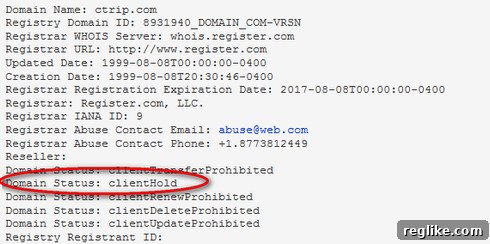
Timely intervention proved crucial. As of around 12 PM EST on the day of the incident, the “ClientHold” on ctrip.com was successfully removed, quickly restoring its online presence. This swift resolution underscored the effectiveness of immediate communication and compliance with registrar requirements.
Here’s what the whois record from DomainTools looked like when ctrip.com was under hold:
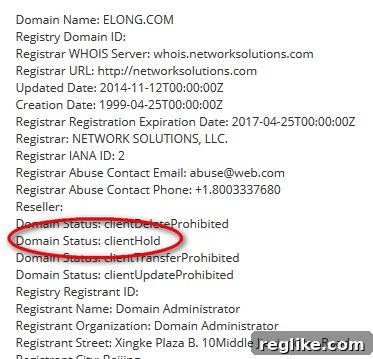
eLong.com’s website, however, experienced a slightly longer period of downtime, remaining inaccessible past 12 PM EST before it too was eventually restored. The differing timelines for resolution, even within the same registrar family, highlight that each case might require specific actions and verification processes.
Here’s the whois record from Network Solutions for eLong.com during its hold:
Proactive Strategies to Safeguard Your Domain from ClientHold
Preventing a “ClientHold” status is far simpler and less costly than recovering from it. Businesses and individuals must adopt robust domain management practices:
- Maintain Impeccable WHOIS Accuracy: Regularly review and update your domain’s WHOIS contact information. Ensure all email addresses, phone numbers, and physical addresses are current and accessible. Respond promptly to any WHOIS verification emails from your registrar.
- Ensure Timely Renewals and Reliable Payments: Always enable auto-renewal for critical domains and link them to up-to-date payment methods with sufficient funds. Consider registering domains for multiple years to minimize renewal frequency. Set independent reminders for domain expiration dates well in advance.
- Monitor Domain Status Proactively: Utilize domain monitoring services or set calendar alerts to track your domain’s expiration status and WHOIS information. Some registrars offer dashboard alerts for impending issues.
- Understand Your Registrar’s Policies: Familiarize yourself with your domain registrar’s terms of service, especially regarding WHOIS accuracy, payment defaults, and dispute resolution.
- Implement Domain Locking: Domain locking prevents unauthorized transfers or changes to your domain’s settings without your explicit permission, adding an extra layer of security.
- Keep Registrar Contact Information Handy: Ensure you have direct contact details for your domain registrar’s support team, including emergency lines, to facilitate rapid communication if an issue arises.
- Consolidate Domains (With Caution): While having domains spread across multiple registrars can diversify risk, consolidating them under a single, reputable registrar can simplify management, provided that registrar offers excellent service and security.
What to Do if Your Domain is on ClientHold
If you discover your domain has been placed on “ClientHold,” immediate action is required:
- Contact Your Registrar Immediately: Reach out to your domain registrar’s support team through their most direct channels (phone support is often best for urgent issues).
- Identify the Reason: Ask the registrar for the specific reason your domain was placed on “ClientHold.” This will dictate the necessary steps for resolution.
- Provide Necessary Documentation/Information: Be prepared to provide updated WHOIS information, proof of payment, or any other documentation the registrar requests to resolve the issue.
- Follow Instructions Diligently: Adhere strictly to the registrar’s instructions for resolution. Once the issue is addressed, verify that the “ClientHold” status has been removed and your website is accessible again.
Conclusion: Vigilance is Key to Uninterrupted Online Presence
The case of Ctrip and eLong serves as a stark reminder that even the largest and most well-established online entities are not immune to the severe disruptions caused by a “ClientHold” status. The intricate web of domain registration, WHOIS verification, and registrar policies demands constant vigilance from businesses of all sizes. Proactive domain management, characterized by accurate data, secure payment methods, and diligent monitoring, is not merely a technicality; it is a fundamental pillar of maintaining a stable, reliable, and continuously accessible online presence. Protecting your domain means protecting your business, your customers, and your reputation in the digital age.