
Defending Your Domain: Proactive Strategies Against Cybersquatting with Descriptive Landing Pages
In the vast and ever-expanding digital landscape, a domain name is more than just an address; it’s a cornerstone of online identity, a valuable digital asset, and often, the first point of contact for businesses and individuals alike. However, the value of desirable domain names also attracts unscrupulous actors, leading to disputes over ownership, most notably through cybersquatting. Understanding how to proactively defend your domain, especially through transparent communication on its landing page, can be a game-changer in Uniform Domain-Name Dispute Resolution Policy (UDRP) cases. This guide explores the critical role that a well-crafted explanation of a domain’s generic or descriptive uses can play in reinforcing legitimate ownership and intent, thereby safeguarding your digital investments.
Understanding the UDRP Framework: Criteria and Common Pitfalls
The Uniform Domain-Name Dispute Resolution Policy (UDRP) is an administrative procedure established by the Internet Corporation for Assigned Names and Numbers (ICANN) to provide a streamlined, relatively inexpensive forum for resolving domain name disputes, primarily related to cybersquatting. For a complainant to succeed in a UDRP action, they must prove three cumulative elements:
- The domain name is identical or confusingly similar to a trademark or service mark in which the complainant has rights.
- The respondent (domain registrant) has no rights or legitimate interests in respect of the domain name.
- The domain name has been registered and is being used in bad faith.
The “bad faith” element is often the most contentious and heavily debated aspect of UDRP cases. Complainants frequently point to a domain being listed “for sale” as prima facie evidence of bad faith. The argument often implies that the registrant acquired the domain solely to profit from selling it to the trademark holder, or to intentionally disrupt their business. This interpretation, however, doesn’t always hold true, particularly for domains that consist of generic terms, descriptive phrases, or short, versatile letter combinations. Legitimate domain investors regularly register and hold such domains with the genuine intent of reselling them for their inherent value, not to exploit specific trademarks.
Distinguishing Legitimate Domain Investment from Cybersquatting
The core distinction lies in intent. Cybersquatting involves the malicious intent to capitalize on someone else’s brand recognition or goodwill. Legitimate domain investing, conversely, focuses on acquiring domains whose value stems from their generic nature, broad appeal, or inherent linguistic properties. For instance, registering “cars.com” or “travelagency.net” is an act of investing in a descriptive asset, while registering “googlesearch.info” would be a clear case of cybersquatting. The challenge in UDRP cases often lies in convincing a panelist that a domain listed for sale falls into the former category rather than the latter.
The Strategic Advantage of Explanatory Landing Pages
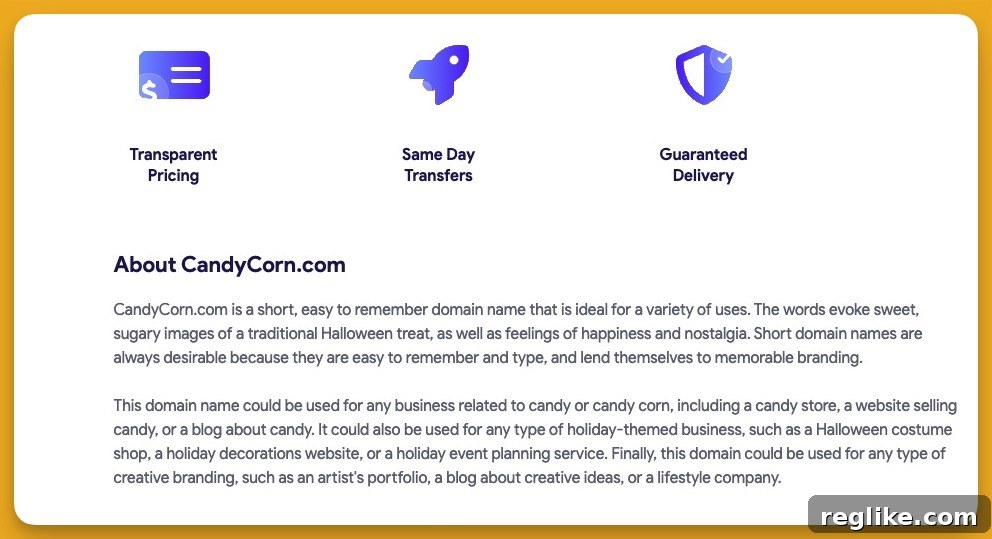
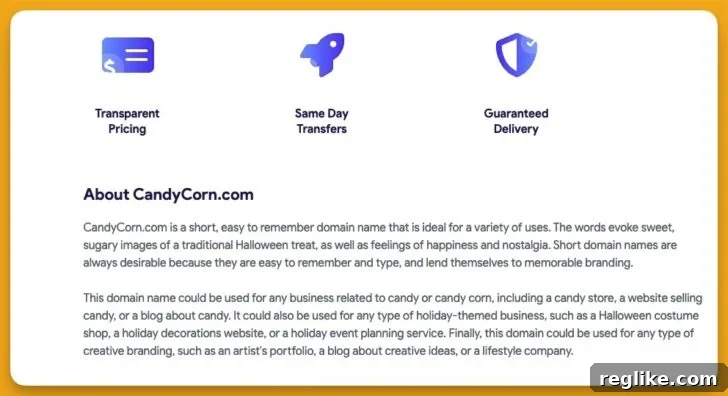
One of the most effective ways to counteract a “bad faith” allegation, especially when a domain is listed for sale, is to transparently explain its potential generic or descriptive uses directly on its landing page. This proactive disclosure serves multiple critical functions:
- Demonstrates Legitimate Intent: By clearly outlining various non-trademark-specific applications for the domain, the registrant immediately establishes a legitimate business purpose for holding and offering the domain. It shifts the narrative from opportunistic trademark infringement to genuine domain asset management.
- Reinforces “Legitimate Interest”: A detailed description can provide compelling evidence that the registrant has a “legitimate interest” in the domain, not as an infringing entity, but as a generic or descriptive term with broad commercial applicability. This directly addresses the second UDRP element.
- Preempts Bad Faith Arguments: A well-articulated explanation preempts the complainant’s primary argument that the domain is being held solely to target their specific trademark. It establishes alternative, non-infringing reasons for the domain’s value and its availability for sale.
- Creates a Favorable Record: Should a dispute arise, the presence of such a message, particularly if verifiable via services like the Wayback Machine, provides tangible evidence of the registrant’s intent dating back to the time the page was active. This historical record can be crucial for panelists.
This strategy allows the domain to speak for itself, highlighting its intrinsic value as a generic keyword or phrase, rather than relying on any association with a specific brand. For example, a domain like “buywidgets.net” can be legitimately offered for sale with explanations about its use for any e-commerce platform selling small gadgets, tools, or components, distancing it from any particular “Widget Co.” brand.
Learning from Case Law: The `afer.com` Precedent and Beyond
The practical application and effectiveness of this strategy are underscored by actual UDRP decisions. In a recent case concerning the domain afer.com (pdf), the panelist noted that the registrant had included a message on the landing page explaining potential descriptive uses of the domain. While the decision did not explicitly reference this message within the “bad faith” section, its inclusion undoubtedly contributed to the overall impression of the registrant’s legitimate intent and good faith. Such contextual information helps a panelist form a comprehensive understanding of the circumstances surrounding the domain’s registration and use.
Consider what “afer” could signify generically: It could be a misspelling of “after,” suggesting a domain for post-event services, after-market products, or follow-up communications. It could also represent an acronym, a short-form for “African Energy Resources,” or a phonetic representation in certain languages. By enumerating these possibilities, even if hypothetical, the registrant demonstrates that the domain holds value beyond any single, specific trademark. This stands in stark contrast to a domain like “googleupdates.org” being listed for sale without any generic explanation; such a domain’s value is almost entirely derived from its association with the Google brand, making a cybersquatting claim much stronger.
Crafting Compelling and Compliant Descriptions
The effectiveness of an explanatory landing page hinges on the quality and integrity of its content. A good description should be:
- Clear and Concise: Directly state the generic or descriptive nature of the domain.
- Honest and Broad: Offer a range of legitimate, non-trademark-specific uses for the domain.
- Industry-Agnostic (where applicable): Suggest how the domain could serve various industries or niches that align with its generic meaning.
For example, for a domain like “digitaltrends.online”, a description could read: “This premium domain is ideal for technology news sites, digital marketing agencies, trend forecasting blogs, or businesses focused on future-oriented solutions. It leverages the universal concepts of ‘digital’ and ‘trends’ for broad appeal and relevance across numerous sectors.” The key is to demonstrate that the domain’s value is derived from its inherent linguistic meaning rather than its potential to confuse consumers with an existing brand.
Crucially, descriptions should avoid any language that could be misconstrued as targeting a trademark, attempting to create confusion, or making overly aggressive sales pitches that might imply undue profit from another’s brand. The goal is to inform, not to infringe.
Platform Support for Proactive Domain Management
The ability to implement these descriptive landing pages depends largely on the domain marketplace or parking service being used. Services like Atom and Efty are examples of platforms that currently offer features allowing registrants to include custom descriptions for their domains.
- Atom: This service offers AI-generated descriptions, which can be a double-edged sword. While AI can quickly generate text and save time, registrants must exercise extreme caution and diligently review any AI-generated content. Just as pay-per-click algorithms can inadvertently display ads targeting trademarked terms, an AI might generate descriptions that, if unchecked, could create unintended legal issues or undermine the registrant’s legitimate intent. Human oversight is paramount.
- Efty: Platforms like Efty typically provide registrants with more direct control over the content of their landing pages, allowing for manually crafted, precise, and legally sound descriptions. This level of control is invaluable for strategic UDRP defense.
Historically, platforms like Dan.com (prior to its acquisition and integration into GoDaddy) also allowed such descriptive statements, recognizing their importance for domain investors. However, GoDaddy’s current policy does not generally facilitate this level of customization on its standard for-sale landing pages. This presents a challenge for registrants who manage their portfolios through platforms with restrictive content policies. In such scenarios, domain owners might consider creating a simple, custom one-page website for their most valuable generic or descriptive domains, detailing their potential uses and linking to their preferred sales platform. This extra step ensures that the crucial defensive narrative is publicly available.
A Critical Disclaimer: Not a Shield for True Cybersquatting
It is imperative to understand that this strategy of explaining generic or descriptive uses is not a loophole or a magical shield for genuine cybersquatting. This approach is effective only when the domain name itself is genuinely generic or descriptive and not inherently confusingly similar to a protected trademark. Attempting to apply this logic to a domain such as “coca-cola-something.com” or “microsoftsupport.net” will unequivocally fail. No amount of explanation about potential “generic uses” will legitimize a domain that clearly targets an established brand.
Before registering any domain, especially those that include common words or phrases, it is vital to conduct thorough due diligence, including trademark searches, to ensure that the domain does not infringe on existing intellectual property rights. The UDRP exists to protect trademark holders from opportunistic squatters, and legitimate domain investors should always operate within the boundaries of fair practice and respect for intellectual property. The goal is to distinguish yourself as a legitimate investor in valuable digital assets, not to disguise malicious intent.
Conclusion: Transparency as Your Strongest Defense
In conclusion, the strategic deployment of explanatory content on a domain’s for-sale landing page represents a powerful, proactive defense mechanism against potential cybersquatting allegations in UDRP disputes. By clearly articulating the generic or descriptive nature and diverse potential applications of a domain, registrants can effectively establish legitimate interest, demonstrate good faith, and preempt arguments of trademark infringement. This transparency strengthens your position, mitigates risks, and enhances the perceived value of your digital assets.
For domain investors and portfolio managers, embracing this best practice is not merely about avoiding legal trouble; it’s about fostering a reputation for ethical investment, promoting clarity in the domain market, and ensuring the long-term viability and security of your digital holdings. In an era where digital identity is paramount, clear communication and demonstrable intent are your most formidable allies.