
Unlocking Web3 Potential: Doma Protocol and the Future of Domain Ownership
The digital landscape is constantly evolving, and domain names are at the heart of it. Now, a groundbreaking development is poised to revolutionize how we perceive and utilize these digital assets. D3 Global, a pioneer in domain name innovation and web3 integration, has officially launched its Doma Protocol mainnet, ushering in a new era of domain ownership and utility.
This launch marks a significant leap forward, empowering domain registrants with the ability to seamlessly integrate web3 capabilities into their existing domain names. Imagine transforming your domain into a dynamic, interactive asset with functionalities previously unimaginable. The Doma Protocol makes this a reality.
Empowering Domain Owners with Web3 Functionality
At the core of the Doma Protocol lies the concept of enhancing domain utility through web3 technologies. One of the most compelling features is tokenization, which allows domain owners to fractionalize their domain names. This groundbreaking approach opens up a wealth of opportunities, enabling shared ownership, increased liquidity, and novel investment strategies.
Tokenization essentially divides a domain name into smaller, tradable tokens. This allows multiple individuals or entities to own a portion of the domain, fostering a collaborative and dynamic ecosystem around the asset. This shared ownership model can be particularly attractive for high-value domains, making them more accessible to a wider range of investors and enthusiasts.
Leading Registrars Embrace the Doma Protocol
The Doma Protocol has already garnered significant support from leading domain registrars, demonstrating its potential to reshape the industry. Prominent names like InterNetX and ConnectReseller have joined the Doma Protocol network, signaling their commitment to embracing web3 innovation. Furthermore, Encirca has announced its operational integration with the protocol, empowering its customers to seamlessly add web3 functionality to domains across a staggering 450 top-level domains (TLDs).
This widespread adoption highlights the growing recognition of the Doma Protocol as a transformative force in the domain name space. By partnering with these key industry players, D3 Global is paving the way for a more interconnected and dynamic domain ecosystem.
Unlocking Liquidity and Value Through Fractionalization
One of the primary objectives of the Doma Protocol is to provide domain name owners with increased liquidity. Traditionally, selling a domain name has been the primary means of extracting its value. However, the Doma Protocol introduces fractionalization as a compelling alternative, allowing registrants to unlock value without relinquishing ownership entirely.
By tokenizing a domain, owners can attract cryptocurrency enthusiasts and investors on web3 exchanges, creating a vibrant marketplace for domain-related assets. This increased exposure and accessibility can lead to greater liquidity, enabling domain owners to realize a portion of their domain’s value without selling it outright. This is particularly beneficial for domain owners who wish to retain long-term control of their valuable digital assets while still benefiting from their market potential.
A Closer Look at Fractionalization: An Example with Software.ai
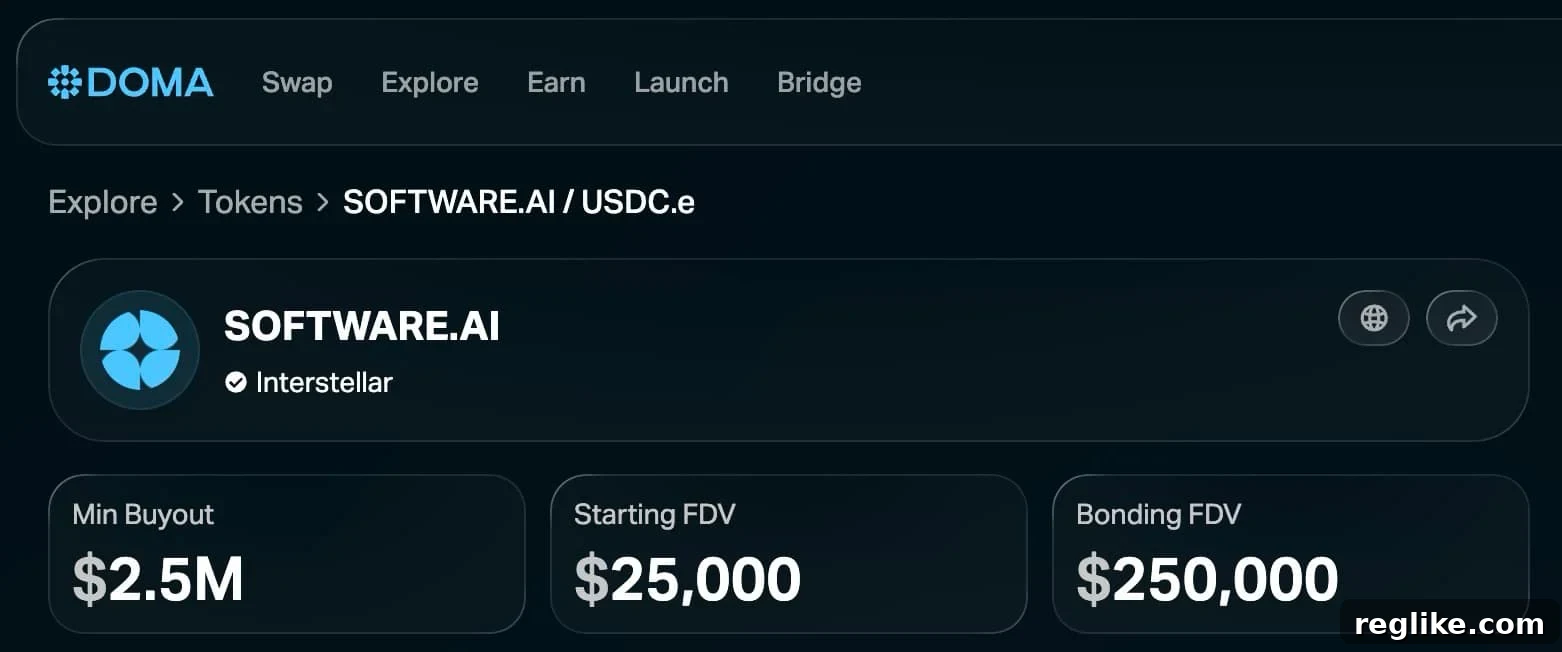
To illustrate the power of fractionalization, let’s examine the real-world example of Software.ai. This domain is set to be tokenized on the Doma Protocol, providing a tangible demonstration of how fractional ownership can work in practice.
Prior to launch, each domain on the Doma Protocol is assigned three key values that govern its initial tokenization and trading dynamics:
- Min Buyout: This represents the minimum price at which 100% of the domain can be purchased outright. This mechanism safeguards the domain from being sold at an undervalued price, ensuring that owners receive fair compensation for their asset.
- Starting FDV (Fully Diluted Valuation): The Starting FDV represents the total market value of the domain based on the initial starting price of its tokens. For Software.ai, the launch FDV is set at $25,000, providing early participants with the opportunity to acquire tokens at a favorable valuation. This incentivizes early adoption and fosters a vibrant community around the domain.
- Bonding FDV: The bonding curve is an automated pricing mechanism that dynamically adjusts the token price as more tokens are purchased. This ensures a gradual and controlled price increase, preventing volatility and promoting stability. In the case of Software.ai, the bonding curve starts at $25,000 and gradually increases the price until it reaches $250,000.
Once the bonding curve reaches its maximum value of $250,000, the tokens are released for open-market trading. At this point, the price of the tokens is determined by the forces of supply and demand, reflecting the perceived value and utility of the domain within the broader web3 ecosystem.
The Future of Domain Ownership is Here
The launch of the Doma Protocol represents a pivotal moment in the evolution of domain names. By seamlessly integrating web3 capabilities, the protocol empowers domain owners with unprecedented control, liquidity, and opportunities for monetization. The ability to tokenize and fractionalize domains opens up a new realm of possibilities, transforming them from static assets into dynamic and interactive components of the decentralized web.
The Software.ai example provides a glimpse into the potential of fractional domain ownership. Acquiring a share of a valuable domain at an early stage, with a starting FDV of $25,000, could prove to be a lucrative investment. However, the ultimate success of this model hinges on the perceived value and future potential of the domain. Whether Software.ai can achieve a $2.5 million valuation remains to be seen, but the Doma Protocol provides the framework for unlocking that potential.
As the Doma Protocol gains traction and more domains are tokenized, we can expect to see a flourishing ecosystem of domain-related assets emerge on web3 exchanges. This new paradigm of domain ownership promises to revolutionize the digital landscape, empowering individuals and businesses alike to unlock the full potential of their domain names.
The Doma Protocol is not just about technology; it’s about empowering domain owners, fostering innovation, and shaping the future of the internet. By embracing web3 principles and providing innovative tools, D3 Global is leading the charge towards a more decentralized, accessible, and valuable domain ecosystem. The future of domain ownership is here, and it’s powered by the Doma Protocol.