
Unlocking the Secrets of Chinese Acronym Domains: A Guide for Non-Speakers
In today’s interconnected digital landscape, understanding domain names, especially those influenced by foreign languages, is more crucial than ever. For domain investors, entrepreneurs eyeing international markets, or even curious individuals, the allure of short, memorable acronym domains is undeniable. However, a significant barrier often arises when these acronyms are intended to represent phrases in languages we don’t speak, particularly Chinese. The vast and vibrant Chinese domain market holds immense potential, yet deciphering the underlying meanings of acronyms like “ZML” or “HJQP” can seem like an insurmountable task without fluency in Mandarin. Fortunately, bridging this linguistic gap is now more accessible than you might think.
This comprehensive guide will introduce you to a powerful methodology that empowers you to uncover the Chinese meanings behind acronym domains, even if you don’t speak a word of the language. By combining the strengths of a specialized Chinese domain meaning assistant with a robust translation tool, you can gain invaluable insights into potential brandability, market value, and cultural relevance. This approach opens up new avenues for domain analysis, investment, and strategic planning, making the previously opaque world of Chinese acronyms remarkably transparent.
Introducing the Domain Meaning Assistant: JSCXC.com
Our primary tool in this endeavor is the 域名含义助手 (Domain Meaning Assistant), hosted at JSCXC.com. This ingenious online utility is specifically designed to tackle the challenge of identifying potential Chinese phrases that correspond to a given acronym. The importance of such a tool cannot be overstated, particularly given the unique characteristics of the Chinese language and its impact on domain name conventions. Chinese domain names often derive their value from pinyin (the phonetic transcription of Chinese characters into the Latin alphabet) abbreviations, making tools like JSCXC.com indispensable for anyone serious about navigating this market.
The website itself embodies simplicity and efficiency. Upon arrival, you’ll be greeted by a minimalist interface featuring a prominent search box and a clear “查询” (Check) button. This user-friendly design ensures that anyone, regardless of technical proficiency, can quickly grasp its functionality. The site’s primary function is to act as a bridge between an English-letter acronym and a multitude of potential Chinese character combinations, laying the groundwork for deeper linguistic analysis. This initial step is vital for uncovering the diverse possibilities that a simple string of letters can represent in the rich tapestry of the Chinese language, offering a foundational understanding before diving into translation.

To begin your search, simply input the acronym domain you’re interested in into the provided search box. You can safely disregard any Chinese placeholder text within the box; its presence is merely for illustrative purposes. For instance, let’s consider the acronym “ZML.” This specific domain, ZML.com, notably sold for an impressive $34,000 in August, highlighting the significant value that short, three-letter acronyms can command in the domain market. Once you’ve entered “ZML,” click the “查询” (check) button. The power of JSCXC.com immediately becomes apparent as it generates a vast list of potential Chinese phrases. In the case of “ZML,” you’ll likely discover over 400 suggested Chinese phrases, each representing a distinct meaning or combination of characters that could phonetically align with the acronym. This extensive list is the raw material for our next step, providing a comprehensive overview of potential interpretations.

Upon receiving the results, you’ll notice that the suggested phrases are displayed in either red or black text. While the color difference might initially suggest a categorization or ranking, practical observation indicates that there is no apparent functional distinction between phrases presented in red versus black. All suggestions are equally valuable for our purpose of uncovering potential meanings. This extensive output underscores the polysemic nature of language and the numerous ways in which a short acronym can be interpreted. However, for a non-Chinese speaker, this list of characters, while impressive, still requires translation to become truly actionable. This leads us to the second critical component of our domain meaning discovery process: a reliable translation tool.
Bridging the Language Barrier with Yabla: Your Translation Companion
To transform the cryptic Chinese phrases provided by JSCXC.com into understandable English meanings, we turn to a specialized translation resource. While many general translation tools exist, for precise Chinese-to-English translation, particularly for individual phrases and characters, a dictionary-focused platform like Yabla proves exceptionally effective. Yabla’s Chinese-English Pinyin Dictionary offers not only direct translations but also pinyin pronunciation and context, which is invaluable for a deeper understanding of the terms.
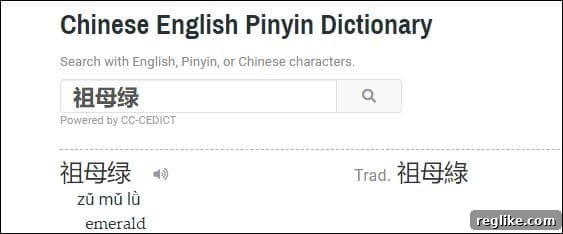
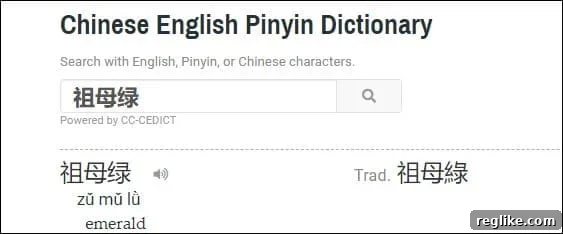
The process of using Yabla is straightforward and seamlessly integrates with the output from JSCXC.com. Simply select and copy one of the Chinese phrases from the results list – for our “ZML” example, let’s pick “祖母绿.” Then, navigate to Yabla’s dictionary page and paste the copied Chinese phrase directly into its search box. With a quick search, Yabla will instantly provide its English equivalent. In this specific instance, “祖母绿” translates to “emerald.” This reveals a clear and desirable meaning for ZML, suggesting that the domain could be associated with precious stones, luxury goods, or even a brand name inspired by the gemstone. Understanding such a meaning can significantly impact a domain’s perceived value and its potential for branding, especially within markets sensitive to elegant and culturally significant terms.
The synergy between JSCXC.com and Yabla is truly remarkable. JSCXC.com acts as the brain, generating hundreds of potential interpretations, while Yabla serves as the interpreter, unlocking the meaning of each. This two-step process demystifies Chinese acronym domains, transforming them from obscure letter combinations into terms with real-world significance. For domain investors, this means the ability to quickly assess the intrinsic value and brandability of an acronym. For businesses, it provides a crucial layer of due diligence when considering a domain for the Chinese market, ensuring that the chosen name resonates positively and accurately conveys the intended message, avoiding potential cultural missteps.
Exploring Longer Acronym Domains: The HJQP.com Example
Our methodology is not limited to short, three-letter acronyms. The power of JSCXC.com and Yabla truly shines when analyzing longer, more complex acronym domains, where the number of potential Chinese interpretations multiplies exponentially. Let’s take HJQP.com as another illustrative example. This four-letter domain also commanded a respectable sale price of $9,349 in August, indicating the strong demand for quality acronyms across various lengths. The increased length of the acronym “HJQP” means that JSCXC.com will likely provide an even broader array of Chinese phrases, offering a rich pool of potential meanings to explore.
When “HJQP” is entered into the Domain Meaning Assistant, it suggests approximately 30 distinct Chinese phrases. Each of these phrases, when translated via Yabla, reveals a fascinating potential meaning. Consider the following four examples, demonstrating the diversity and specificity of the interpretations:
| Chinese | Pinyin | Meaning |
|---|---|---|
| 黄金棋牌 | Huang Jin Qi Pai | golden chess piece / golden board game |
| 红江棋牌 | Hong Jiang Qi Pai | red river chess piece / red river board game |
| 黄金旗袍 | Huang Jin Qi Pao | golden Chinese-style dress (Qipao) |
| 黄金嵌片 | Huang Jin Qian Pian | golden embedded thin piece / golden inlay piece |
These translations offer significant insights. “黄金棋牌” (Huang Jin Qi Pai), translating to “golden chess piece” or “golden board game,” immediately suggests a strong fit for a gaming platform, a strategy game brand, or even a luxury board game manufacturer. The phrase evokes images of prestige and entertainment. Similarly, “红江棋牌” (Hong Jiang Qi Pai), meaning “red river chess piece,” also points towards the gaming sector, perhaps with a regional or thematic twist. On the other hand, “黄金旗袍” (Huang Jin Qi Pao), translating to “golden Chinese-style dress,” takes us into the realm of fashion, traditional attire, and luxury apparel. This meaning would be perfect for a high-end clothing brand specializing in Qipao. Finally, “黄金嵌片” (Huang Jin Qian Pian), or “golden embedded thin piece,” could be relevant for jewelry, decorative arts, or even manufacturing components. The stark difference in these meanings underscores the importance of a thorough analysis. A domain investor might value “HJQP” differently depending on whether it suggests a lucrative gaming niche or a high-fashion brand, illustrating how understanding these underlying meanings directly impacts perceived value and strategic application.
Understanding Limitations and Unforeseen Interpretations
While the combination of JSCXC.com and Yabla is remarkably effective, it’s also important to acknowledge that automated tools, by their very nature, can sometimes yield unexpected or even humorous results. Not every acronym will have a perfectly logical or directly relevant Chinese meaning. Occasionally, an acronym might primarily be phonetic, or its most literal translation might not align with common understanding or desired branding. This is where a touch of human intuition and contextual awareness becomes important.
Consider the very domain of the assistant itself: JSCXC.com. If we were to apply our methodology to “JSCXC,” entering it into its own search box, the tool provides a single suggestion: “驾驶铲雪车” (Jia Shi Chan Xue Che). When this phrase is run through Yabla, the translation reveals “drive a snowplow.” While technically a valid phonetic match, the idea of using “drive a snowplow” as the core meaning for a domain meaning assistant is, quite frankly, amusing and clearly not its intended brand identity. This example highlights a crucial aspect of domain interpretation: not all phonetic matches will yield a brandable or sensible meaning. Some acronyms might be chosen for their sound, their brevity, or simply because they were available, rather than for a direct semantic link to a common Chinese phrase. This doesn’t detract from the tool’s utility; rather, it informs us to approach the results with a critical eye, prioritizing meanings that are logical, brandable, and culturally appropriate for the intended use.
Strategic Applications: Empowering Domain Investors and Global Businesses
The ability to decipher Chinese acronym domains offers a significant competitive advantage for several key groups:
1. Domain Investors and Speculators: For those navigating the volatile yet rewarding domain market, understanding the potential Chinese meanings of an acronym can uncover hidden gems. A domain that appears generic in English might have a highly desirable, brandable, and culturally relevant meaning in Chinese, significantly increasing its value. This methodology allows investors to identify undervalued assets, assess market demand, and make more informed decisions when buying or selling. Knowing if “ZML” means “emerald” can differentiate it from an arbitrary three-letter combo, justifying a higher price point.
2. Businesses Eyeing the Chinese Market: Entering the vast Chinese market requires meticulous planning, and a culturally appropriate domain name is paramount. This tool allows businesses to pre-screen potential brand names or domain acquisitions, ensuring they resonate positively with Chinese consumers. Avoiding inadvertently offensive or nonsensical translations can save significant branding headaches and costs down the line. It ensures that the brand’s first digital impression is strong and meaningful.
3. Market Researchers and Linguists: Beyond commercial applications, these tools offer a fascinating window into the interplay of language, culture, and digital identity. Researchers can use this methodology to analyze trends in Chinese domain registration, study phonetic preferences, and gain deeper insights into how the Chinese language adapts to global internet naming conventions.
Best Practices for Maximizing Utility:
- Explore Multiple Meanings: Always review a significant number of the suggestions from JSCXC.com, as the most valuable meaning might not be the first one listed.
- Consider Context: When translating with Yabla, think about the context in which the domain might be used. Does the meaning fit a specific industry, product, or service?
- Cross-Reference: For critical decisions, consider seeking a second opinion from a native Chinese speaker to confirm nuances, cultural connotations, and overall brand suitability.
- Focus on Brandability: Prioritize meanings that are memorable, positive, easy to pronounce (in pinyin), and relevant to a potential brand or business.
Conclusion: Demystifying the Chinese Domain Landscape
The perceived complexity of Chinese acronym domains often deters non-speakers from fully engaging with this vibrant and lucrative segment of the global internet. However, as demonstrated, the combination of specialized online tools like 域名含义助手 (JSCXC.com) and a robust translation dictionary like Yabla completely transforms this challenge. What once seemed like an impenetrable linguistic barrier now becomes an accessible pathway to understanding, analysis, and strategic advantage.
By following the straightforward steps outlined in this guide, anyone can embark on a journey to demystify Chinese acronyms, unlocking their hidden meanings and assessing their true potential. Whether you’re a seasoned domain investor looking for your next high-value acquisition, an entrepreneur planning an expansion into the lucrative Chinese market, or simply an individual with a keen interest in global digital trends, these tools empower you. Embrace this methodology to gain an unparalleled insight into the world of Chinese domain names, making informed decisions that drive success and broaden your understanding of the intricate connections between language, culture, and the digital realm.