
The Unyielding Grip of Online Criticism: Digicel’s Cybersquatting Complaint Against a Gripe Site Fails
In the vast and ever-expanding digital landscape, brands constantly navigate a complex web of opportunities and challenges. Among these challenges, safeguarding one’s online identity and reputation is paramount. One significant threat comes in the form of cybersquatting, the practice of registering a domain name in bad faith, usually to profit from another’s trademark. However, not all domain disputes fall neatly into this category, especially when the domain in question serves as a platform for consumer criticism, commonly known as a “gripe site.” A recent case involving Jamaican mobile phone giant Digicel and the domain DigicelSucks.com perfectly illustrates the intricate balance between trademark protection and the fundamental right to free expression online. This landmark decision by the World Intellectual Property Organization (WIPO) panel underscores that the Uniform Domain Name Dispute Resolution Policy (UDRP) is not a blunt instrument to silence legitimate criticism, even if that criticism is unflattering.
Understanding Cybersquatting and the UDRP Framework
To fully appreciate the nuances of the DigicelSucks.com case, it’s essential to first grasp the foundational principles of cybersquatting and the UDRP, the primary mechanism for resolving domain name disputes.
What is Cybersquatting?
Cybersquatting refers to the opportunistic, bad-faith registration of internet domain names that are identical or confusingly similar to a pre-existing trademark. The intent behind such registration is typically malicious, ranging from selling the domain to the trademark owner at an inflated price, diverting traffic to a competing website, or otherwise exploiting the brand’s reputation for personal gain. This practice poses a significant threat to intellectual property rights and can dilute a brand’s online presence, leading to consumer confusion and financial losses for the rightful trademark holder.
The Uniform Domain Name Dispute Resolution Policy (UDRP)
Developed by the Internet Corporation for Assigned Names and Numbers (ICANN), the UDRP provides an administrative, out-of-court procedure for resolving domain name disputes. It offers a faster and less expensive alternative to traditional litigation. For a complainant to succeed in a UDRP action and reclaim a disputed domain name, they must satisfy three crucial elements, proving that:
- The domain name is identical or confusingly similar to a trademark or service mark in which the complainant has rights.
- The registrant (domain name holder) has no rights or legitimate interests in respect of the domain name.
- The domain name has been registered and is being used in bad faith.
The UDRP is designed to tackle clear instances of abusive registration, making it a powerful tool for brand protection. However, its application becomes particularly complex when dealing with domains intended for critical commentary, as seen in the realm of gripe sites.
The Curious Case of Gripe Sites Under UDRP
Gripe sites occupy a unique and often contentious space within domain name disputes. They represent a collision point between a brand’s trademark rights and an individual’s right to freedom of expression and fair criticism. While trademark law generally protects a brand’s exclusive right to use its mark, this right is not absolute, especially when it infringes upon legitimate consumer speech.
The Nuance of Free Speech vs. Trademark Rights
Gripe sites are digital platforms where consumers or employees air grievances, share negative experiences, and criticize a company, product, or service. They serve as outlets for public opinion, offering feedback that can range from constructive criticism to vehement condemnation. The core of the legal debate surrounding these sites under UDRP lies in distinguishing between legitimate, non-commercial criticism and attempts to capitalize on a trademark in bad faith. Generally, UDRP panels have established a precedent that legitimate gripe sites, especially those that are non-commercial and clearly intended for criticism, fall outside the scope of cybersquatting. The key is often whether the site is genuinely used to discuss complaints about the trademark holder, rather than to confuse or mislead consumers for commercial gain.
Key Factors for a Gripe Site’s Legitimacy
Several factors typically influence a UDRP panel’s determination regarding the legitimacy of a gripe site:
- Non-Monetized Use: A crucial indicator is whether the site is used for commercial purposes. If the site features advertisements, sells competing products, or attempts to profit from the trademark in any way, its claim to legitimate interest is significantly weakened. Non-commercial criticism is generally protected.
- Clear Intent: The site’s content and the domain name itself must clearly signal its critical nature. Domains using suffixes like “sucks,” “reviews,” “complaints,” or “scam” often make the registrant’s intent unambiguous, reducing the likelihood of consumer confusion.
- Absence of Confusion: The site should not be designed to confuse consumers into believing it is an official platform of the trademark owner or somehow endorsed by them.
- Focus on Brand Criticism: The criticism should primarily target the company, its products, or services, rather than engaging in personal attacks unrelated to the brand’s commercial activities.
Digicel vs. DigicelSucks.com: A Closer Look at the Dispute
With this understanding, the DigicelSucks.com case provides a compelling real-world application of these principles.
The Complainant: Digicel
Digicel is a prominent mobile phone and telecommunications company with a strong presence across the Caribbean, Central America, and Oceania. As a major player in its markets, Digicel invests heavily in its brand and intellectual property. It is entirely understandable that a company of its stature would be vigilant in protecting its brand against potential abuse and cybersquatting.
The Disputed Domain: DigicelSucks.com
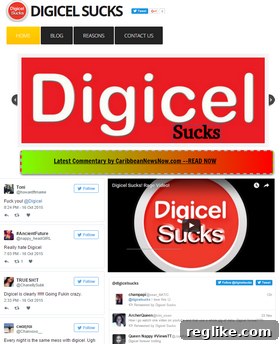
The domain name DigicelSucks.com was registered on October 12 of a given year. The associated website, as depicted by the image, immediately makes its critical intent clear with the “sucks” suffix. The site consists of user-generated commentary about the mobile carrier, coupled with aggregated tweets from individuals expressing dissatisfaction with Digicel’s services. Crucially, the site was found to be non-commercial, meaning it did not generate revenue through advertising or by selling products, and its primary purpose was to facilitate discussion and complaints about the trademark holder.
Swift Action, Unfavorable Outcome
Digicel acted with remarkable speed, filing a UDRP complaint with the World Intellectual Property Organization (WIPO) just five days after the domain’s registration, on October 17. This swift action demonstrated the company’s proactive stance on brand protection. However, despite their quick response, the outcome was not in their favor.
The Panel’s Verdict: Upholding Legitimate Interests
The WIPO panelist carefully considered the arguments presented by both parties, ultimately determining that the registrant of DigicelSucks.com had a legitimate interest in the domain name. This finding was pivotal in Digicel’s complaint failing.
The Critical Finding: Rights or Legitimate Interests
The panelist determined that the registrant possessed rights or legitimate interests in the domain name. This decision hinged on two primary factors: the site’s explicit purpose and its non-commercial nature. The panel recognized that the site was genuinely being used as a platform for discussion and criticism concerning the trademark holder. The inclusion of the “sucks” descriptor in the domain name itself, coupled with the content’s focus on aggregated complaints and commentary, clearly communicated the site’s critical intent. Furthermore, the absence of any monetization, such as advertising or sales, was a decisive factor, reinforcing that the registrant was not attempting to exploit Digicel’s trademark for commercial gain or to confuse consumers. This distinguishes the case from traditional cybersquatting, where the primary motive is typically profit or competitive advantage through bad faith use of a trademark.
The Shadow of Reverse Domain Name Hijacking (RDNH)
While the panel declined to make a formal finding that Digicel was guilty of Reverse Domain Name Hijacking (RDNH), its comments strongly hinted at such a possibility. RDNH occurs when a trademark holder attempts to use the UDRP process in bad faith to improperly seize a domain name from a legitimate registrant. The panel noted that “there is considerable force in the argument that the Complainant should have realized its prospects against the disputed domain name were very poor, given the disputed domain name itself and the content of the associated website as a ‘gripe’ site.” This statement serves as a stern warning to trademark holders: while vigilance is important, it must be coupled with due diligence and a realistic assessment of UDRP precedents. Filing a UDRP complaint against a clearly legitimate gripe site, especially one that is non-commercial, can be seen as an attempt to suppress free speech rather than genuinely protect a trademark, potentially leading to an RDNH finding.
Broader Implications for Brand Owners and Online Freedom
The DigicelSucks.com case offers valuable lessons for both brand owners and individuals seeking to express criticism online.
Navigating Online Criticism
For brands, this case reinforces the reality that online criticism is an unavoidable aspect of the digital age. Instead of viewing all negative online mentions as legal threats requiring UDRP action, companies must develop more nuanced strategies. Engaging with customers, addressing complaints transparently, and maintaining robust customer service channels can often be more effective in managing brand reputation than resorting to legal measures against legitimate criticism.
Empowering Consumer Voice
The decision also empowers consumers, reaffirming the internet’s role as a vital platform for free speech and corporate accountability. It highlights the importance of protecting legitimate criticism, which contributes to market transparency and fosters healthier consumer-brand relationships. The ability for individuals to voice their opinions, even negative ones, is fundamental to an open digital ecosystem.
Best Practices for Brands Facing Gripe Sites
When confronted with a domain like DigicelSucks.com, brands should:
- Assess Intent: Carefully evaluate whether the gripe site is genuinely critical and non-commercial, or if it’s designed to confuse consumers or generate revenue through bad faith.
- Engage and Monitor: Rather than immediate legal action, consider engaging with the criticism. Address issues raised by consumers directly, and continuously monitor online sentiment.
- Legal Action as a Last Resort: UDRP should be reserved for clear cases of cybersquatting, where there is undeniable bad faith and a lack of legitimate interest. Companies should conduct thorough due diligence and understand UDRP precedents regarding gripe sites before filing a complaint.
Advice for Registrants of Gripe Sites
Individuals wishing to establish a gripe site should take precautions to protect their legitimate interests:
- Ensure Non-Commercial Use: Avoid any form of monetization, such as advertising or selling products. This is often the most critical factor in a UDRP panel’s decision.
- Make Intent Clear: Use domain name suffixes like “sucks,” “complaints,” or “reviews” to explicitly communicate the site’s critical nature. The content should consistently reflect this intent.
- Focus on Brand, Not Individuals: Criticism should target the company, its products, or services, rather than engaging in personal attacks or defamation.
- Be Prepared: Even with legitimate intent, be aware that trademark holders may still attempt legal challenges. Document the site’s purpose and non-commercial nature meticulously.
In conclusion, the DigicelSucks.com case serves as a powerful reminder that the UDRP is a targeted mechanism for combating abusive domain registrations, not a tool to suppress freedom of speech or legitimate consumer criticism. It underscores the delicate balance trademark law must maintain with fundamental rights in the digital age. For brand owners, it highlights the need for strategic and nuanced approaches to online reputation management that extend beyond legal threats. For individuals, it reinforces the robust protection afforded to legitimate, non-commercial expression online, even when that expression is critical. As the internet continues to evolve, so too must our understanding of how brand protection and online freedom coexist and interact.