
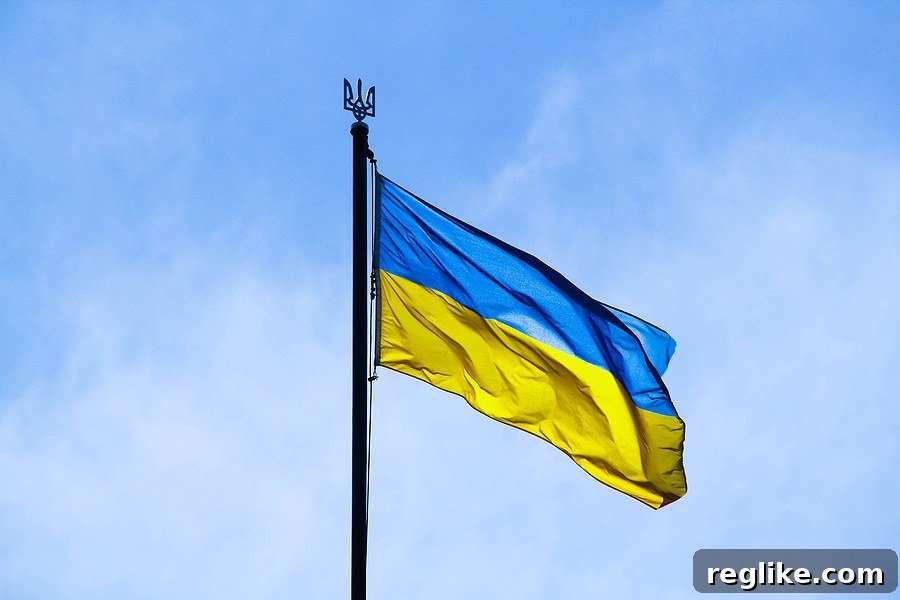
Groups are creating their own sanctions.
The Unprecedented Era of Digital Sanctions: How the Domain Name Ecosystem is Responding to Geopolitical Conflict
In an increasingly interconnected world, geopolitical conflicts often extend beyond traditional battlefields, infiltrating economic systems, financial markets, and even the digital infrastructure that underpins modern society. The internet, once envisioned as a borderless realm fostering global communication and commerce, has become a new frontier for pressure and protest. Following Russia’s invasion of Ukraine, a striking phenomenon emerged: private companies and decentralized entities within the vital domain name ecosystem began to implement their own forms of “digital sanctions,” taking actions that challenge the traditional notions of neutrality and universality on the web. This proactive stance by non-state actors highlights a pivotal shift in how global events influence the very architecture of the internet, sparking debates about ethics, access, and the future of online governance.
Private Entities Take Decisive Action: Namecheap’s Stance and Its Ripple Effects
Among the first and most prominent players to take a stand was Namecheap, a major domain registrar and web hosting company. With approximately 1,000 employees based in Ukraine, the company’s decision was deeply personal and remarkably swift. Namecheap initially informed its Russian customers that they would need to find alternative service providers, giving them a two-week window to migrate their domain registrations and hosting services elsewhere. This move, while lauded by many as a powerful act of solidarity, also ignited considerable debate regarding the ethical implications of denying services based on nationality, irrespective of individual political views.
The company’s initial directive was a bold declaration, reflecting a corporate decision to align its business practices with a moral opposition to the conflict. However, recognizing the complexities and potential for unintended consequences, Namecheap later refined its policy. The company announced a significant exception, pledging to provide free, anonymous domain registration and web hosting services for any anti-war or protest websites specifically targeting the governments of Russia and Belarus. This amendment underscored a nuanced approach: while applying pressure on the aggressor state through its citizens, it simultaneously aimed to support freedom of expression for those within Russia who opposed the war, offering a crucial lifeline for dissent in an environment of escalating censorship.
Namecheap’s actions set a precedent, demonstrating how private enterprises, driven by ethical considerations and employee welfare, can become active participants in geopolitical responses. Their decisions sparked a broader conversation within the tech community about corporate responsibility, the limits of service provision, and the potential for a “splinternet” where access is determined by geopolitical allegiances. The impact on Russian businesses and individuals, forced to navigate an increasingly isolated digital landscape, further emphasized the profound consequences of such private sector sanctions.
Collective Response from Internet Governance Bodies: CENTR’s Suspension of Russian Colleagues
Beyond individual companies, collective bodies responsible for the technical coordination of the internet also felt the imperative to act. The Council of European National Top-Level Domain Registries (CENTR), an organization comprising managers of country code Top-Level Domains (ccTLDs) such as .de for Germany or .fr for France, made a notable move. CENTR suspended its Russian colleagues from the organization.
This decision by CENTR, while not directly impacting the technical operation of Russia’s .ru or .рф domains, carries significant symbolic and practical weight. It signifies a clear denouncement of Russia’s actions by a key segment of the global internet governance community. The suspension means that Russian representatives are excluded from discussions, decision-making processes, and collaborative initiatives that shape the future of ccTLDs in Europe and beyond. This exclusion limits their influence, cuts off avenues for cooperation, and isolates Russian domain administrators from the broader international consensus-building efforts that are crucial for maintaining a stable and interoperable internet. Such actions, though not as direct as a service cutoff, send a powerful message about the erosion of trust and the unwillingness to collaborate with entities associated with an aggressive regime.
Tucows’ Call for Due Diligence: Extending the Reach of Scrutiny
The ripple effect of digital sanctions extended to other major players in the domain ecosystem, albeit in different forms. Elliot Noss, the CEO of Tucows, another prominent internet services provider, took a proactive yet distinct approach. Instead of directly terminating services, Noss issued a letter to the company’s bankers and lawyers, urging them to critically examine any work they were undertaking with individuals or entities connected to the Russian regime.
Tucows’ action represents a call for heightened due diligence within the broader financial and legal networks that support the domain name industry. It encourages service providers to scrutinize their client relationships, ensuring that they are not inadvertently facilitating or benefiting individuals or organizations that are directly or indirectly supporting the conflict. This approach leverages the power of interconnected supply chains and professional services to apply pressure. It highlights a growing trend where companies are not only evaluating their direct operational ties but also the indirect associations through their professional partners, signaling a broader commitment to ethical alignment across the entire business ecosystem. This form of “secondary sanctioning” by private entities introduces a new layer of complexity to international business operations, pushing companies to think beyond their immediate customer base.
Ukraine’s Plea to ICANN and the Debate Over Internet Splintering
Perhaps the most contentious and widely discussed request came from the Ukrainian government itself, which formally asked the Internet Corporation for Assigned Names and Numbers (ICANN) to effectively cut off Russia from the global internet. Specifically, Ukraine requested that ICANN revoke the domain names .ru, .su, and .рф, and even disconnect Russia from the global Domain Name System (DNS) root servers. Such a move would have rendered vast swathes of the Russian internet inaccessible from outside the country, severely disrupting online communication and commerce.
ICANN, however, declined the request. Its refusal was rooted in its fundamental mandate: to ensure the technical stability and global interoperability of the internet, not to serve as an arbiter of geopolitical disputes. ICANN maintained that its role is purely technical, focusing on the coordination of unique identifiers across the internet. Acceding to Ukraine’s request would set a dangerous precedent, politicizing the internet’s core infrastructure and potentially leading to its fragmentation. If ICANN were to disconnect a country for political reasons, it could open the door for other governments to demand similar actions against their adversaries, ultimately undermining the internet’s universal nature and its ability to function as a single, global network.
Despite ICANN’s refusal, the request brought into sharp focus the ongoing debate about internet sovereignty and the very real threat of the internet splintering or “balkanizing.” While a complete global disconnection of Russia did not occur, the incident highlighted the vulnerabilities of a unified internet in an era of heightened geopolitical tension. Authoritarian regimes, including Russia and China, have long invested in developing “sovereign internet” capabilities, designed to allow them greater control over the information their citizens access and exchange. Russia, for instance, has passed laws aiming to create a standalone internet infrastructure capable of operating independently from the global network. The pressure from the Ukraine war, coupled with the actions of private entities, may accelerate these trends, pushing more nations to develop their own national internets, further controlling what their people see and say, and potentially leading to a less open and more fragmented global digital landscape.
The Broader Implications: Ethics, Access, and the Future of Internet Governance
The collective actions within the domain name ecosystem following the Russia-Ukraine conflict represent a significant turning point. These “self-sanctions” by private companies and non-governmental organizations raise profound ethical questions about balancing the principles of an open, global internet with moral opposition to aggression. When companies decide to de-platform users based on their nationality, even if those users are not directly involved in the conflict, it raises concerns about collective punishment and potential human rights implications, particularly regarding freedom of expression and access to information.
The situation also underscores the evolving role of tech companies in geopolitical affairs. No longer passive conduits of information, these entities are increasingly expected, and sometimes compelled, to take sides, transforming them into active participants in international diplomacy and conflict resolution. This new responsibility comes with immense challenges, as their decisions can have far-reaching economic, social, and political ramifications for millions of users worldwide.
Ultimately, the events described here are symptoms of a larger phenomenon: the increasing politicization of the internet. The ideal of a neutral, borderless digital space is under unprecedented strain. As nations assert greater control over their digital territories and private companies exercise their own forms of digital diplomacy, the future of internet governance appears destined for a path of greater complexity and potential fragmentation. The tension between maintaining a unified, accessible internet and the imperative to respond to global crises will continue to shape policy, technology, and human experience in the digital realm for years to come.