
DigitalOcean Charts Course for Public Markets: An In-Depth Look at the Cloud Platform’s IPO Journey
DigitalOcean, a leading cloud infrastructure provider renowned for its developer-friendly approach and focus on small to medium-sized businesses (SMBs), has officially announced its intention to become a publicly traded company. The cloud platform, which proudly serves over 570,000 customers globally—including industry stalwarts like Domain Name Wire—filed its S-1 registration statement with the U.S. Securities and Exchange Commission, signaling a significant milestone in its growth trajectory. This move positions DigitalOcean to list its shares on the prestigious New York Stock Exchange (NYSE) under the distinctive ticker symbol “DOCN,” with an initial public offering (IPO) aiming to raise an estimated $100 million. This public offering represents not just a financial transaction but a validation of DigitalOcean’s unique value proposition in an increasingly competitive cloud market.
The IPO Unleashed: A New Chapter for Cloud Infrastructure
The decision to go public marks a pivotal moment for DigitalOcean, a company that has steadily carved out a crucial niche since its inception in 2012. While the initial listed raise of $100 million provides a preliminary benchmark, the actual capital infusion could fluctuate based on market conditions and investor interest, reflecting the dynamic nature of IPOs. For DigitalOcean, going public is more than just securing capital; it’s about gaining increased visibility, enhancing brand credibility, and unlocking new avenues for expansion and innovation. The capital raised through the IPO will likely be instrumental in accelerating product development, expanding its global data center footprint, and potentially pursuing strategic acquisitions that align with its mission to simplify cloud computing for developers and growing businesses.
Simplifying Cloud for the Modern Innovator
DigitalOcean’s success story is deeply rooted in its commitment to simplicity, affordability, and a robust developer community. Unlike hyperscale cloud providers that often cater to large enterprises with complex, feature-rich ecosystems, DigitalOcean has deliberately focused on providing straightforward, intuitive cloud infrastructure services. Its offerings, known for their predictable pricing and ease of use, include Droplets (virtual machines), managed databases, object storage, and Kubernetes clusters, all designed to be accessible and scalable for individual developers, startups, and SMBs. This user-centric philosophy has cultivated a loyal customer base that values efficiency and transparency, allowing innovators to deploy and scale applications without grappling with the overwhelming complexities often associated with larger cloud platforms. This strategic focus has enabled DigitalOcean to foster a thriving ecosystem where developers can learn, build, and grow together, supported by extensive documentation and an active community forum.
Robust Financial Performance Paves the Way
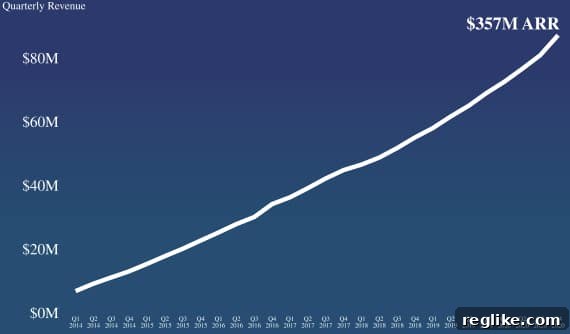
DigitalOcean’s journey to the public market is underpinned by a compelling financial narrative demonstrating consistent growth and increasing operational efficiency. In the fiscal year 2020, the company reported an impressive total revenue of $318.4 million, marking a substantial increase from $254.8 million generated in 2019. This significant year-over-year growth underscores the accelerating demand for its cloud solutions and its effective market penetration strategies. While the company reported a net loss of $43.6 million in 2020, this figure is typical for rapidly expanding technology companies that heavily reinvest in growth and infrastructure. To provide a clearer picture of its core operational performance, DigitalOcean calculates an adjusted EBITDA, which reached a healthy $95.9 million last year, significantly up from $55.2 million in 2019. The primary drivers behind the adjustments from net loss to adjusted EBITDA included substantial non-cash expenses, specifically $75.6 million in depreciation and amortization—reflecting its investment in physical infrastructure—and $29.5 million in stock-based compensation, a common incentive for attracting and retaining top talent in the tech sector.
An Expanding Global Footprint and User Engagement
The cloud platform’s growth isn’t just financial; it’s also reflected in its rapidly expanding customer base and global reach. As of December 31, DigitalOcean proudly served 573,000 customers, a robust increase from 502,000 customers recorded at the end of 2018. This consistent acquisition of new users highlights the platform’s enduring appeal and its ability to attract and retain a diverse range of cloud consumers. The global distribution of its revenue further illustrates DigitalOcean’s broad market penetration: approximately 38% of its revenue last year originated from North America, 30% from Europe, and 22% from the vibrant markets of Asia. This balanced geographic spread mitigates regional market risks and demonstrates the universal demand for accessible cloud infrastructure across continents.
Furthermore, the company’s ability to extract more value from its existing user base is evident in its steadily rising Monthly Average Revenue Per User (ARPU). In 2020, DigitalOcean’s ARPU climbed to $47.78, a significant improvement from $35.97 just two years prior. This upward trend in ARPU indicates that customers are increasingly utilizing more of DigitalOcean’s services, upgrading their existing plans, or adopting new products as their needs evolve. It speaks volumes about the platform’s stickiness and its success in providing solutions that grow alongside its customers’ projects and businesses.
Strategic Leadership and Future Outlook
As DigitalOcean prepares for its public debut, its leadership team is bolstered by experienced industry veterans. Notably, Warren Adelman, former CEO of GoDaddy, joined the company’s board in November 2020. Adelman’s extensive background in web hosting, domain services, and scaling technology businesses brings invaluable strategic insight and governance expertise to DigitalOcean, particularly as it navigates the complexities of being a public entity. His appointment underscores the company’s commitment to strong leadership and its ambition to solidify its position as a dominant force in the cloud infrastructure landscape.
While the company carried $263.7 million in debt as of December 31, 2020, this figure is not uncommon for high-growth technology companies investing heavily in infrastructure and market expansion. The successful execution of its IPO is expected to provide the necessary capital to optimize its balance sheet, reduce reliance on debt financing, and fuel future growth initiatives without excessive financial strain. The journey to IPO signifies DigitalOcean’s maturation from a promising startup into a major player in the global cloud ecosystem, poised to democratize access to powerful computing resources for the next generation of digital innovators. Its commitment to simplicity, community, and accessible pricing ensures that it remains an attractive choice for millions of developers and SMBs worldwide who are building the internet’s future.