
Beyond the .com: Why a Seemingly Clever Domain Choice Can Lead to Major Marketing Headaches
 In the bustling digital landscape, a domain name is far more than just an address; it’s the cornerstone of a brand’s online identity, a crucial marketing asset, and often, the first point of contact for potential customers. Choosing the right domain requires a delicate balance of creativity, memorability, and strategic foresight. While many discussions revolve around the debate between traditional .com domains and the myriad of new, often more evocative, Top-Level Domains (TLDs), there’s a deeper, more insidious flaw that can undermine even the most visually appealing advertisements and robust marketing campaigns. This article delves into a real-world case study to illustrate how a seemingly minor oversight in domain name selection can create significant barriers to customer acquisition and brand recognition, regardless of the chosen TLD.
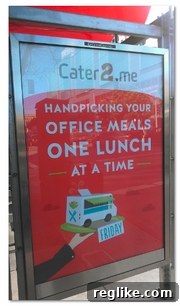
The incident that sparked this reflection occurred on a busy street in San Francisco. A casual stroll down 4th street led to a double-take at a bus stop advertisement. The ad prominently featured a web address ending in .me, promoting a service named Cater2.me. At first glance, this might appear to be a progressive and savvy domain choice. The .me TLD, originally designated for Montenegro, has been cleverly repurposed globally as a personal branding tool or for services that emphasize individuality or direct interaction. For companies operating in the tech-savvy epicenters like San Francisco, a .me domain can often resonate well with a target audience accustomed to alternative TLDs and innovative branding.
Cater2.me, a service designed to streamline corporate lunch catering, seems to be a perfect candidate for such a domain. Its target demographic – workplaces and tech professionals – are likely familiar with and accepting of new TLDs. This choice demonstrates a willingness to break from the traditional .com mold, potentially offering a more memorable or unique brand identity in a crowded market. Indeed, for many domain enthusiasts, seeing a .me domain advertised so prominently would be a point of pride, showcasing the expanding viability of non-.com extensions.
However, the true flaw in Cater2.me’s domain strategy doesn’t lie in its use of the .me TLD. While some purists may instinctively dislike anything other than .com, the reality is that the digital ecosystem has evolved. New gTLDs (generic Top-Level Domains) like .io, .co, .app, and even country-code TLDs repurposed for specific niches have gained significant traction, especially among startups and technology companies. These alternatives often provide greater availability for desired names and can contribute to a unique brand narrative. For Cater2.me, the .me extension could have been an asset, conveying a direct, personalized service. The actual problem, however, emerges when the domain name is subjected to the ultimate test of usability: the “radio test.”
The “radio test” is a critical benchmark for any domain name. It evaluates how easily a domain can be understood, remembered, and accurately typed into a browser after being heard aloud. Imagine hearing an advertisement for a company on the radio, or a friend recommending a website verbally. Can you confidently spell out the domain name without needing to see it written down? This test often exposes hidden complexities in seemingly simple domain names. While Cater2.me might pass the radio test regarding its TLD (most people recognize “.me” as a web extension now), it profoundly fails when it comes to the core brand name itself.
The fundamental issue with “Cater2.me” lies in the numeral “2.” When spoken aloud, “2” is almost universally understood as “to.” This seemingly innocuous substitution creates a critical phonetic ambiguity. If a potential customer hears about “Cater To Me” – perhaps from a colleague, a networking event, or even a friend who saw the bus ad but didn’t commit the exact spelling to memory – what domain are they most likely to type into their browser? The overwhelming majority would naturally gravitate towards CaterTo.me, or even CaterToMe.com, not the intended Cater2.me. This subtle yet significant difference has profound implications for user experience, brand integrity, and ultimately, the company’s bottom line.
The consequences of this domain name confusion are multifaceted and detrimental. Firstly, prospective clients who attempt to find Cater2.me but mistype the domain as CaterTo.me are likely to land on a completely different website. In this specific case, typing CaterTo.me leads to a website belonging to Christian Schneider, a caterer based in Hawaii, whose company also owns the domain CaterToMe.com. This immediately creates a barrier to entry for potential customers. They might assume the service doesn’t exist, that they misremembered the name, or worse, they might become frustrated and abandon their search entirely. This is a direct loss of business, as marketing efforts spent driving awareness for Cater2.me inadvertently funnel traffic to an unrelated entity.
Secondly, this scenario can lead to significant brand dilution and confusion. Customers who encounter the Hawaiian catering service might mistakenly associate the brand values or services of the unintended recipient with Cater2.me. This erodes the unique brand identity that Cater2.me is trying to establish. Imagine the customer journey: hear about a great new catering service, try to find it online, end up on a site for a different caterer, and then either give up or form a negative impression of the original service due to the difficulty in finding it. This is a textbook example of poor user experience (UX) stemming from a preventable domain choice.
Moreover, the existence of easily mistyped variations of a brand’s domain name can have negative implications for Search Engine Optimization (SEO). While Google and other search engines are sophisticated, split traffic across multiple, similar-sounding domains can dilute the authority of the primary domain. Customers searching for “Cater To Me” might see results for both services, adding another layer of confusion. This reduces the effectiveness of organic search as a marketing channel and necessitates additional resources to clarify brand identity and direct users to the correct site.
For Cater2.me, the immediate impact might be negligible if they primarily rely on direct, known traffic. However, as the company expands its marketing reach and relies more on word-of-mouth or general brand awareness, the problem will only compound. Every mention, every recommendation, every time someone hears the name and tries to find it, presents an opportunity for misdirection. The cost of acquiring customers who have to overcome this hurdle is inherently higher, and the potential for lost customers due to frustration is ever-present.
It’s unclear whether Christian Schneider’s Hawaiian company directly owns CaterTo.me. The domain’s WHOIS record was placed under privacy last year, but it was previously registered to an individual in San Francisco. Regardless of current ownership, the mere availability and active use of such a phonetically identical domain poses a significant threat. While the Hawaiian company might not actively steal business until Cater2.me launches in Hawaii, the passive loss of traffic and the persistent brand confusion are real and ongoing concerns. The proactive acquisition of such “typo domains” or phonetically similar domains is a fundamental strategy for brand protection in the digital age.
This situation underscores a vital lesson for businesses in all sectors: domain name selection is not merely a technical decision; it is a critical marketing and brand strategy decision that demands careful consideration. Beyond the choice of TLD, companies must prioritize clarity, memorability, and ease of communication. The “radio test” should be a non-negotiable step in the domain selection process. Businesses should consider all possible phonetic interpretations and common misspellings of their chosen name. It is often well worth the investment to purchase variations of your domain, including those with numerals replaced by words (e.g., “2” vs. “to,” “4” vs. “for”) and common misspellings, and redirect them to your primary site. This defensive strategy safeguards against lost traffic, brand confusion, and potential competitive threats.
For Cater2.me, acquiring CaterTo.me, and perhaps even CaterToMe.com if available, would be an invaluable investment. As the company grows and potentially expands its geographic footprint, the cost of not owning these critical variations will only increase. The initial savings from not buying a few extra domains pale in comparison to the long-term cost of lost customers, marketing inefficiencies, and brand damage. In the digital realm, a seamless and intuitive user journey from hearing a brand name to accessing its online presence is paramount. A domain name that fails this basic test, regardless of its TLD, can inadvertently become a major obstacle to success.