
The Hidden Dangers of Zero-Click Traffic: Scams and Misleading Installers
In the dynamic world of domain monetization, “zero-click” traffic has emerged as a potentially lucrative, yet often overlooked, strategy. This approach, where domain traffic is automatically redirected to another website instead of a traditional ad-laden landing page, has gained traction as a means to boost revenue. However, beneath the surface of this seemingly innovative technique lurks a dark side: the potential for exposure to scams, misleading installers, and significant damage to your domain’s reputation.
While the concept of zero-click monetization for parked domains isn’t entirely new, its adoption has surged in recent years. Faced with declining revenues from traditional advertising platforms like Google Ads, many domain parking companies have integrated zero-click providers into their systems. This integration aims to compensate for lost income, offering domain owners the promise of increased earnings. However, this pursuit of higher revenue can come at a steep price.
A significant issue is that many domain owners are likely unaware that a portion of their valuable traffic is being diverted to external websites rather than the expected landing pages. This lack of transparency can be highly problematic, as it relinquishes control over the user experience and exposes visitors to potentially harmful content. The consequences of this exposure can range from annoyance and distrust to serious security risks.
Joseph Peterson, a respected domain consultant and author of expired domain reports for Domain Name Wire, recently highlighted several alarming instances of zero-click forwarding leading to websites containing scams or misleading information. These findings underscore the inherent risks associated with this type of traffic redirection and raise serious questions about the responsibility of domain parking companies.
Examples of Zero-Click Traffic Scams
One particular domain name examined by Peterson exhibited a concerning pattern of traffic rotation. The domain’s traffic was intermittently directed to a Sedo parking page, a couple of legitimate websites, and, most disturbingly, at least two scam or misleading sites. This inconsistent and unpredictable behavior highlights the vulnerability of domain owners who rely on zero-click monetization without proper oversight.
For instance, on several visits to this domain, users were redirected to “windowslivehelpdesk.com,” a website designed to mimic a legitimate Microsoft support page. This deceptive site displayed a fabricated warning claiming that the user’s computer might be lacking malware protection, accompanied by a prominent alert urging immediate action. The alert looked something like this:

This is a classic example of a phony Microsoft tech support scam. Victims who call the number displayed on the screen are typically connected to individuals who attempt to gain remote access to their computer under the guise of providing technical assistance. They often pressure users to install unnecessary software or purchase expensive “security” solutions, ultimately defrauding them of their money and potentially compromising their personal data. In this specific case, the individual on the phone instructed the user to visit LMI1.com, which redirects to LogMeInRescue.com, a legitimate remote computer access site, but used for malicious purposes.
On other occasions, visitors to the same domain were redirected through a series of URLs to a landing page that closely resembled the official Adobe Flash download site. This deceptive tactic exploited the widespread use of Flash Player and the common perception that it requires frequent updates. The user’s browser would then display an alert indicating that their Flash Player was potentially outdated, prompting them to download a fake update.
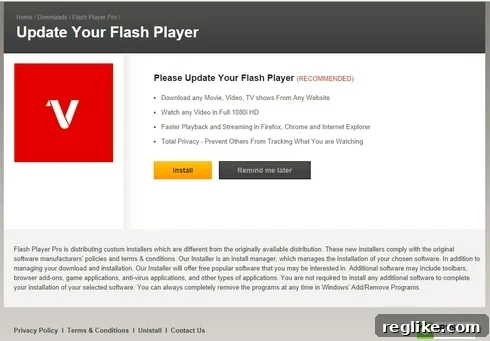
The fine print at the bottom of the page revealed the true nature of the “update,” stating:
Flash Player Pro is distributing custom installers which are different from the originally available distribution. These new installers comply with the original software manufacturers’ policies and terms & conditions. Our Installer is an install manager, which manages the installation of your chosen software. In addition to managing your download and installation, Our Installer will offer free popular software that you may be interested in. Additional software may include toolbars, browser add-ons, game applications, anti-virus applications, and other types of applications. You are not required to install any additional software to complete your installation of your selected software. You can always completely remove the programs at any time in Windows’ Add/Remove Programs.
This disclaimer, while attempting to appear transparent, effectively admits that the installer is bundling additional software, potentially including unwanted toolbars, browser add-ons, and even potentially harmful applications. Users who blindly install this “update” risk compromising their computer’s security and performance.
The Consequences for Domain Owners
Allowing a domain name to resolve to a page containing scams, malware, or misleading installers can have devastating consequences for the domain owner. Such practices can severely damage the value of the domain name, making it significantly less attractive to potential buyers. Furthermore, it can expose the domain owner to legal challenges, such as a Uniform Domain Name Dispute Resolution Policy (UDRP) complaint. A UDRP complaint can result in the loss of the domain name, along with potential legal fees and reputational damage.
Sedo’s Response and Industry Practices
In response to the discovery of these questionable practices, Sedo, a prominent domain marketplace and parking company, was contacted for comment. The company stated, “Our advertising providers must commit to deliver quality content. This kind of internet scams are not tolerated. We will contact the advertisers and ask them to remove the ads from our traffic right away. This is not acceptable.” Sedo promptly removed the offending ads after being notified.
While Sedo’s response is encouraging, it highlights the need for greater vigilance and proactive monitoring of zero-click traffic. Other domain parking companies also utilize zero-click monetization, and investigations have revealed instances of domains forwarding to sites containing scams that could not be directly traced back to a specific parking company. This underscores the pervasive nature of the problem and the challenges involved in identifying and preventing these malicious activities.
Mitigating the Risks of Zero-Click Traffic
Zero-click monetization can be a valuable revenue stream for domains that struggle to perform well on traditional parking pages. However, domain owners and domain parking companies must prioritize the safety and security of their users by diligently monitoring where traffic is being directed. This proactive approach is crucial to prevent the exposure of visitors to scams, malware, and misleading installers.
If your domain doesn’t generate significant revenue from parking or if you primarily use parking as a tool to facilitate domain sales, it may be prudent to choose a platform that either avoids zero-click monetization altogether or allows you to disable it. For instance, Sedo offers its customers the option to opt out of zero-click forwarding by submitting a request to their support team. Taking advantage of such options can provide greater control over your domain’s traffic and minimize the risk of exposing your visitors to harmful content.
Protecting Your Domain and Your Users
The world of domain monetization is constantly evolving, and it’s crucial to stay informed about the latest trends and potential risks. Zero-click traffic offers the potential for increased revenue, but it also carries significant risks that must be carefully considered. By understanding the dangers associated with this monetization strategy and taking proactive steps to protect your domain and your users, you can minimize your exposure to scams, misleading installers, and other harmful content. Regularly monitor your domain’s traffic, choose reputable parking providers, and consider opting out of zero-click monetization if you have concerns. By taking these precautions, you can safeguard your domain’s reputation and ensure a positive experience for your visitors.